

Most founders believe a website development studio simply codes what designers hand them. This thinking creates friction, delays, and products that fail conversion targets. The reality is that modern development isn't about translating static mockups into HTML. It's about building systematic, scalable experiences where design and implementation are inseparable from the start. When a website development studio operates at this level, you're not buying a website. You're investing in a conversion engine built on design systems, AI-augmented workflows, and continuous iteration.
The Core Misconception About Development Studios
The traditional handoff model is broken. Design creates a perfect Figma file, developers receive it weeks later, and then months of back-and-forth begin. A modern website development studio eliminates this friction entirely by merging design thinking with technical execution from day one.
Why this matters for startups:
- Speed to market determines competitive advantage
- Every revision cycle costs investor capital
- Conversion optimization requires live iteration, not static deliverables
The studios winning in 2026 don't separate design from development. They build in integrated environments where visual decisions and technical architecture inform each other continuously. This approach aligns with best practices for website development that emphasize collaboration and efficiency.

Systems Over Screens
Traditional agencies deliver 50 unique page designs. A strategic website development studio delivers one coherent system that generates infinite variations. This isn't about templates. It's about building foundational logic that scales.
| Traditional Approach | Systems Approach |
|---|---|
| Custom design every page | Reusable component library |
| Manual updates across sections | Single-source design tokens |
| Inconsistent user patterns | Predictable interaction models |
| Dev recreates designs | Design generates production code |
The practical difference:
When you need a new landing page for a product launch, the traditional studio takes two weeks. A systems-oriented website development studio ships it in two hours because the foundation already exists. The components, spacing logic, typography scales, and interaction patterns are all production-ready.
This systematic thinking connects directly to how design systems work at scale, where every decision compounds value rather than creating technical debt.
The Psychology of High-Performance Development
Speed isn't about rushing. It's about removing cognitive friction from every decision point. When a website development studio operates with clarity, they're optimizing for mental load reduction across three dimensions.
Depth Creates Confidence
Users don't trust flat interfaces. Visual hierarchy communicates information architecture before anyone reads a word. Shadows, layering, and spatial relationships tell users what's interactive, what's primary, and what's contextual.
Implementation in development:
- Establish z-index systems tied to component hierarchy
- Build elevation tokens that map to interaction states
- Create consistent depth language across all touchpoints
A strategic website development studio doesn't apply shadows randomly. They build a depth system where elevation increases with importance and interactivity. This creates subconscious understanding that reduces cognitive load and increases conversion.
Rhythm Guides Attention
Typography, spacing, and animation timing all follow rhythm. When these align with human perception cycles, interfaces feel intuitive. When they conflict, users feel disoriented even if they can't articulate why.
The best website development studio teams understand cadence. They know that a 400ms transition feels decisive while 200ms feels jarring. They build spacing scales based on mathematical ratios that create visual harmony without conscious thought.
Practical rhythm implementation:
- Motion timing follows easing curves that mirror physical acceleration
- Spacing increments create predictable visual scanning patterns
- Typography scales establish reading rhythm across device contexts
This level of detail separates conversion-focused development from generic website building. Every millisecond and pixel compounds into measurable business outcomes.
AI as Workflow Accelerator
AI doesn't replace creative thinking. It eliminates repetitive technical tasks that drain designer and developer capacity. A modern website development studio uses AI to compress timelines without compromising quality.
Code Generation for System Components
When you've established design foundations, AI can generate production-ready component variations in seconds. This isn't about prompting ChatGPT to "build a website." It's about using AI within constrained systems to handle predictable variations.
Real workflow example:
- Designer defines button system with variants (primary, secondary, ghost)
- AI generates responsive code for all states and sizes
- Developer reviews, refines edge cases, commits to production
- Total time: 15 minutes instead of 3 hours
The website development studio that masters this workflow delivers 10x faster without sacrificing quality. The AI handles boilerplate. Humans focus on strategic decisions and edge cases. This aligns with modern web development best practices that emphasize automation where appropriate.

Content Optimization Through Intelligent Analysis
AI analyzes conversion patterns across your entire site in real-time. A strategic website development studio builds this intelligence into the foundation, not as an afterthought.
| Manual Analysis | AI-Augmented Analysis |
|---|---|
| Monthly conversion reviews | Real-time pattern detection |
| Gut-feel optimization | Data-driven recommendations |
| Limited variant testing | Continuous multivariate testing |
| Reactive problem solving | Predictive opportunity identification |
This capability transforms how startups approach product-market fit. Instead of guessing which messaging resonates, your website development studio builds adaptive systems that learn and optimize continuously.
The integration of AI in product design workflows demonstrates how these tools enhance rather than replace human creativity and strategic thinking.
Building for Conversion, Not Aesthetic Awards
Beautiful websites that don't convert are expensive art projects. A results-focused website development studio optimizes every decision for measurable business outcomes.
The Conversion Hierarchy
Before writing any code, establish what success means:
- Primary conversion: Product signup, demo request, purchase
- Secondary engagement: Newsletter signup, resource download
- Micro-interactions: Scroll depth, video plays, feature exploration
Each layer requires different development approaches. Your website development studio should architect information hierarchy and interaction patterns specifically to drive these behaviors.
Technical implementation priorities:
- Critical path loads in under 1.2 seconds
- Primary CTAs remain visible during all scroll states
- Form friction reduced through intelligent autofill and progressive disclosure
- Social proof positioned at decision points, not randomly scattered
These details determine whether your site generates pipeline or just looks impressive in portfolios. The focus on responsive design and user experience reflects this conversion-first mentality.
Performance as Conversion Driver
Every 100ms of load time reduces conversion by approximately 7%. A serious website development studio treats performance as a core design constraint, not an optimization phase.
Performance architecture decisions:
- Image formats matched to content type (WebP for photos, SVG for icons)
- Critical CSS inlined, non-critical deferred
- JavaScript loaded based on interaction necessity
- Third-party scripts delayed until after primary content renders
These aren't optional enhancements. They're foundational decisions that determine whether users stay or bounce. When a website development studio builds performance into the system architecture, optimization becomes automatic rather than manual.
The Framer Advantage for Modern Studios
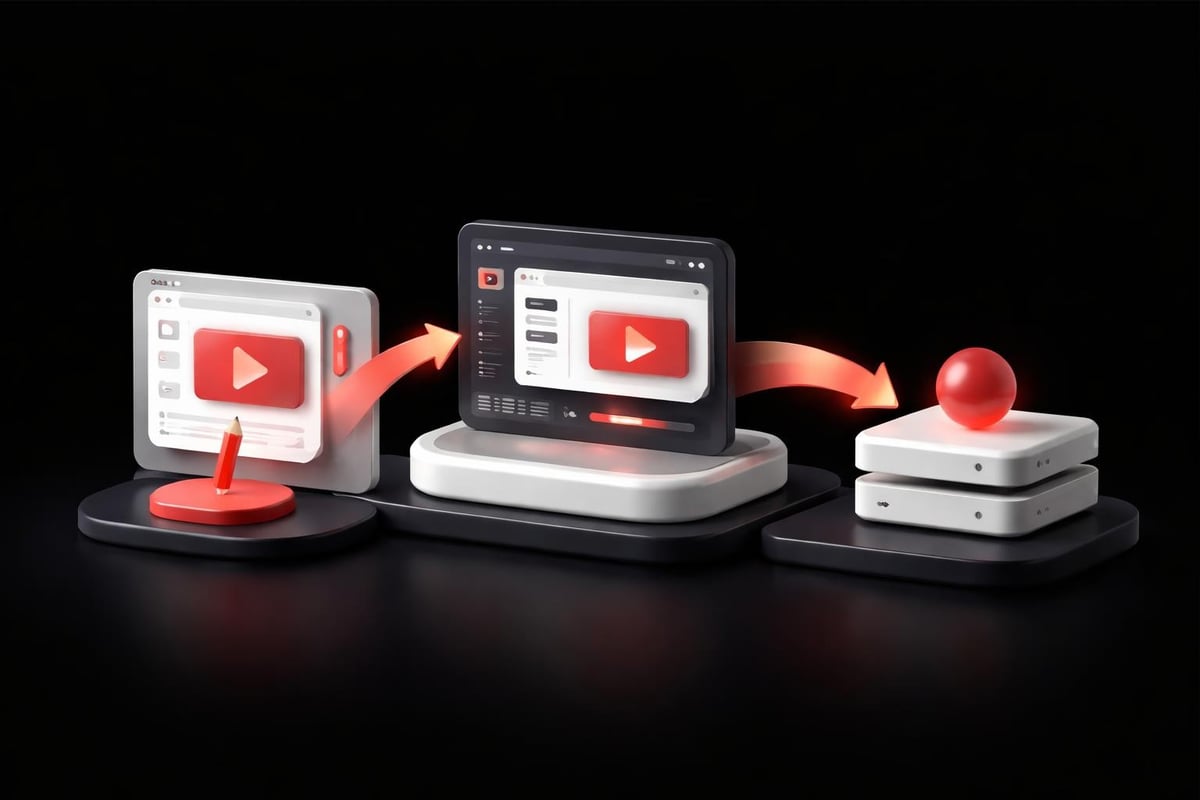
Traditional development requires separate design tools, development environments, and staging servers. Framer collapses this complexity into one integrated platform that accelerates every phase.
Design to Production in Hours
A website development studio working in Framer eliminates the translation phase entirely. Design decisions become production code automatically. This isn't about no-code limitations. It's about removing artificial barriers between creative vision and technical implementation.
The practical workflow:
- Design components with production constraints from the start
- Build interactions using the same system users will experience
- Preview real performance characteristics during design
- Publish directly without code translation
This approach reduces development cycles from months to weeks. More importantly, it enables continuous iteration based on real user behavior. Understanding how Framer works reveals why leading studios have adopted it for startup clients.
Component-Based Scaling
When your business launches new products or enters new markets, you need parallel web experiences fast. A website development studio using systematic component architecture can deploy new properties in days, not months.
Real scenario:
Startup launches enterprise tier alongside existing self-serve product. Traditional approach requires building a separate enterprise site from scratch. Systems approach uses existing components with variant configurations.
- Week 1: Define enterprise messaging and visual differentiation
- Week 2: Configure component variants and build enterprise-specific pages
- Week 3: User testing and refinement
- Week 4: Launch
Same outcome that traditionally takes three months compressed into one month. The components, interactions, and technical infrastructure already exist. The website development studio focuses purely on strategic positioning and content.
Continuous Improvement Over Launch-and-Leave
Websites aren't projects with end dates. They're living systems that require ongoing evolution. The most effective website development studio model treats launch as the beginning, not the conclusion.
The Studio Membership Model
Traditional agency relationships follow a feast-or-famine pattern. You invest heavily in a redesign, launch, then have no budget for iteration. Six months later, conversion rates have declined and the site feels dated.
Alternative approach:
- Initial foundation sprint (4-6 weeks)
- Ongoing monthly retainer for continuous optimization
- Rapid response to market changes and user feedback
- Regular conversion analysis and systematic improvement
This model aligns studio incentives with client success. The website development studio isn't incentivized to recommend full redesigns every year. They're motivated to make the existing system perform better continuously. This philosophy underpins why studio membership models work for growth-stage companies.
Data-Driven Iteration Cycles
Every two weeks, review performance data and deploy improvements. This cadence keeps the site responsive to market dynamics without destabilizing the user experience.
| Metric Category | Review Frequency | Action Threshold |
|---|---|---|
| Conversion rates | Weekly | 10% variance from baseline |
| Page performance | Daily | Load time over 1.5s |
| User flow drop-off | Bi-weekly | 15% abandonment increase |
| Feature engagement | Monthly | Usage below 30% of projections |
A strategic website development studio builds measurement into every component. You're not guessing what works. You're responding to clear signals with systematic improvements.
Choosing the Right Development Partner
Not every website development studio operates with this level of strategic thinking. Most still follow the old model: take requirements, build to spec, invoice, disappear.
Evaluation Framework
When assessing potential partners, look beyond portfolio aesthetics. Focus on process, systems thinking, and business alignment.
Critical questions to ask:
- How do you handle design-development handoffs? (Red flag if they have handoffs)
- What's your approach to performance optimization? (Should be foundational, not optional)
- How do you integrate AI into workflows? (Should be specific, not buzzwords)
- What does post-launch support look like? (Should include continuous improvement)
- How do you measure conversion success? (Should have clear KPIs and tracking)
Studios that can't answer these questions with specific methodologies aren't equipped for modern product development. The principles outlined in web development best practices emphasize the importance of collaboration and systematic approaches.
Red Flags and Green Flags
Avoid studios that:
- Promise "custom design for every page" without mentioning systems
- Separate design and development into sequential phases
- Don't discuss performance metrics until you bring them up
- Offer fixed-price projects with no ongoing relationship
- Can't explain their approach to AI integration
Prioritize studios that:
- Lead with systems thinking and scalable architecture
- Demonstrate integrated design-development workflows
- Make performance guarantees part of the contract
- Propose ongoing partnership models
- Show specific AI workflow implementations
The distinction determines whether you're buying a website or building a growth engine. For startups, this difference directly impacts runway and scale velocity.
Real-World Application: Startup Scenario
Consider a Series A SaaS startup preparing for their next funding round. Their current site converts at 2.3%. Industry benchmark is 4.1%. They need to demonstrate traction to close their round.
Traditional Studio Approach
Timeline: 4-5 months
- Discovery and requirements (3 weeks)
- Design mockups and revisions (6 weeks)
- Development and QA (8 weeks)
- Launch and monitoring (2 weeks)
- Post-launch fixes (ongoing)
Total investment: $85,000-$120,000. Result: New site that looks better but conversion improvement uncertain. No bandwidth for rapid iteration based on early performance data.
Modern Website Development Studio Approach
Timeline: 6-8 weeks initial, then continuous
- Strategic foundation sprint: business goals, user research, conversion framework (1 week)
- Design system build: components, interactions, content architecture (2 weeks)
- Production implementation with real content and integrations (2 weeks)
- Performance optimization and conversion tracking setup (1 week)
- Launch with ongoing monthly optimization retainer
Initial investment: $45,000-$65,000 plus $8,000-$12,000 monthly. Result: Live site in half the time, with systematic monthly improvements driven by actual conversion data. This is the approach detailed in our corporate website development guide.
Performance outcomes after 90 days:
- Conversion rate increased from 2.3% to 3.8%
- Page load time reduced from 3.2s to 1.1s
- Mobile conversion improved 127%
- Cost per acquisition decreased 34%
The difference isn't just timeline and budget. It's the compounding value of continuous improvement versus one-time delivery.
The Technical Stack Decision
Your website development studio's technology choices directly impact what's possible long-term. Legacy platforms create technical debt. Modern approaches create strategic advantage.
Platform Considerations
WordPress/Traditional CMS:
- Extensive plugin ecosystem but performance overhead
- Requires ongoing security updates and maintenance
- Separation between design and front-end creates handoff friction
- Difficult to implement sophisticated interactions without custom development
React/Vue Custom Build:
- Maximum flexibility but significant ongoing development cost
- Requires dedicated engineering team for updates and improvements
- Excellent performance when optimized correctly
- Steep learning curve for content team
Framer/Modern Integrated Platforms:
- Design and production environment unified
- Built-in performance optimization and hosting
- Component-based architecture native to platform
- Content team can make updates without developer intervention
- AI-assisted workflows integrated at platform level
The right choice depends on team structure, budget model, and growth trajectory. For most startups, platforms that reduce dependency on specialized developers accelerate iteration and reduce costs. This connects to broader trends in high-end web design where integrated tools enable better outcomes.
Integration Architecture
Your website doesn't exist in isolation. It connects to CRM, analytics, marketing automation, and product platforms. A sophisticated website development studio architects these integrations for reliability and performance.
Critical integration patterns:
- Analytics and tracking: Implement event tracking that maps to business KPIs, not vanity metrics
- CRM sync: Ensure lead data flows to sales team with complete context
- Marketing automation: Connect user behavior to targeted communication workflows
- Product platforms: Create seamless transitions between marketing site and product experience
Poor integration architecture creates data silos and friction. Strategic integration creates a unified view of the customer journey that enables intelligent optimization.
The Future of Website Development Studios
The gap between commodity website builders and strategic development partners is widening. As AI commoditizes basic implementation, the value shifts to systematic thinking, conversion optimization, and continuous improvement.
Emerging Capabilities
AI-driven personalization at scale:
Website development studios will build adaptive experiences that customize content, layout, and interactions based on user signals. Not basic A/B testing, but intelligent systems that optimize in real-time.
Voice and multimodal interfaces:
As interaction patterns evolve beyond clicks and taps, studios that understand conversational UI and ambient computing will build the next generation of web experiences.
Performance as competitive moat:
With Core Web Vitals directly impacting search rankings, performance optimization becomes a primary differentiator. Studios that build speed into system architecture will deliver measurable SEO advantages.
The studios that thrive won't be the ones with the biggest teams or flashiest portfolios. They'll be the ones that treat website development as strategic product development, bringing design systems thinking, AI-augmented workflows, and continuous optimization to every client relationship.
Skills That Matter in 2026
Technical proficiency is table stakes. The differentiated website development studio brings:
- Systems architecture thinking: Building scalable foundations rather than one-off solutions
- Conversion psychology: Understanding why users behave the way they do
- Performance engineering: Making speed a core design constraint
- AI workflow integration: Using automation strategically without losing creative control
- Business metric literacy: Speaking the language of revenue, not just design principles
These capabilities transform website development from a cost center into a growth driver. When your studio partner thinks this way, the relationship becomes strategic rather than transactional. For deeper insights into this approach, explore our thoughts on design of web in the modern era.
Modern website development studios don't just build sites. They architect conversion engines built on systematic design foundations, AI-augmented workflows, and continuous optimization cycles. The difference between commodity web development and strategic partnership is the difference between having a digital brochure and owning a scalable growth system. Embark Studio™ partners with startups to build exactly these kinds of high-performance web experiences, combining design systems thinking with AI-assisted workflows to help founding teams move faster and drive measurable growth. If you're ready to treat your website as a strategic asset rather than a marketing expense, let's build something that compounds value with every interaction.
Get articles like this in your inbox
Practical design and growth insights for founders. No spam, unsubscribe anytime.


