

Most websites today look sleek, but only a few truly stand the test of time. Why do some digital experiences linger in memory, while others fade the moment you click away?
In this guide, we break down the latest design website trends for 2026, going beyond surface visuals. You’ll explore what makes digital design resonate, how user psychology shapes engagement, and where AI fits in creative workflows.
Whether you’re building your first site or rethinking a brand, you’ll find practical strategies, real-life examples, and a blueprint for future-proof web experiences. Let’s uncover what makes design work—and how to build lasting impact.
The Psychology Behind 2026’s Website Design Trends
Why do some websites feel instantly credible, while others fade from memory? The answer lies deeper than surface trends. The latest design website approaches for 2026 are grounded in psychology, not just aesthetics. In this section, we unpack why clarity, rhythm, and emotional resonance drive engagement, and how systems thinking creates websites that stand the test of time.
Why Timeless Design Outperforms Trend Chasing
Many designers chase the latest design website trends, but timeless sites rely on principles that never go out of style. Clarity, rhythm, and depth create lasting impact—fleeting tricks cannot compete. When users land on a page with clear structure, their cognitive load drops. They find what they need faster, and feel in control.
Visual hierarchy is the secret weapon. Well-placed white space, strong contrast, and subtle motion guide the eye and reduce friction. For example, fintech and ecommerce UIs in 2026 use minimalist layouts with bold accent colors, making navigation effortless and actions obvious. Data shows that sites with clear structure see engagement rates jump by 30 percent.
The science supports this. As outlined in the Aesthetic–usability effect, users perceive attractive interfaces as easier to use, which builds trust and keeps them coming back. The latest design website strategies must prioritize these timeless psychological cues.
Emotional Resonance: Designing for Trust and Connection
A website should not just function, it should connect. The latest design website techniques use color psychology to evoke the right emotions and prompt action. Choosing calming blues or energetic oranges can shift a user's mood instantly.
Micro-interactions and gentle animations add delight without becoming a distraction. Imagine a portfolio landing page for a creative agency: subtle hover effects on project cards, animated transitions between sections, and a color palette that signals credibility at first glance. These cues, according to research from Nielsen Norman Group, increase perceived trustworthiness and drive conversions.
The magic is in the details. When designers craft every interaction and visual element with intention, users feel understood. The latest design website experiences win by building genuine connections—one subtle cue at a time.
Rhythm and Flow: Creating Seamless User Journeys
Great websites tell a story from landing to conversion. Rhythm is the unsung hero behind the latest design website success stories. It is about creating visual predictability, so users always know what comes next.
Designers use repetition, pacing, and progressive disclosure to guide exploration. For instance, travel agency and real estate sites in 2026 reveal information step by step—first a breathtaking hero image, then key details, then a clear call to action. This approach reduces bounce rates and encourages deeper engagement.
Storytelling is woven into every UI choice. Motion cues, repeating elements, and thoughtful pacing create a seamless journey. When rhythm is embedded in the system, users feel invited to explore—and are far more likely to convert.
Core Aesthetics and Visual Trends Shaping 2026
What makes a latest design website instantly memorable? In 2026, surface-level polish alone is not enough. The real impact comes from a blend of cinematic minimalism, purposeful motion, evolved color, and AI-driven visuals. Each element works together to create sites that feel alive, trustworthy, and future-proof.
Cinematic Minimalism and Bold Typography
The latest design website trends are defined by clarity. Large, expressive type and immersive editorial layouts strip away distractions, guiding the eye with intention. Minimalism is not about emptiness, but about focus — every element earns its place.
Consider an architecture agency site: oversized headlines, sharp contrast, and generous whitespace let projects shine. News portals now use dynamic fonts and grid structures to deliver stories with gravitas and ease. Less visual noise means users make decisions faster and stay longer.
For a deeper dive into these evolving aesthetics, see the 2026 Website Design Trends Guide.
Fluid Motion and Micro-Interactions
Motion is now a core language for the latest design website. Subtle transitions, hover states, and animated cues direct attention without being overwhelming. Motion gives feedback, sets rhythm, and reveals content in digestible steps.
Picture a fintech dashboard: data points animate into view, onboarding flows guide with soft fades, and micro-interactions confirm every action. These touches build trust and keep users engaged. The right motion transforms browsing into a seamless, story-driven experience.
Color Evolution: From Gradients to Hyper-Realism
Color stories are richer on every latest design website. Flat tones have given way to layered gradients, soft textures, and hyper-real highlights. 2026 palettes often balance calming blues, energetic oranges, and organic transitions inspired by nature.
NFT and e-commerce landing pages use vibrant gradients to create mood and hierarchy. Color is not just decoration — it signals emotion, brand values, and call-to-action urgency. Sites that master color psychology stand out and connect instantly.
AI-Generated Visuals and Dynamic Content
AI is a creative accelerator for the latest design website. Hero sections, backgrounds, and product visuals are now generated on demand, letting teams move faster while keeping control over mood and narrative.
Fashion and skincare brands deploy AI-generated campaigns, updating imagery with seasonal trends or real-time data. Designers remain the storytellers, using AI to scale assets while ensuring every visual matches the overall brand system. This blend of human direction and machine efficiency is shaping the next wave of web experiences.
Systems-Driven Design: Building for Scale and Consistency
A common misconception is that the latest design website trends are just about fresh visuals. In reality, what sets leading digital experiences apart is a system-driven approach. When every element is intentional and reusable, brands achieve both consistency and rapid evolution.
Design Systems: The Backbone of Future-Proof Web Experiences
The strongest foundation for any latest design website is a robust design system. Design systems are more than style guides—they are living toolkits of components, tokens, and rules that create clarity and rhythm across every touchpoint.
Clarity comes from using consistent patterns for navigation, typography, and buttons. Rhythm emerges when these elements repeat predictably, reducing cognitive load and helping users feel at home.
For example, a fintech dashboard built on a scalable system can quickly launch new features while maintaining brand integrity. According to the Scalable Design Systems for 2026 guide, brands with strong systems see faster rollout and better user trust.
Systems thinking means investing in architecture, not just screens. It is the path to long-term growth and effortless updates.
Framer and No-Code Workflows: Speed Meets Flexibility
Speed has become crucial in 2026. Framer and no-code platforms empower teams to bring the latest design website ideas to life without bottlenecks.
No-code bridges the gap between designers, developers, and marketers. Instead of waiting weeks for changes, startups can launch and refine landing pages in hours. Framer allows live prototyping, so teams see interactions and flows instantly.
Picture a SaaS brand iterating on their onboarding flow. With a modular system and no-code tools, they test layouts, gather feedback, and optimize—without breaking consistency. This agility is critical for brands competing in fast-moving markets.
Embedded Partnerships and Continuous Improvement
The latest design website is never a static product. High-velocity teams now favor embedded design partnerships over one-off projects.
Ongoing collaboration means designers are part of the product team, iterating weekly based on analytics and real-world feedback. Investor-backed startups thrive with this approach, measuring growth and adapting continuously.
Continuous improvement is not a trend, it is a necessity for digital leaders.
How Embark Studio™ Powers High-Performance Websites
Embark Studio™ partners with product teams to design, build, and optimize conversion-focused sites. Leveraging Framer, AI-driven workflows, and a systems-first mindset, Embark delivers scalable, cinematic experiences.
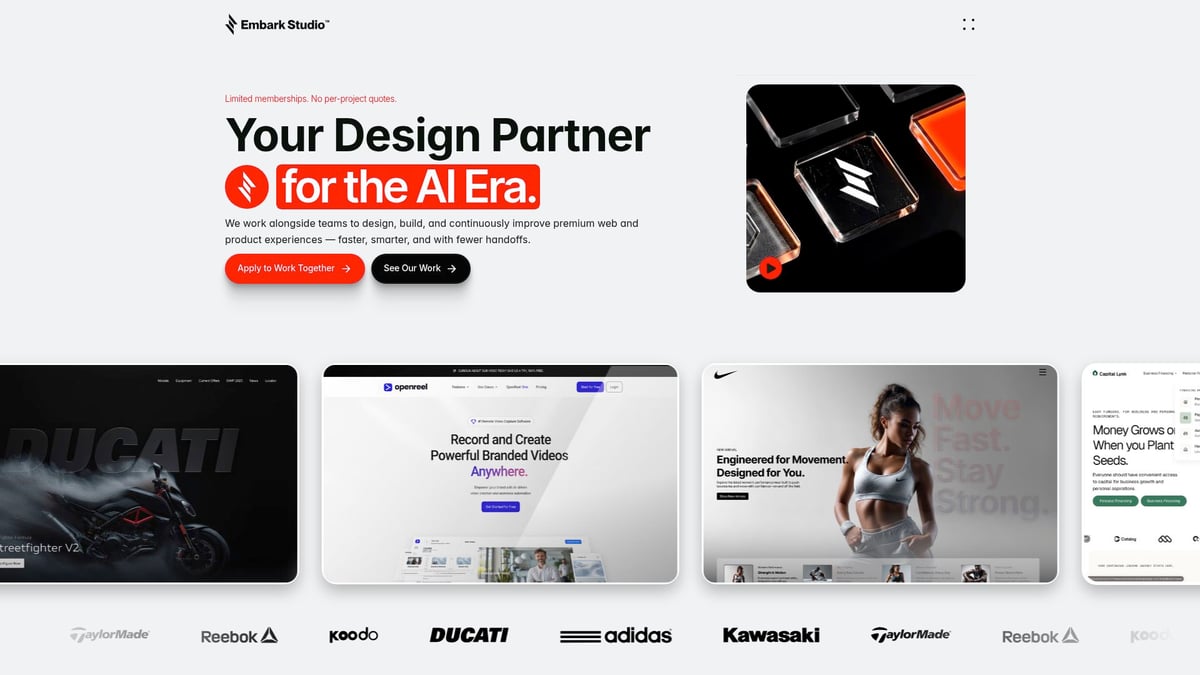
For startups seeking clarity, speed, and ongoing improvement, this studio approach is the blueprint for the latest design website success.
The Role of AI in Creative Web Design Workflows
AI in web design sparks debate. Many assume it will replace designers, automating the creative process and removing the human touch. The reality is more nuanced. The latest design website projects leverage AI not to dictate style, but to unlock speed, insight, and personalization at scale.
Accelerating (Not Replacing) Human Creativity
Too often, teams mistake AI for a shortcut to instant results. The truth is, the latest design website successes come from a balance. AI serves as a co-pilot, streamlining repetitive tasks like asset generation, layout suggestions, and pattern recognition.
Imagine a designer refining a homepage. AI proposes several hero image options, identifies layout inconsistencies, and surfaces relevant user data. The designer curates, judges, and elevates these raw materials into a cohesive vision.
This partnership frees up time for deeper creative thinking. According to Human-Centered AI Design Best Practices, successful teams use AI for efficiency, but always reserve the final say for human intuition and storytelling. The result is a workflow where clarity and rhythm outweigh fleeting trends.
Personalization and Dynamic User Experiences
AI transforms static sites into living experiences. The latest design website strategies use AI-driven personalization to adapt content, visuals, and offers in real time. For example, an e-commerce UI might adjust its color palette or recommended products based on a visitor’s browsing history or purchase intent.
This dynamic adaptation leads to higher engagement and conversion rates. Data shows that when websites personalize the journey, conversions can rise by up to 20 percent.
In practice, designers set the guardrails and tone. AI supplies the variations, but human oversight ensures each experience feels intentional, not random. The best sites in 2026 will make every visitor feel seen, heard, and understood.
Ethical Considerations and Authenticity
With great power comes greater responsibility. Over-automation can strip a brand of its unique voice. The latest design website projects maintain authenticity by balancing automation with curated, intentional design.
Designers act as editors, filtering AI-generated suggestions to ensure the result feels crafted. Subtle cues—consistent tone, meaningful imagery, and purposeful motion—signal trustworthiness and care. The most memorable experiences never feel generic, even when powered by sophisticated AI.
AI in Collaboration and Feedback Loops
AI also accelerates collaboration. Tools generate rapid prototypes, run user tests, and analyze feedback at speed. This means designers can iterate quickly, respond to real user needs, and launch improvements faster than ever.
Ultimately, the future lies in systems thinking. The most effective teams use AI to build frameworks for clarity, rhythm, and continuous growth. To see how these principles come to life, explore the frameworks and toolkits behind our studio’s process.
Step-by-Step: Designing a Future-Ready Website in 2026
Building a future-ready site isn’t just about following the latest design website trends. Many teams chase aesthetics, but true longevity comes from a process that blends psychology, systems, and cinematic clarity. Here’s a blueprint for creating digital experiences that feel both timeless and cutting-edge.
1. Define Purpose and Audience
Start by clarifying why your product exists and who it serves. Use empathy mapping and journey frameworks to pinpoint business goals and user needs. This step is the foundation for any latest design website project, ensuring every creative decision aligns with measurable outcomes.
2. Architect a Scalable Design System
Create component libraries, style guides, and detailed documentation. This system supports flexibility as your content evolves. By prioritizing structure over screens, you build consistency across products and campaigns. For more on how this approach aligns with broader trends, see Web Design Trends 2026.
3. Craft Cinematic Visuals and Clear Hierarchies
Use bold typography, immersive visuals, and intentional white space. Establish hierarchy through rhythm and flow, making navigation feel effortless. Picture an architecture agency’s homepage—expressive fonts paired with editorial layouts—where each scroll reveals depth and narrative.
4. Integrate AI for Speed and Personalization
Leverage AI tools to accelerate asset creation, suggest content, and drive A/B testing. The latest design website experiences now adapt in real time, tailoring content to each visitor. For instance, e-commerce platforms use AI-Powered Hyper-Personalization to increase conversion rates by adjusting visuals and offers dynamically.
5. Prototype, Test, and Iterate Rapidly
Utilize platforms like Framer for live prototyping and user testing. Gather feedback early, analyze behavioral data, and refine journeys. Fintech dashboards, for example, iterate weekly—testing animated data transitions and onboarding flows—to optimize clarity and engagement.
6. Launch, Measure, and Continuously Improve
Set clear KPIs for engagement, conversion, and retention. Schedule regular design sprints, using analytics to inform every update. The latest design website is never static; it’s an evolving system that adapts as your users and market shift.
7. Reference: Studio Frameworks for Ongoing Success
Adopt systems thinking—clarity, consistency, and rhythm should guide every iteration. Explore advanced frameworks and toolkits to support high-performance web design. This approach, inspired by Embark Studio™, ensures your site stays ahead of the curve.
Real-World UI Examples: What Works in 2026
Which website UIs truly stand the test of time? Many try to follow the latest design website trends, but only a few deliver trust, clarity, and seamless journeys. Below, see how top performers in 2026 blend psychology, rhythm, and AI-powered workflows into results-driven digital experiences.
Fintech and E-Commerce: Balancing Trust and Conversion
The latest design website standards for fintech and e-commerce demand more than sleek visuals. Users expect secure flows, bold calls to action, and transparent pricing.
- Clear onboarding steps reduce cognitive friction.
- Animated data transitions build trust by showing real-time updates.
- Visual hierarchy ensures users never feel lost.
Smart use of white space and contrast guides attention. AI helps automate data visualization, but designers set the narrative, keeping every detail on brand.
Creative Portfolios and Agencies: Storytelling Through Design
In creative portfolios, the latest design website approach centers on narrative-driven layouts and immersive visuals. Minimal navigation keeps focus on the work, while micro-interactions add delight.
- Interactive case studies invite exploration.
- Color psychology is used to build instant credibility, as explored in the Psychology of Color in Web Design.
- Cinematic whitespace and bold type set the rhythm.
AI speeds up asset prep, but story remains king. Studio systems ensure consistency across every project touchpoint.
SaaS and Product Platforms: Systems at Scale
For SaaS, the latest design website principles mean modular components and adaptive layouts. Onboarding is seamless, with customizable widgets and intuitive feedback loops.
- Dashboards evolve with user needs, not just static screens.
- Real-time data and notifications keep users engaged.
- AI supports rapid prototyping and user testing, but human oversight preserves clarity.
Systems-driven design allows teams to iterate fast, scale easily, and maintain a unified brand presence.
Niche Markets: Hyper-Personalization and Micro-Interactions
Travel, real estate, and NFT platforms leverage the latest design website ideas for dynamic content and personalized offers. Here, micro-interactions and subtle motion are key.
- Landing pages adapt in real time based on user behavior.
- Animated transitions guide users through complex decisions.
- As discussed in Motion Design Becomes Functional, motion design enhances usability and deepens engagement.
AI personalizes visuals and offers, but designers create the underlying flow. The result: memorable, conversion-focused experiences.
Systems thinking makes all the difference. For frameworks that drive clarity and growth, explore the Embark Studio™ approach to high-performance design.
We’ve explored how the right design systems, AI-assisted workflows, and a focus on clarity can set your website apart in 2026. If you’re ready to move beyond trends and build a high-performance site that grows with your startup, why not take the next step? Let’s chat about how we can help you design and launch web experiences that truly resonate—combining cinematic visuals, smart systems, and continuous improvement. You don’t have to figure it all out alone. Book a free, no-pressure call with our team to explore what’s possible for your next digital product.
Get articles like this in your inbox
Practical design and growth insights for founders. No spam, unsubscribe anytime.


