

Most web product ideas never reach their potential. The problem is rarely technology. Instead, what holds them back is a lack of true differentiation and design depth. In a world crowded with apps, standing out requires more than just features.
In 2026, the web product landscape will reward clarity, rhythm, and relentless value. Users crave outcomes, not just tools. Design psychology, seamless systems, and meaningful experiences will separate leaders from noise.
This article reveals seven real-world web product ideas built for this new era. We’ll explore why they work, how AI accelerates their workflow, and the design logic founders should borrow. Think of this as a blueprint, not just inspiration—a toolkit you can adapt, powered by the evolving systems thinking at Embark Studio™.
What Makes a Web Product “Inspiring” in 2026?
Most founders believe a web product succeeds because of clever features or technical novelty. In reality, what sets an inspiring web product apart in 2026 is a deep commitment to outcomes, clarity, and rhythm. The bar for digital experiences is higher than ever. What does it take to truly stand out?
The Shift from Features to Value Systems
In 2026, users no longer flock to the web product packed with the most features. Instead, they choose platforms that deliver clear outcomes and fit into their daily rhythms. The psychology behind this shift is simple: people trust products that make their lives easier, not more complicated.
Consider Netflix. Its interface is so effortless, you barely notice the design. Google’s search is reliable every time, creating a habit loop. Product Hunt’s community-driven approach makes discovery personal and meaningful. Each web product succeeds because it builds trust through clarity and consistency.
When designing, ask: what outcome does my web product deliver, and how does it fit into the user’s life? It’s not about piling on features, but about creating a system users believe in.
The Role of Design Depth and Clarity
An inspiring web product is more than a pretty interface. Depth comes from intentional choices—visual rhythm, hierarchy, and emotional resonance. Medium, for example, strips away distractions so readers can focus on content. Every margin, font, and interaction is tuned for clarity.
Design depth is about building scalable systems that grow with your audience. For a deeper dive into how this works, see Scalable design systems in 2026. By investing in systems, your web product becomes more than a collection of screens—it evolves into a living ecosystem.
Clarity isn’t just visual. It’s structural. A web product with clear navigation, feedback, and rhythm keeps users engaged and loyal.
AI as a Workflow Accelerator, Not a Replacement
AI in 2026 is a powerful workflow accelerator for any web product, but it doesn’t replace human creativity. Think of AI as your rapid prototyping partner. It can generate layouts, personalize onboarding, and suggest content paths in seconds.
However, the best web product ideas still require systems thinking and creative intuition. Studio teams use AI to test variations, analyze user behavior, and iterate faster. Yet, every decision—what to ship, what to cut—remains in human hands.
Build your web product with AI as a collaborator, not a substitute. The future belongs to those who balance speed with thoughtful design.
The Metrics That Matter in 2026
Vanity metrics are out. In 2026, inspiring web product teams focus on retention, engagement, and network effects. These metrics reveal if your product creates lasting value. According to UserGuiding, products with strong onboarding see over 50 percent higher retention.
| Metric | Why It Matters | Example |
|---|---|---|
| Retention | Drives compounding value | Netflix, Google |
| Engagement | Signals ongoing interest | Medium, PH |
| Network Effects | Accelerates growth | Product Hunt |
Prioritize onboarding, feedback loops, and features that encourage users to return. Build your web product as a system that compounds in value over time, not just a funnel for acquisition.
An inspiring web product in 2026 is never static. It adapts, grows, and evolves. If you want to build systems that last, consider exploring Embark Studio™’s frameworks for the next generation of web products.
7 Inspiring Web Product Ideas to Launch in 2026
What does it really take to build a web product that stands out in 2026? Most attempts fail because they chase features, not outcomes. The truth is, the next wave of inspiring web product ideas are shaped by psychology, design depth, and relentless clarity—not just clever code.
Below, we break down seven real-world web product ideas. For each, you’ll see why it works, how design choices drive engagement, and how AI accelerates but never replaces creative systems. These are the frameworks founders should steal, refine, and launch.
1. Product-Led Onboarding Platforms (UserGuiding)
The first moment users interact with your web product sets the tone for everything after. UserGuiding nails this by making onboarding seamless, interactive, and measurable.
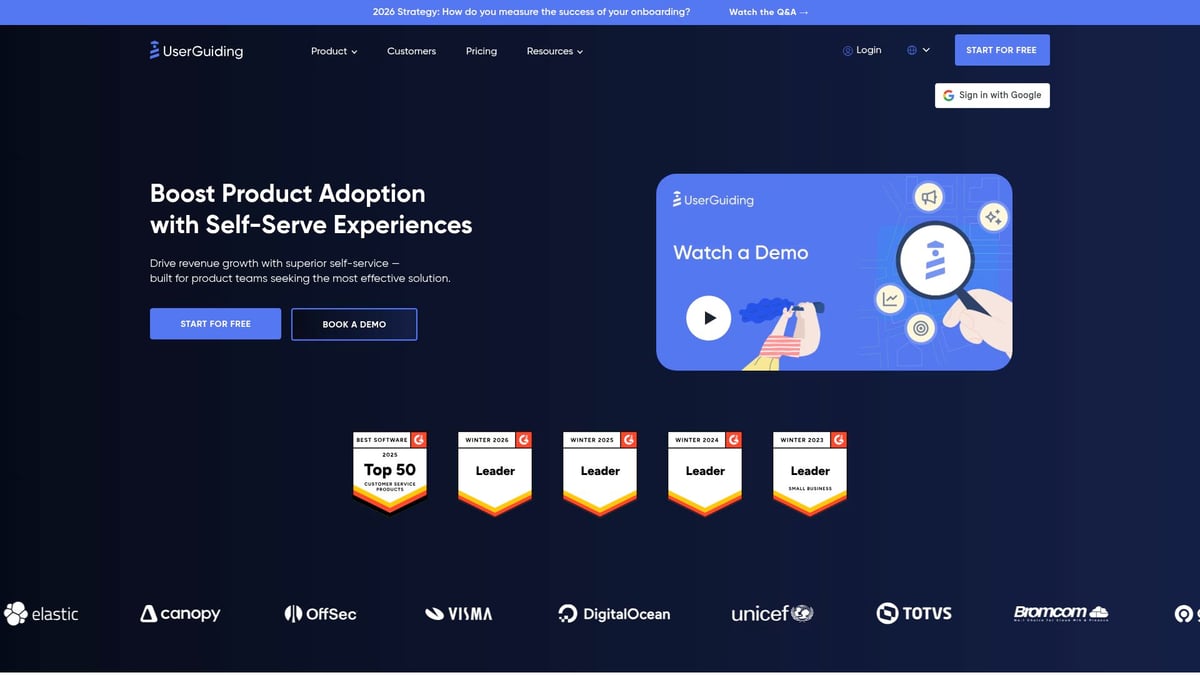
Pricing starts with a freemium model, scaling to $89/month. Features include product tours, onboarding checklists, in-app surveys, and analytics. The no-code setup empowers product teams to iterate quickly, while AI personalizes the onboarding experience based on user behaviors.
Why does this web product idea work? Onboarding is the psychological “first reward”—it builds trust and reduces friction. When onboarding adapts in real time, users feel seen, not just processed.
Studio thinking: Treat onboarding as a living system. Iterate, measure, and evolve it as your web product grows.
2. Embedded Design Partnership for Startups (Embark Studio™)
Building a premium web product is not a one-off sprint. Embark Studio™ transforms design into an ongoing partnership, not a transactional service. Memberships start at $4,000/month, offering high-performance Framer sites, intuitive product design, and scalable brand systems.
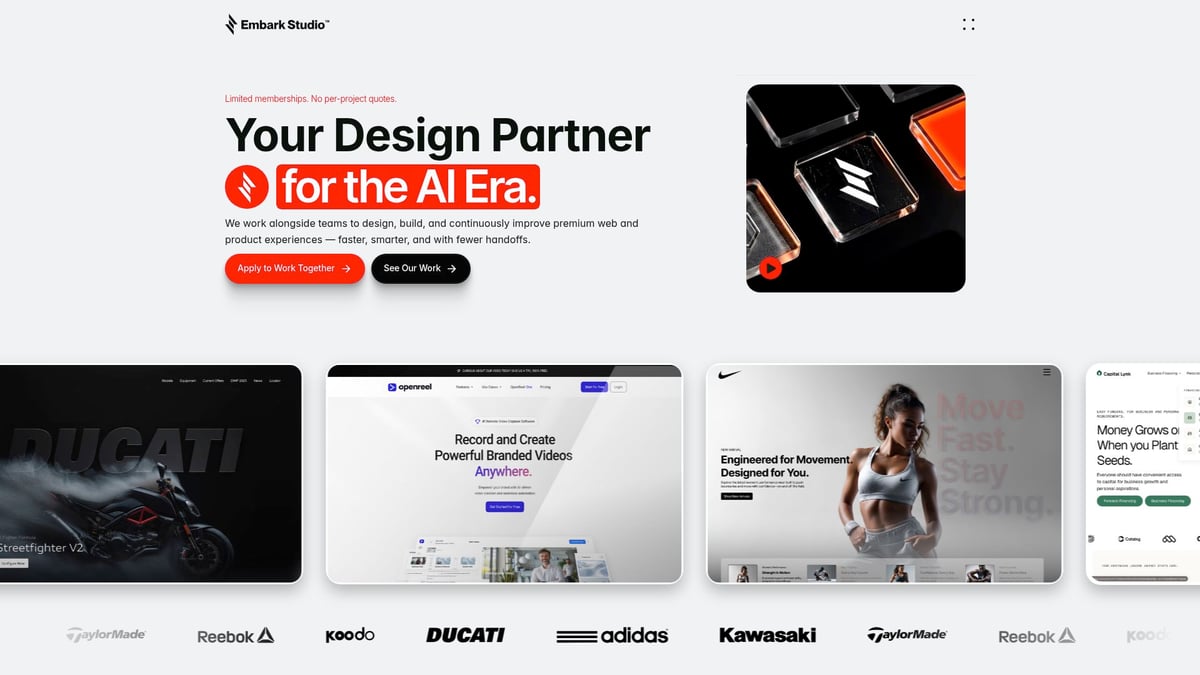
The core benefit is velocity with clarity. Founders get direct access to strategists, rapid iteration, and AI-assisted creative without the drag of traditional agencies. The model suits startups needing continuous evolution, not just a single launch.
AI accelerates asset creation—think instant wireframes, not generic templates. But the real edge is in system thinking: every design choice compounds, building clarity and a brand rhythm users trust.
Studio thinking: Design is a living, breathing process. Outcome-focused systems, not just screens, elevate your web product above the noise.
3. Community-Driven Product Discovery (Product Hunt)
What makes a web product launch go viral? Community. Product Hunt leverages daily launches, upvoting, and curated discussions to create network effects. It’s free for users, with paid options for makers.
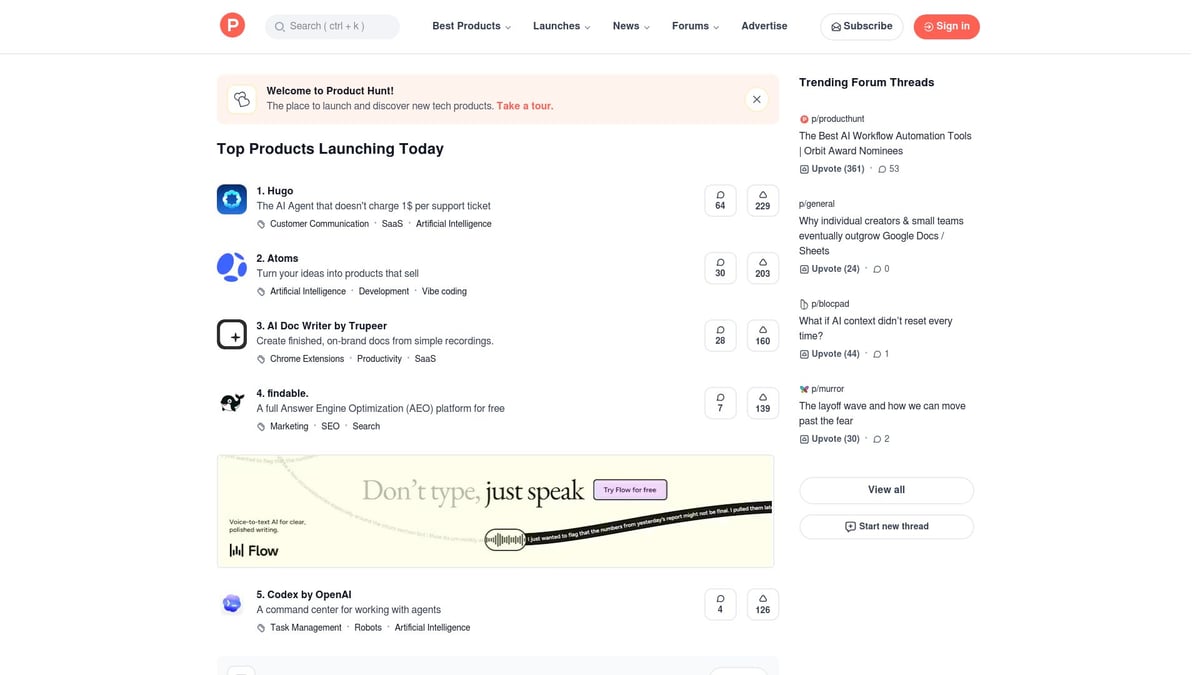
The platform’s magic lies in social proof. New web product ideas gain instant feedback and visibility, while AI personalizes recommendations and spots trends early.
Standing out here requires a differentiated story and a clear value system. Product Hunt’s rhythm—daily, participatory, transparent—builds trust and keeps engagement high.
Studio thinking: Community isn’t an add-on. It’s a compounding engine that can turn your web product into a movement.
4. Interactive Learning Hubs (HubSpot Academy)
Education as a growth lever is more than a trend—it’s a system. HubSpot Academy offers free video lessons, quizzes, certifications, and curated learning paths. The web product is designed for clarity, with actionable skills and recognized credentials.
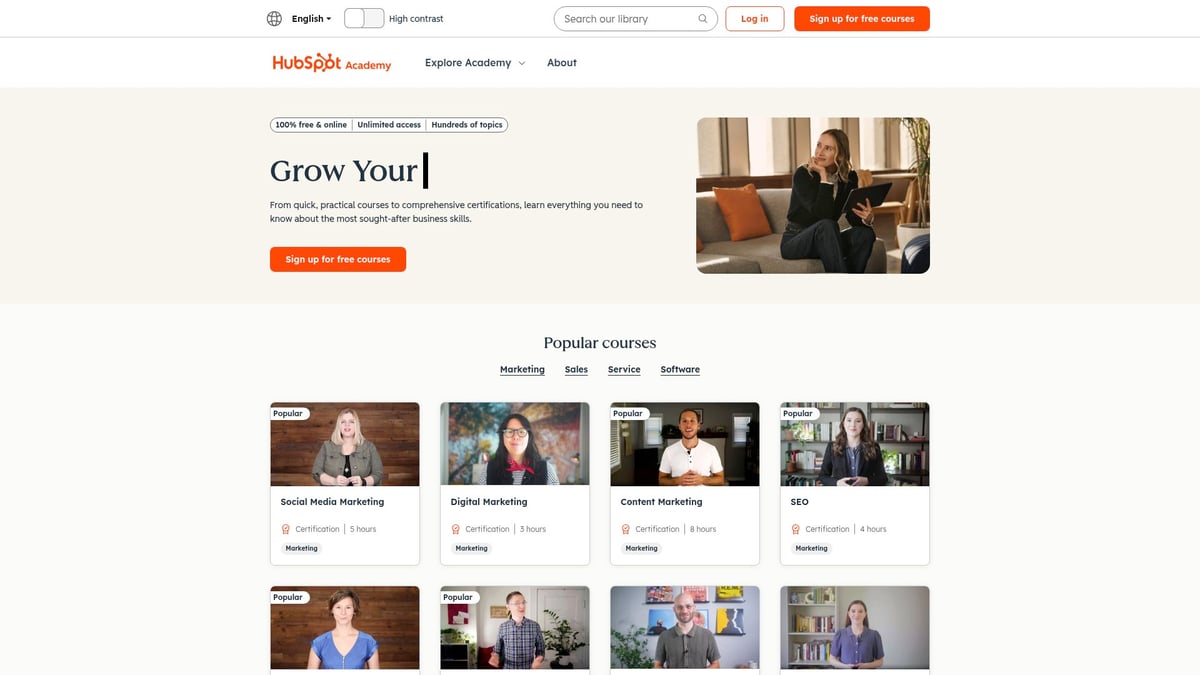
For users, the journey feels guided, not overwhelming. AI adapts learning paths, automates feedback, and keeps content fresh. For brands, it’s a trust-building machine and a powerful lead magnet.
Why does this web product approach work? Because learning is a journey, not a static archive. The design supports habit formation and rewards progress.
Studio thinking: Treat learning as a system. Build journeys that adapt, reward, and evolve with your users.
5. No-Code Web App Builders (Framer)
Speed and iteration are everything when launching a web product. Framer’s no-code builder empowers teams to design, prototype, and ship in record time. Pricing starts free, scaling with usage.
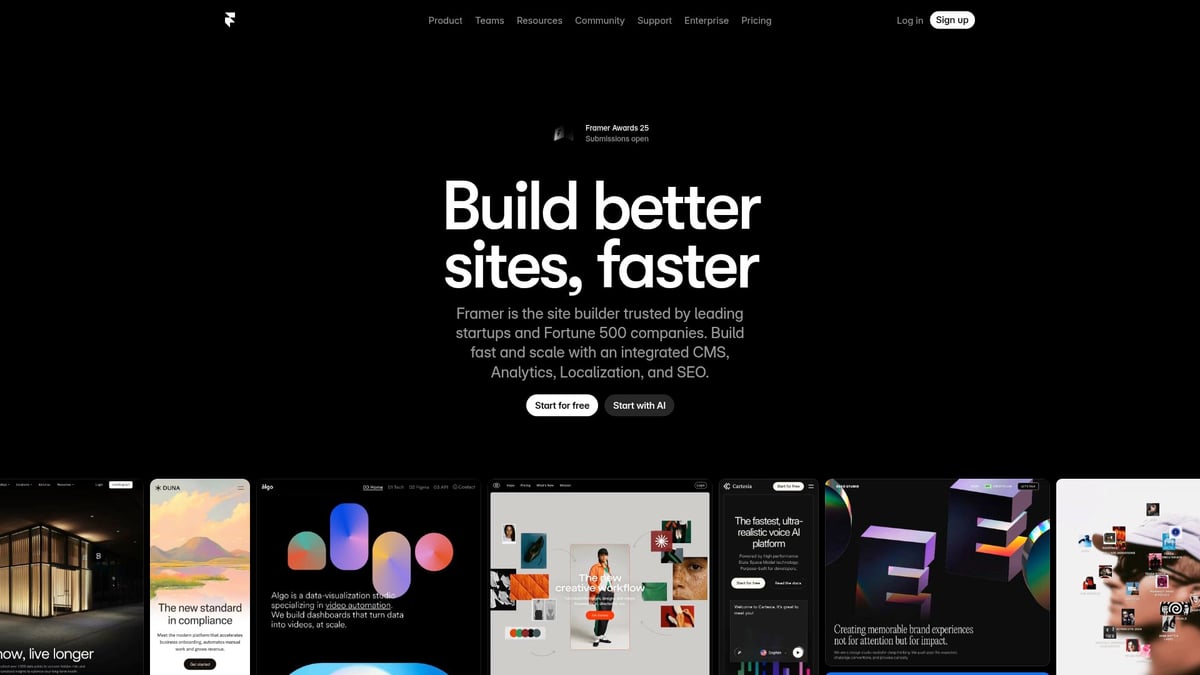
The visual editor and real-time collaboration bridge the gap between design and development. Component libraries and code export make it scalable. AI features like smart layout and auto-responsive design accelerate workflows without boxing in creativity.
What sets this web product apart is flexibility. Teams can move from idea to user-ready UI in hours, not weeks.
Studio thinking: Build systems for scale and flexibility. Let your web product evolve with every iteration.
6. Personalized Content Platforms (Medium)
Medium’s web product is a masterclass in content-first design. Readers get a clean, distraction-free experience, while writers reach a global audience. The business model is simple: free reads for a few articles, then $5/month for unlimited access.
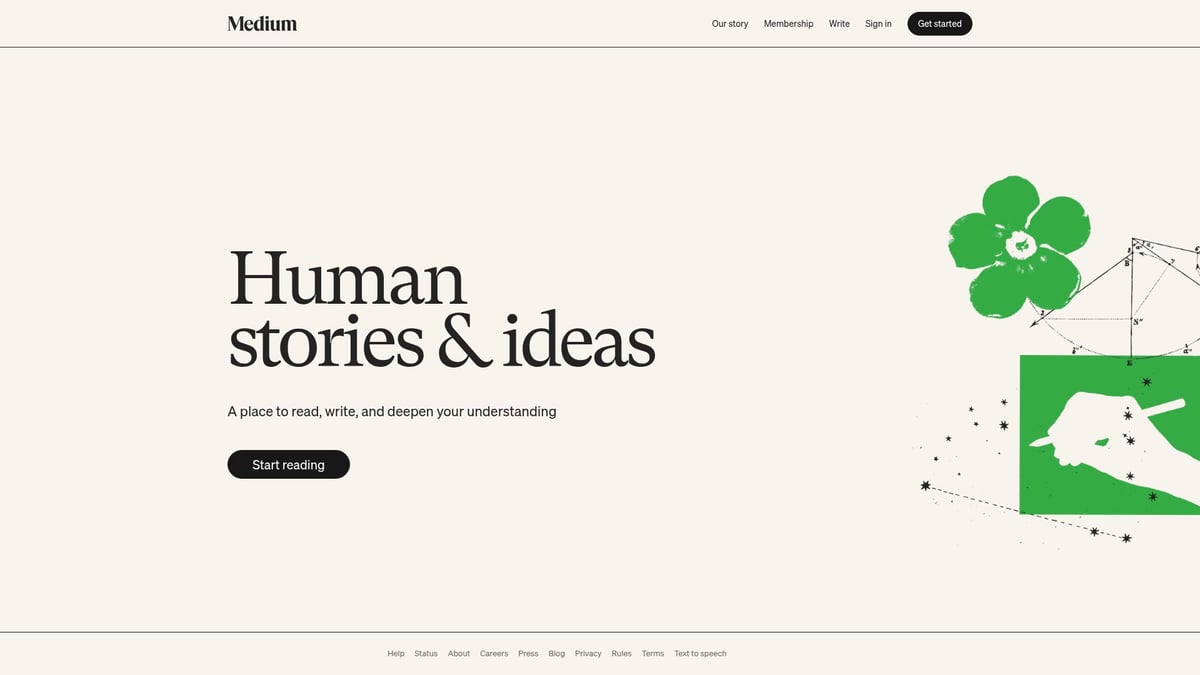
AI powers personalized feeds and topic clustering, making discovery effortless. The real genius is in the clarity—minimal UI, strong typography, and a focus on storytelling.
Medium proves that quality and simplicity drive retention. Writers gain a platform, readers find fresh perspectives, and the web product system learns from every interaction.
Studio thinking: Prioritize clarity in storytelling. Design for content, not clutter.
7. Interactive Assessment Tools (HubSpot Website Grader)
Instant feedback is magnetic. HubSpot Website Grader offers a free web product that analyzes site speed, mobile readiness, SEO, and security. In seconds, users get actionable reports and benchmarks.
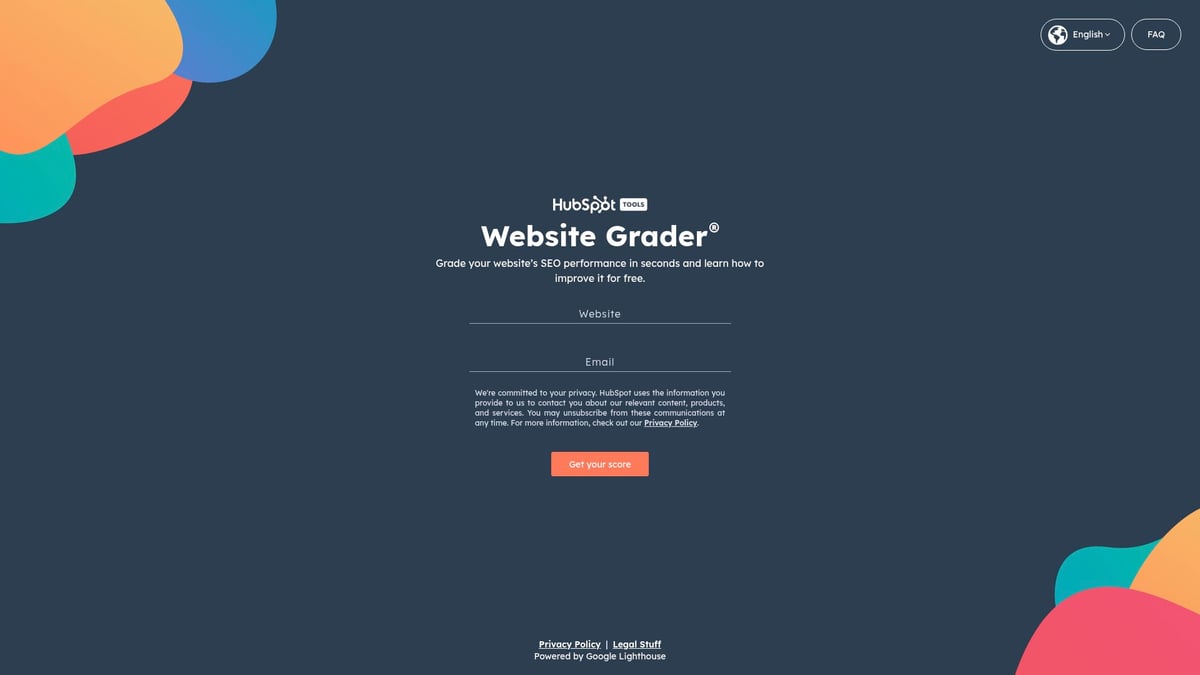
It’s simple, direct, and positions HubSpot as an authority. AI automates the analysis, tailoring recommendations to each user. While less deep than paid tools, its instant value makes it a gateway to further engagement.
The psychology: solve a real pain point, provide immediate clarity, and open the door for deeper relationships.
Studio thinking: Use tools as entry points. Let your web product offer value from the first interaction.
Each of these web product ideas is a system, not a surface. They are built for clarity, rhythm, and compounding value. To dive deeper into how AI accelerates these workflows and shapes the next generation of web product innovation, see this guide to AI in product design trends.
As you build, remember: systems thinking beats feature-chasing every time. Your toolkit is in progress—refine, iterate, and let your web product evolve.
Designing for Retention, Not Just Acquisition
Retention is the silent engine behind every successful web product. Too often, teams chase new signups, believing the next feature will tip the scales. The reality? Growth without retention is a mirage. If your web product fails to keep users coming back, everything else eventually crumbles.
The Psychology of Habit-Forming Products
Why do some web products become daily rituals while others gather digital dust? The answer lies in the Hook Model: Trigger, Action, Reward, Investment.
- Trigger: A notification or need draws users in.
- Action: The user takes a simple step, like clicking or searching.
- Reward: Immediate feedback or delight keeps them engaged.
- Investment: Users contribute—profile info, content, or time—raising their future commitment.
Netflix’s binge-watching loop and Google’s everyday search habit are classic examples. Designing around these cycles ensures your web product becomes part of a user’s life, not just a fleeting utility.
UI Decisions That Drive Engagement
Retention starts at the first click. Progressive disclosure keeps users curious, feedback loops reinforce progress, and micro-interactions create emotional resonance.
For example, interactive onboarding sequences, like those in top SaaS web products, boost retention by over 50%, according to UserGuiding.
Want to dig deeper into what really moves the needle? Explore Enhancing User Engagement Metrics for a breakdown of actionable engagement strategies. Every UI decision should reinforce the rhythm and clarity that keeps users engaged.
Building for Compounding Value
A web product grows stronger when users find more value as the community expands. Network effects, user-generated content, and community-driven features create a flywheel that powers itself.
Product Hunt’s daily launch ecosystem is a perfect case—every new user and launch amplifies discovery for everyone. Design with compounding value in mind, so your web product naturally becomes more indispensable over time.
AI’s Role in Personalization & Retention
AI is transforming retention from guesswork to precision. Real-time recommendations, adaptive interfaces, and predictive nudges help your web product evolve with each interaction.
Imagine onboarding flows that adjust to user behavior, or content feeds that surface just the right story. The result? Systems that feel alive, responsive, and genuinely user-centric.
At Embark Studio™, we believe the future of web product design is about systems, not just screens. For deeper frameworks, see our product design and innovation guide and start building for retention that compounds.
AI-Accelerated Workflows: Moving from Idea to Launch
AI in web product design is often misunderstood. The myth? That AI will replace human creativity. The reality is more nuanced. AI is a catalyst, not a substitute, for the kind of clarity and depth that makes a web product truly stand out.
The real value lies in systems thinking. Effective web product teams use AI to strip away noise and focus on core outcomes. This means building workflows that adapt and evolve, not just automating tasks. Think of it as designing a rhythm, where each element—from onboarding to retention—contributes to a clear, unified experience.
Consider the launch of a new web product. In the past, prototyping meant weeks of static wireframes and feedback loops. Now, with AI-driven tools, teams can move from concept to interactive prototype in days. Framer’s smart layout features and adaptive design suggestions are a prime example. This speed gives designers more time to refine the user journey, not just the visuals.
But acceleration does not mean compromise. AI enables rapid iteration, but the best web product outcomes come from intentional decisions. For instance, onboarding flows can be personalized in real time, responding to user behavior and preferences. This is not about replacing the designer—it is about amplifying their impact. According to AI's Impact on Product Design, AI is already transforming how teams approach ideation and iteration.
Studio thinking is the anchor. Instead of building static screens, founders should focus on systems that adapt as users grow. The most inspiring web product experiences in 2026 will be those that evolve, guided by both data and design intuition. For those seeking a deeper dive into frameworks that elevate both process and outcome, the High-end web design for brands guide offers actionable insights.
If you’re feeling inspired by these product ideas and want to see how a design-driven, system-first approach could accelerate your own startup’s growth, let’s connect. At Embark Studio™, we’re all about building high-performance web and product experiences that move fast, scale smart, and actually drive results—no fluff, just clarity and momentum. Whether you have a raw idea or an MVP ready to evolve, I’d love to hear where you are in your journey and brainstorm how we can help you stand out in 2026’s crowded landscape. Ready to take the next step? Book a Free Discovery Call
Discover 7 inspiring web product ideas to launch in 2026, blending design psychology, AI, and proven frameworks for retention and real-world impact.
Get articles like this in your inbox
Practical design and growth insights for founders. No spam, unsubscribe anytime.


