

In 2026, it’s easy to find a product web design that looks beautiful, yet so many fail to actually convert visitors into loyal customers. The digital landscape is shifting, and what worked before no longer guarantees results.
To stand out, your product web design must go beyond surface visuals. You need clarity, rhythm, and systems that drive real engagement. In this article, we’ll reveal eight product web design trends that merge psychology, real UI decisions, and the latest AI enhancements.
Discover how to future-proof your product web design with strategies focused on conversion, creativity, and scalable systems. Ready to reimagine your digital experience?
The Psychology of Modern Product Web Design
Digital products are everywhere, but why do so many websites fail to stick in your memory? The answer lies in the psychology of design. In the world of product web design, the difference between a site that converts and one that gets ignored often starts with the basics: clarity, rhythm, and emotional resonance.
Why Most Product Websites Struggle to Stand Out
Most product web design projects start with a beautiful template. Yet, many end up feeling almost identical. Overused layouts and generic visuals quickly blur together, making it hard for brands to stand apart.
When a site lacks narrative flow, users rarely remember their first visit. Poor hierarchy means visitors struggle to find what matters—so they leave before engaging. Consider the sea of SaaS landing pages that fail to communicate value in just a few seconds. The psychology is simple: users crave clarity and a sense of rhythm.
Effective product web design is not about adding more visuals or effects. It is about stripping away the unnecessary, so every element supports the story and guides the user toward action.
Core Design Principles for 2026
To move beyond sameness, future-forward product web design will rely on four core principles:
- Depth: Layered visual storytelling creates emotional impact, letting users feel the journey as much as see it.
- Clarity: Every detail, from typography to buttons, must serve a clear purpose and drive decisions.
- Rhythm: Consistent, repeatable patterns guide users smoothly, reducing friction and building trust.
- Trust: Subtle cues, like microinteractions or testimonials, reassure visitors at every step.
For example, a leading e-commerce site reimagined its hero section by simplifying copy, focusing on a single bold image, and adding a testimonial carousel. The result? A 30 percent jump in engagement. In product web design, these principles build systems where every component works together—not just isolated screens.
How AI Accelerates—but Doesn’t Replace—Creative Web Design
AI is transforming product web design workflows at lightning speed. Designers can now generate assets, test layouts, and prototype ideas in minutes instead of days. Yet, the creative spark still comes from human insight.
Imagine using AI to generate ten different hero image variants for a product launch. The tool can analyze which visuals grab attention, but only a designer can weave those assets into a compelling narrative. AI is best used for rapid iteration, not invention.
For deeper integration of human creativity and AI, consider these human-centered AI design principles. Studio thinking means using AI to enhance systems thinking—so teams spend more time refining clarity, rhythm, and emotional depth.
8 Inspiring Product Web Design Trends to Watch in 2026
The future of product web design is cinematic, data-driven, and deeply personal. In 2026, high-converting product sites will be defined not by surface-level trends, but by strategic systems that blend psychology, interactivity, and AI-powered iteration. Let’s break down the 8 leading trends that will set ambitious brands apart.
1. Cinematic Product Storytelling
Forget static hero banners. In 2026, the new hook is immersive cinematic storytelling. Product web design is evolving to unfold like a movie trailer, capturing attention instantly.
Why does this work? Visual narrative creates emotional resonance. Full-bleed hero images and looping video backgrounds provide context and drama. Seamless transitions mimic film editing, guiding users through the product’s story.
Imagine a skincare brand’s homepage: the page scrolls, and each section reveals a new benefit with scroll-triggered animations. The experience feels orchestrated, not random. According to recent studies, 78% of users recall a product better when it’s introduced this way.
AI accelerates this trend by powering rapid video editing and content iteration. Designers use AI to test multiple hero variants, refining narrative flow with data, not guesswork.
Studio thinking: modular storytelling blocks allow teams to update or swap scenes, keeping the story fresh. In 2026, product web design is about crafting a journey, not just showing a product.
2. Hyper-Personalized User Journeys
Generic flows are out. Hyper-personalization is the new standard in product web design. Dynamic content adapts to each user’s behavior and intent, making every visit feel unique.
Why does this matter? Personalized journeys reduce friction and increase relevance. Smart onboarding flows change based on previous actions. E-commerce sites now rearrange featured products in real time, responding to user signals.
For example, a returning customer sees tailored recommendations and pre-filled forms. Data shows personalization can boost conversion rates by up to 35%.
AI enables real-time segmentation and predictive content, ensuring each interaction is meaningful. Instead of static flows, designers map flexible journey systems that evolve with user needs.
Studio thinking: treat journey maps as living documents, not one-time diagrams. The best product web design teams iterate on these flows constantly, turning visitors into loyal users.
3. Framer-Powered No-Code Web Systems
Speed is everything in modern product web design. The rise of no-code tools like Framer empowers designers to launch, test, and iterate without waiting on developers.
How does this shift impact process? Designers can now ship high-fidelity prototypes as production-ready sites. SaaS startups update landing pages daily, responding instantly to user data and campaign results.
The benefit: fewer handoffs, faster iterations, and higher design velocity. Teams build reusable design systems instead of isolated screens, enabling scalable growth.
AI supercharges this workflow with automated component generation and layout testing. Designers use AI to generate variants and optimize performance in real time.
Studio thinking: prioritize systems over screens. For inspiration, explore Framer-powered web design inspiration to see how leading teams leverage this approach.
4. Microinteractions and Motion for Depth
Depth is not just visual—it's interactive. In 2026, microinteractions and subtle motion cues define product web design excellence.
What makes microinteractions powerful? They guide users, reduce cognitive load, and communicate quality. Hover states, animated buttons, and real-time feedback turn static pages into responsive experiences.
Consider a product configurator with live visual updates as users tweak options. This small detail keeps users engaged and confident. Studies show sites with microinteractions see 20% higher engagement.
AI-generated motion presets help teams maintain a consistent brand style across the product web design system. Designers select from tailored animation libraries, ensuring every interaction feels intentional.
Studio thinking: treat motion as a system, not a last-minute add-on. Build reusable motion patterns that support clarity and rhythm.
5. AI-Enhanced Visual Storytelling
AI is becoming an essential creative partner in product web design. It accelerates asset creation, making it possible to deliver fresh, on-brand visuals at scale.
Designers now use AI to generate unique imagery, composite product shots, and background scenes. For seasonal campaigns, teams can iterate on hero images rapidly—testing dozens of options without sacrificing consistency.
This approach leads to faster creative cycles and a more cohesive visual identity. AI is not replacing creativity, but enhancing it by handling repetitive tasks and providing inspiration.
Studio thinking: integrate AI as a creative accelerator within your workflow. Your product web design team should focus on concept and narrative, letting AI handle the heavy lifting.
6. Accessibility-First Design
Accessibility is non-negotiable for product web design in 2026. Sites that ignore it lose both users and credibility.
Inclusive design starts at the wireframe stage. Ensure color contrast, scalable typography, and keyboard navigation are default features. Many product sites now offer accessibility toggles for dark mode or text size right in the UI.
With 15% of users having accessibility needs, this is a business imperative. Automated AI audits and real-time suggestions help teams catch issues early and iterate quickly.
Studio thinking: treat accessibility as a system constraint. Build accessible components from the start, not as an afterthought. This way, your product web design is ready for everyone.
7. Conversion-Driven Minimalism
Minimalism is not about doing less—it’s about doing what matters. In 2026, conversion-driven minimalism is a core principle of product web design.
What does this look like? Remove visual clutter, highlight core product value, and use whitespace strategically. Focused calls to action and essential dashboard actions appear above the fold.
The result: minimalist sites load 40% faster, reducing bounce rates and boosting conversions. Every element must earn its place in the design system.
Studio thinking: audit your product web design regularly. If something doesn’t support clarity or conversion, remove it. Let the essentials shine.
8. Modular Content Blocks for Continuous Optimization
Product web design is no longer static. Modular content blocks empower marketers and designers to iterate and optimize in real time.
How does it work? Drag-and-drop blocks allow teams to run A/B tests, swap feature sections, and update content based on campaign performance. Modular sites see update cycles that are twice as fast as traditional builds.
AI-driven analytics predict which blocks will perform best, turning your product web design into a living, breathing system.
Studio thinking: treat content as a dynamic system. Build for ongoing optimization, not just launch day. This approach keeps your product web design relevant and high-performing.
How to Apply These Trends: Real UI Scenarios
Most teams assume adopting product web design trends is about flashy visuals or quick fixes. In reality, true transformation means building clarity, rhythm, and conversion into every layer of your product web design system. It’s not about chasing the latest feature, but about orchestrating a process that lets your brand adapt and thrive.
Step-by-Step Process for Implementing 2026 Trends
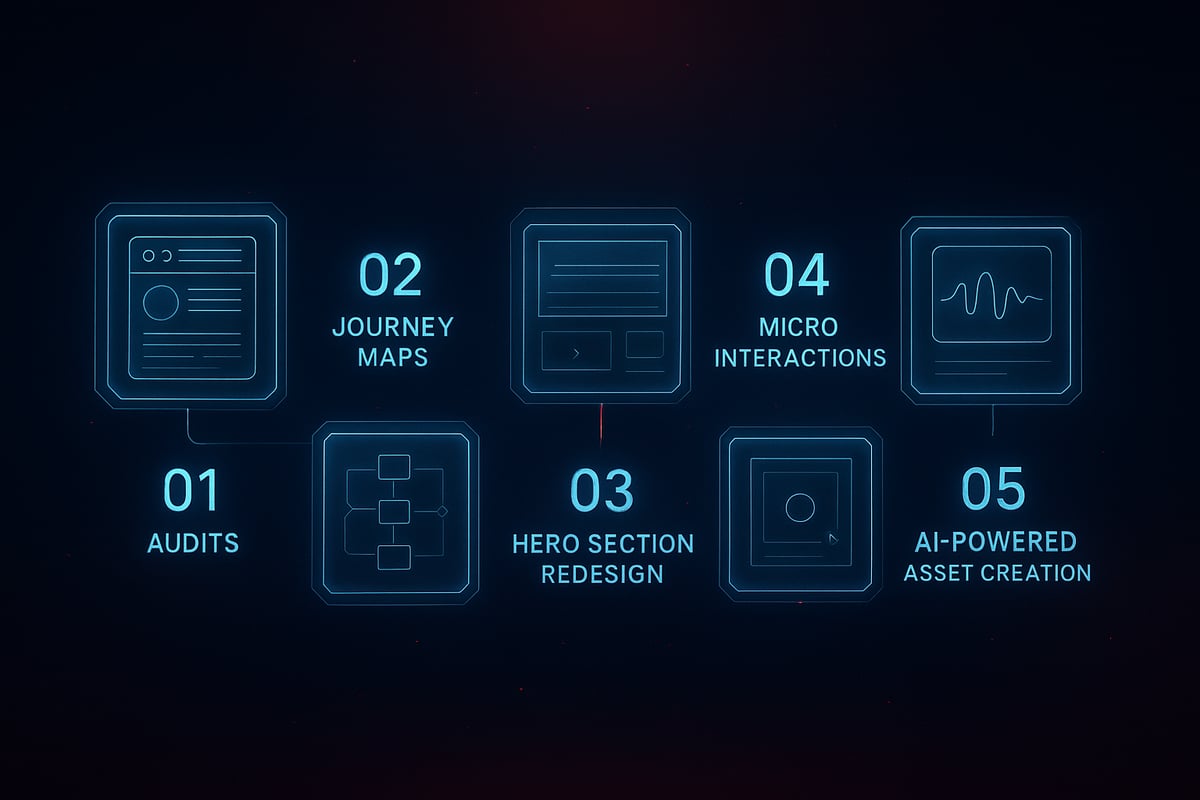
- Audit your product web design for clarity and conversion gaps.
- Map user journeys and identify personalization opportunities.
- Rebuild hero sections using cinematic storytelling.
- Integrate microinteractions and motion.
- Leverage no-code tools like Framer for rapid prototyping.
- Apply AI for asset generation and layout testing.
- Ensure accessibility and modularity from the start.
Real UI Scenario: SaaS Homepage Transformation
Imagine a SaaS homepage with a static hero, generic icons, and cluttered CTAs. By following this process, the team audits the user journey, rebuilds the hero with cinematic video, personalizes onboarding flows, and adds modular content blocks. AI helps generate seasonal visuals and test layouts. The result: a product web design that feels alive, adaptive, and conversion-focused.
For a deeper dive into building robust systems that support ongoing optimization, check out our Scalable design systems guide.
Ready to reimagine your product web design? Start thinking in systems, not just screens.
Studio Thinking: Systems Over Screens
Most teams still approach product web design as a series of disconnected screens. This leads to inconsistencies, slow updates, and wasted effort. In 2026, the brands that win are those who think in systems, not just layouts.
A design system acts as the engine behind every high-performing product web design. It includes reusable components, design tokens, and clear rules for rhythm and clarity. This foundation lets you iterate quickly while keeping the experience cohesive.
Consider a real scenario: a SaaS team needs to update pricing, add a feature, and launch a seasonal campaign. With a modular system, designers and marketers can swap content blocks, adjust typography, and test new flows—all without breaking the site’s DNA. This approach means every update supports conversion and brand trust.
AI now accelerates these workflows, enabling rapid prototyping and asset generation. Still, human creativity ensures that each UI decision fits the narrative and business goals. For a deeper dive into how AI empowers systems-driven product web design, explore AI in product design trends.
Ready to reimagine how your product web design scales? Explore our systems-driven approach to unlock clarity, rhythm, and conversion—one unified framework at a time.
After exploring these trends and real-world strategies, you can see how the future of product web design is about much more than just good looks—it’s about clarity, rhythm, and building systems that actually drive growth. If you’re ready to turn these insights into a product website that converts and scales alongside your startup, let’s connect and map out what’s possible together. We love partnering with teams who want to move fast, innovate with AI, and build for the long term. Curious what that partnership could look like for you? Book a Free Discovery Call and let’s start designing what’s next.
Get articles like this in your inbox
Practical design and growth insights for founders. No spam, unsubscribe anytime.


