

Most creative teams still believe a logo and a splash of color define a studio brand. In 2026, this outdated approach risks leaving your studio brand invisible in a crowded market.
Today's leading studios know that a studio brand guide is more than a PDF—it's a living system driving clarity, consistency, and real results at every touchpoint.
This article uncovers the psychology that makes modern brands unforgettable. You'll get a proven, step-by-step roadmap for building your studio brand guide, learn how AI supports creativity, and see real UI examples that bring each principle to life.
Ready to rethink your studio's future? Let’s dive in.
The Psychology of Studio Branding in 2026
Most studios still believe a logo and a palette define their brand. In 2026, this mindset risks more than irrelevance—it invites chaos. Today, a studio brand must deliver clarity, rhythm, and emotional resonance, not just visual sameness.
Why Brand Systems Outperform Style Guides
A studio brand system goes beyond matching colors and fonts. It creates a rhythm, ensuring every touchpoint feels intentional and familiar. This rhythm lowers cognitive load for users, making experiences feel effortless and trustworthy.
Research shows the stakes are real. According to the Lucidpress 2023 study on brand consistency, consistent branding can increase revenue by up to 33 percent. That’s not just theory—it’s measurable impact.
Airbnb’s design system is a standout. By moving from static style guides to a flexible system, their product teams gained speed, clarity, and the power to scale. The lesson: a true studio brand system is a living asset, not a static document.
The Power of Narrative and Depth
A studio brand is more than a look—it’s a story. Brands that lead in 2026 use narrative to foster belonging and loyalty. Archetypes and storytelling transform forgettable products into movements.
Take Notion as a prime example. Their narrative—tools for thinkers and creators—turns a simple productivity app into a cultural touchstone. Every feature, onboarding screen, and update echoes this story, deepening the user’s bond with the brand.
If you want your studio brand to last, craft a story that runs deeper than visuals. This narrative will be the thread connecting every platform, campaign, and update, making your brand unforgettable.
Studio Thinking: Systems Over Screens
Many studios fixate on individual screens and assets. But in 2026, system thinking is what sets a studio brand apart. Systems define rules, behaviors, and logic that let your identity adapt—fast.
Spotify exemplifies this evolution. Their brand moved from static assets to a system that flexes across playlists, podcasts, and new features. This shift enables rapid scaling, consistent voice, and creative freedom for designers worldwide.
A true studio brand system is built for change. It empowers teams to iterate, expand, and maintain consistency without micromanagement. That’s how modern studios grow without losing their soul.
Clarity Over Noise: The Minimalist Advantage
Minimalist studio brand systems cut through digital clutter. By stripping away excess, they boost user comprehension and engagement. The Nielsen Norman Group found that simpler designs increase both trust and conversion.
In a world overwhelmed by options, clarity is your most valuable asset. A minimalist studio brand doesn’t just look good—it works.
Step-by-Step: Building Your Studio Brand Guide for 2026
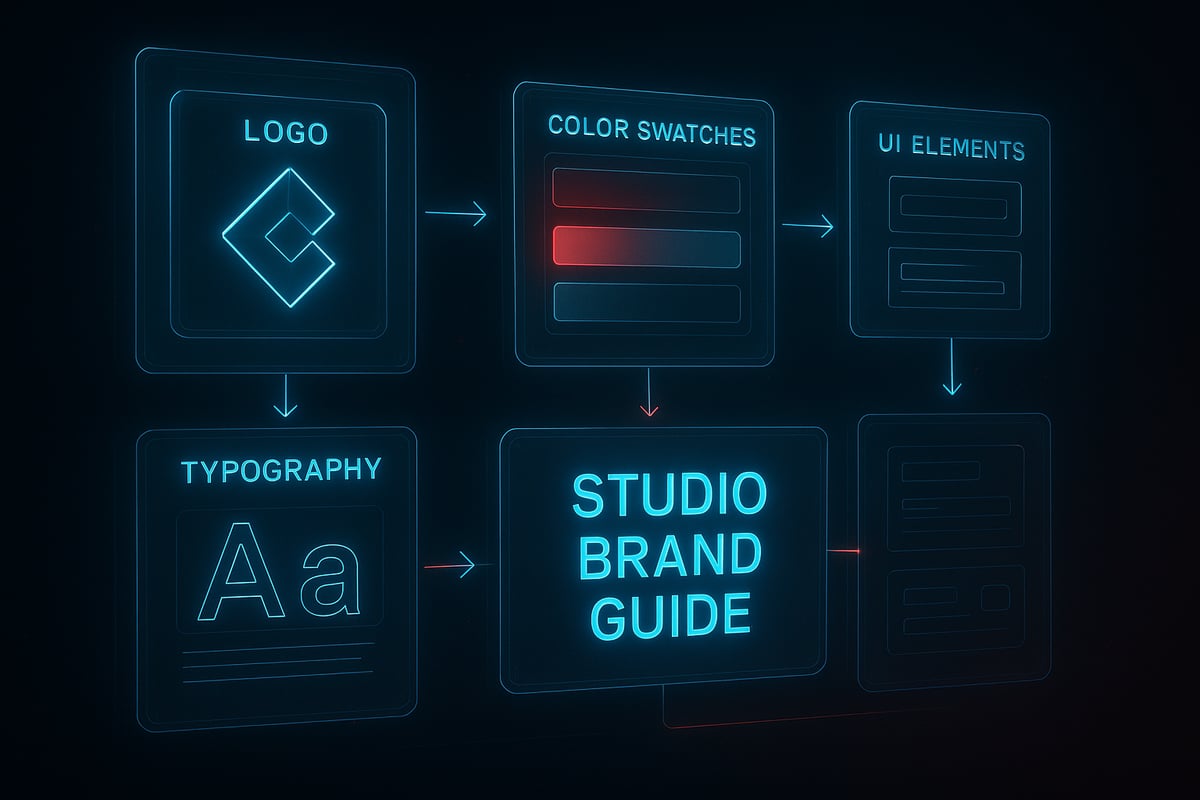
Is your studio brand more than a logo and color palette? In 2026, only those with a living, adaptive system will thrive. Here’s how to architect a studio brand guide that delivers clarity, cohesion, and measurable impact.
Step 1: Define Your Core Brand Narrative
Every memorable studio brand starts with a story. Why does your studio exist? What future are you building for your clients and team?
Begin by gathering your founders, leads, and creative minds. Discuss your mission, vision, and values until you can distill them into one clear, compelling narrative. This story becomes the lens through which every decision is made.
Take Figma’s “design for everyone” approach. Their studio brand narrative is simple yet powerful, guiding product features and community engagement. When your studio brand narrative is authentic, it drives loyalty and builds internal alignment.
Step 2: Architect a Modular Visual System
A modern studio brand cannot rely on static assets. Modularity is key. Create a flexible system of core components: logo, color palette, typography, iconography, and motion.
Think of your studio brand as a set of building blocks. Each asset should work independently yet snap together seamlessly. This approach ensures consistency from web to mobile to marketing.
Google’s Material Design pioneered this atomic structure, allowing rapid iteration without sacrificing cohesion. For a deeper dive, the Essential Guide to Systems in Design explains how modular systems future-proof any studio brand.
Step 3: Create Behavioral and Voice Guidelines
A studio brand transcends visuals. Define how your brand sounds, acts, and interacts. Codify tone, language, and micro-interactions, so every message and touchpoint feels unmistakably yours.
Study Mailchimp’s voice and microcopy playbook. Their studio brand uses clear, friendly language and consistent interaction patterns, building trust with every send and click.
Write sample messages, onboarding scripts, and error states. Test them with real users. This process ensures your studio brand feels human, not robotic or generic.
Step 4: Integrate AI-Supported Workflows
AI is transforming how studio brand guides evolve. Use AI to accelerate asset generation, automate color palette testing, and prototype new layouts in minutes.
For instance, AI-driven tools can suggest new icon variants or test color accessibility across devices. However, remember that AI supports creativity but never replaces it. The judgment and taste of your studio brand team remain irreplaceable.
Set boundaries for AI involvement. Let it handle repetitive tasks, while your creative leads focus on strategy and emotional resonance.
Step 5: Build for Continuous Improvement
A studio brand system is never finished. Set up feedback loops and regular brand audits to spot inconsistencies and uncover new opportunities.
Slack’s team reviews its studio brand system post-launch, iterating based on real user feedback. Schedule quarterly checkpoints. Collect data on brand recall and user sentiment. This keeps your studio brand living, relevant, and ready for what’s next.
Real UI Scenarios: Applying Your Brand Guide
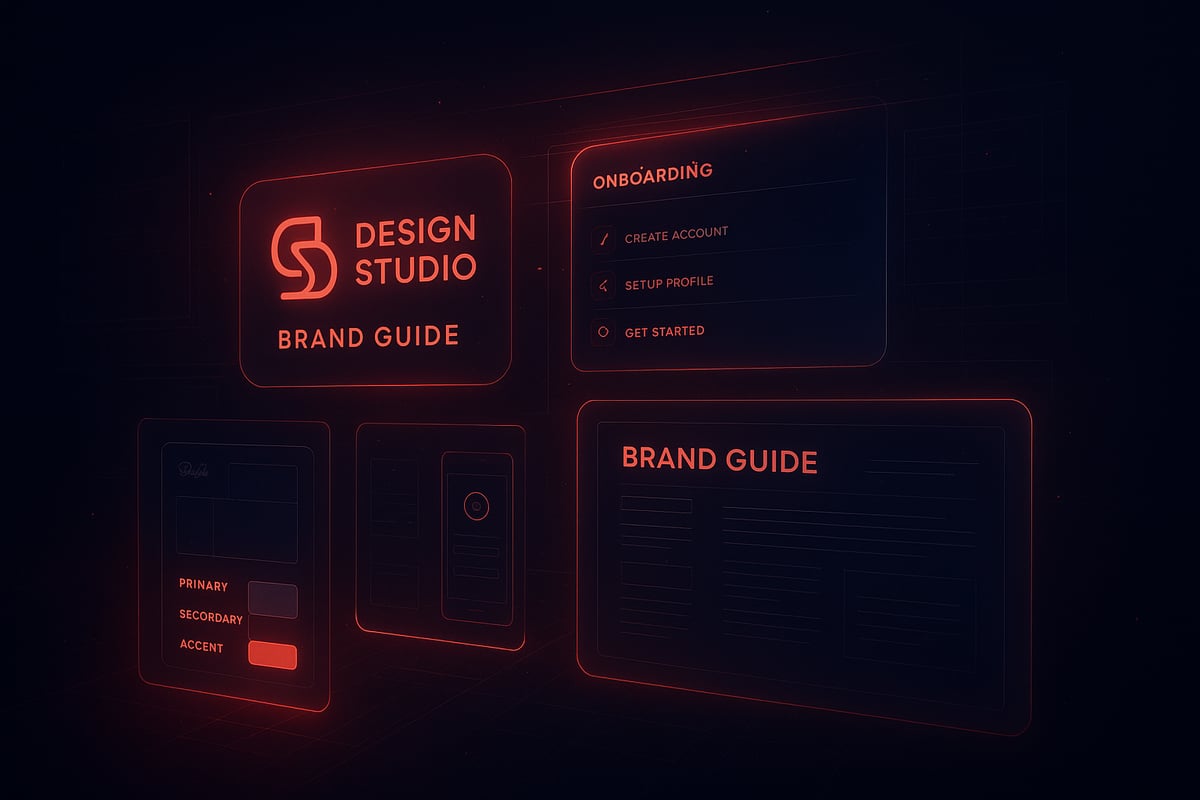
What happens the moment your studio brand leaves the theoretical and meets real UI? Most guides look great on paper but break under the pressure of product launches, rapid scaling, and distributed teams. Let’s break down what an actionable studio brand system looks like in three cinematic, high-stakes scenarios.
Scenario 1: Launching a New Web Product
Launching a new product is the ultimate test of your studio brand system. The challenge? Ensuring every touchpoint is unmistakably yours, from the first login to the final microinteraction.
- Start with a mapped journey: Identify every place your studio brand will appear—logo placement, hero color, onboarding copy.
- Apply your visual system: Use your modular assets for consistent color, typography, and iconography.
- Embed your voice: Craft onboarding flows that echo your studio brand’s personality, not just its visuals.
Stripe is a masterclass in this approach. Their studio brand system guarantees that whether users are setting up payments or reading docs, the experience feels seamless and intentional. Every detail, from button gradients to help text, is driven by system rules, not guesswork.
Scenario 2: Scaling Across Platforms
As your product expands, your studio brand must flex without breaking. Consistency is not about carbon copies—it’s about recognizable rhythm and adaptable behaviors.
- Audit your platforms: List every environment—mobile app, desktop, marketing site, and more.
- Adapt, don’t clone: Adjust your visual and behavioral rules for each context while keeping the studio brand’s core intact.
- Validate consistency: Use checklists or automated tools to spot drift or inconsistency.
Duolingo’s studio brand remains instantly familiar across app, web, and ads. Their system is a living framework—narrative, colors, and tone all flex to fit new mediums, but always echo the same personality. For more on crafting cross-platform consistency, see Corporate Brand Identity Strategies.
Scenario 3: Collaborating with Distributed Teams
Remote work is the new normal. Without a living studio brand guide, miscommunication, asset drift, and style entropy creep in fast.
- Centralize assets: Use shared libraries for all components, colors, and copy rules.
- Document behaviors: Write clear, living guidelines for voice, interaction, and system updates.
- Sync in real time: Schedule regular reviews and use collaborative tools to keep teams aligned.
Shopify’s Polaris system is the gold standard here. With a robust studio brand framework, global teams ship updates faster and with fewer errors. Every contributor knows the rules, the logic, and the narrative—no matter the time zone.
Soft CTA: Reference Your Studio Toolkit
A living studio brand system is your studio’s operating system. High-velocity teams rely on frameworks that evolve, adapt, and deliver clarity at scale. Ready to build a studio brand guide that works as hard as you do? Explore the systems trusted by leading studios.
The Role of AI in Brand Systems—Accelerator, Not Replacement
AI is everywhere, but the biggest misconception in 2026 is that it can replace the creative heart of a studio brand. Many teams are tempted to let AI drive their visual identity or messaging, hoping for speed. The result? Generic outputs that miss the mark, losing the edge that makes a studio brand memorable.
How AI Tools Enhance (But Don’t Define) Brand Systems
The real power of AI in a studio brand system is acceleration, not authorship. AI tools can generate logo variants, automate color palette testing, and even suggest micro-interactions for onboarding flows. For example, when launching a new product, AI can rapidly produce motion variants for social campaigns, freeing designers to focus on narrative and rhythm.
This partnership lets a studio brand iterate faster, test more ideas, and maintain consistency across touchpoints. Automated health checks can flag inconsistencies in usage, while AI-powered design assistants help teams stay on-brand at scale. Yet, the essence of a studio brand always comes from human insight, not algorithmic output.
Avoiding the Pitfalls: Maintaining Human Creativity
Over-reliance on AI threatens to flatten the soul of a studio brand. When teams let AI handle narrative, tone, or design direction, the result is often bland and forgettable. Brands that once stood out can lose their distinctiveness, blending into a sea of sameness.
Human creativity is irreplaceable. It shapes the emotional resonance, depth, and clarity that define a great studio brand. Designers should use AI as a tool to explore possibilities, not as a decision-maker. The best studio brand systems are those where people set the vision and AI handles the repetitive or technical tasks, ensuring the brand’s story remains authentic.
Building an AI-Ready Brand System
To thrive in 2026, every studio brand needs a system built for AI-assisted workflows. This means writing brand guidelines that are modular, flexible, and easy for AI tools to interpret. For example, Netflix’s adaptive brand toolkit anticipates new channels and formats, making it simple for AI to generate assets that fit the core identity.
A future-proof studio brand system empowers teams to move quickly without sacrificing clarity or cohesion. When human creativity leads and AI supports, your brand remains vibrant and relevant. This is the thinking behind the Embark Studio™ approach—living frameworks designed to evolve, adapt, and accelerate your growth.
Embedding the Brand Guide in Studio Culture
Building a studio brand that lasts is not about static assets or a one-time rollout. The real challenge is embedding your brand guide so deeply that it shapes every decision, every interaction, and every new idea. Many studios stumble here, treating the brand guide as a reference, not a living system. Let's break down how to make your studio brand truly part of your team's DNA.
Training Teams for Brand Consistency
The first step is onboarding. Every new team member should experience the studio brand not just through documents, but through immersive workshops. Picture interactive sessions where designers, developers, and strategists walk through the narrative, behaviors, and visual rules.
Next, encourage ongoing learning. Regular brand refreshers and real-time feedback loops help everyone internalize the studio brand. Atlassian’s approach stands out, using hands-on onboarding and scenario-based training to reinforce every principle. This way, the studio brand becomes more than a checklist, it becomes muscle memory.
Measuring Impact and Iterating
A studio brand must evolve as your audience and products do. The key is measurement. Track metrics like brand recall, conversion rates, and user engagement to see where your system shines or needs refinement.
Use dashboards to visualize adoption and spot inconsistencies fast. For example, Adobe's internal brand health dashboard helps teams monitor real-time data and adjust quickly. By making measurement part of the process, your studio brand stays relevant and aligned with business goals, not just design trends.
Why High-Velocity Studios Choose Embedded Brand Systems
The fastest-growing teams know that static guidelines are not enough. They shift to embedded, living systems that evolve with every launch and iteration. This approach empowers teams to act with confidence, reduces friction, and unlocks measurable outcomes.

Partnering with experts can accelerate this process. Studios like Embark Studio deliver frameworks, AI-accelerated workflows, and continuous support to fuel growth. For a step-by-step approach to building a powerful studio brand presence, explore our Branding Pages Guide and unlock the toolkit used by high-velocity teams.
Ready to put your own brand system into action? If you’re looking to move beyond just colors and logos and want to build a living guide that drives real growth, I’d love to help you get there. At Embark Studio™, we work right alongside founders and teams to design, build, and continuously evolve brand systems that scale—powered by Framer and the latest in AI. Curious how this could look for your project? Let’s connect and talk it through. You can Book a Free Discovery Call and start shaping your roadmap for 2026 together.
Get articles like this in your inbox
Practical design and growth insights for founders. No spam, unsubscribe anytime.


