

Ever felt stuck in a creative block, lost in a sea of design resources that promise inspiration but deliver only noise? Many believe that endless scrolling will spark new ideas, yet this approach rarely brings clarity or momentum.
The truth is, real inspiration comes from structured exploration. When you use the right design portals, you gain more than just pretty pictures. These platforms can transform your workflow, fuel original thinking, and help you find clarity in an AI-driven design world.
In this article, you’ll discover a curated guide to the seven best design portals for 2026. We’ll break down what makes each one unique and how they fit into modern, high-performance design systems. If you’re ready for actionable insight and a smarter way to find inspiration, read on—and start building your own toolkit for creative clarity.
Why Design Portals Matter in 2026
The Evolving Role of Design Portals
Design portals have undergone a dramatic transformation by 2026. What once started as static inspiration galleries has now evolved into dynamic, AI-augmented ecosystems. Today, designers expect more than endless scrolling for ideas. They need platforms that sync directly with their workflow, supporting everything from ideation to prototyping.
Modern design portals use AI-powered curation and collaborative features to surface relevant patterns, assets, and even real-time feedback. According to recent industry surveys, over 70 percent of high-performing teams now rely on AI to accelerate their design process and streamline decision-making.
Consider a UI team launching a fintech dashboard. Instead of piecing together random screenshots, designers use a portal that integrates inspiration, feedback loops, and interactive prototypes in a single space. This clarity and rhythm empower teams to move faster, reduce friction, and produce deeper, more thoughtful work.
Core Criteria for Selection
Not all design portals are created equal. In 2026, the essential features are clear:
- High-quality curation
- Workflow integration
- AI-powered search
- Vibrant community
- Scalability for growing teams
Top design teams say the difference comes from systems thinking, not random moodboarding. They look for platforms that connect inspiration directly to execution, ensuring every reference serves a purpose within the broader design system.
For example, imagine using a portal’s AI to filter onboarding flows specific to B2B SaaS, then seamlessly integrating those patterns into your own design toolkit. This approach moves designers from noise to clarity, letting them focus on outcomes, not just aesthetics.
To maximize the impact of design portals, it is essential to build on a solid framework. For a deeper dive on this, see the Guide to scalable design systems.
7 Best Design Portals to Inspire Your Projects in 2026
Ever felt like the world of design portals is a maze? The right portal can cut through noise and bring the clarity, rhythm, and depth your project needs. In 2026, the best design portals don't just showcase pretty screens—they integrate workflow, harness AI, and support systematic creativity.
Below, explore seven standout design portals, each with a unique approach to inspiration and execution. See how these platforms work in real scenarios, why they matter, and how systems thinking elevates your design process. For deeper insight on how AI shapes modern design portals, check the Human-centered AI design guide.
Embark Studio™ Client Portal
Creative block is real, especially when you need velocity and clarity. Embark Studio™’s Client Portal is built for teams that want more than generic design portals. It’s a private, all-inclusive hub with memberships starting at $4,000/month.
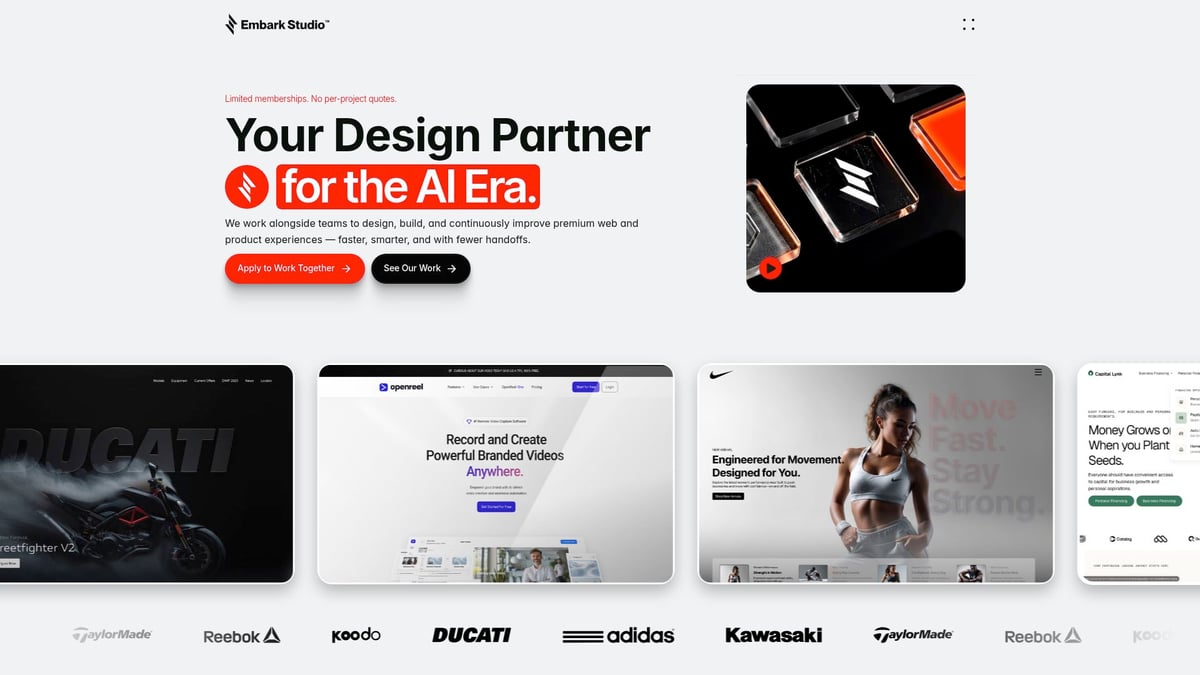
Here, you get embedded partnership—think private project boards, AI-assisted workflows, and direct founder-level access. Startups use this to rapidly iterate, track feedback, and measure growth. The portal’s scalable Framer systems mean you’re not just collecting inspiration, you’re building a repeatable design framework.
Pros? Deep workflow integration, outcome focus, and speed. The main downside is premium pricing and application-only access. If you value systems over random moodboarding, this is your portal. Studio thinking is at the core: systems > screens, clarity > noise. For teams seeking high-performance design portals, Embark sets the benchmark.
Awwwards
Ever wondered where the global standard for web design lives? Awwwards is that place. Unlike generic design portals, it offers free access with a Pro upgrade from $60/year.
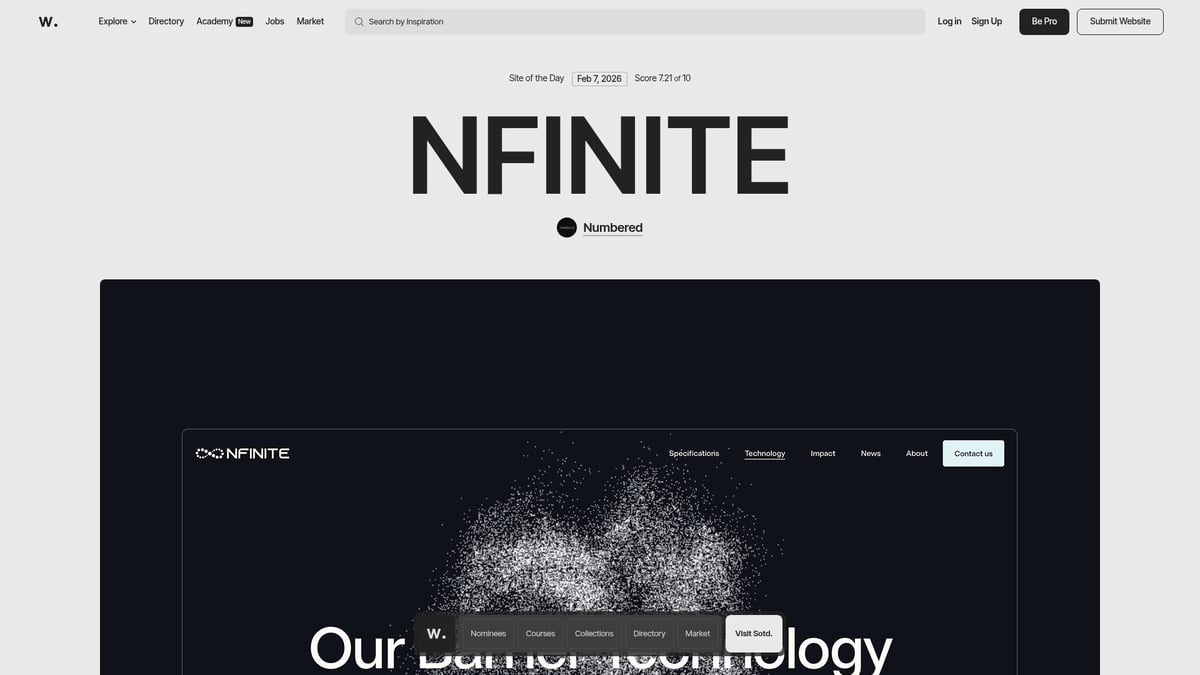
Awwwards curates the best in web design, with jury awards, in-depth case studies, and community voting. Designers and agencies use it to benchmark UI/UX and enrich presentation decks. The platform’s smart search and trend analysis cut the time spent hunting for relevant references.
Pros include high-quality curation and international reach. Cons? It’s mostly web-focused, with less on apps or products. Still, for anyone wanting to see where design portals can set the bar for excellence, Awwwards is essential. Use it to inform both product and marketing site workflows.
Mobbin
When you want actionable UI inspiration, Mobbin stands out among design portals. Its free tier and Pro plan (from $12/month) give access to a massive library of real product screenshots.
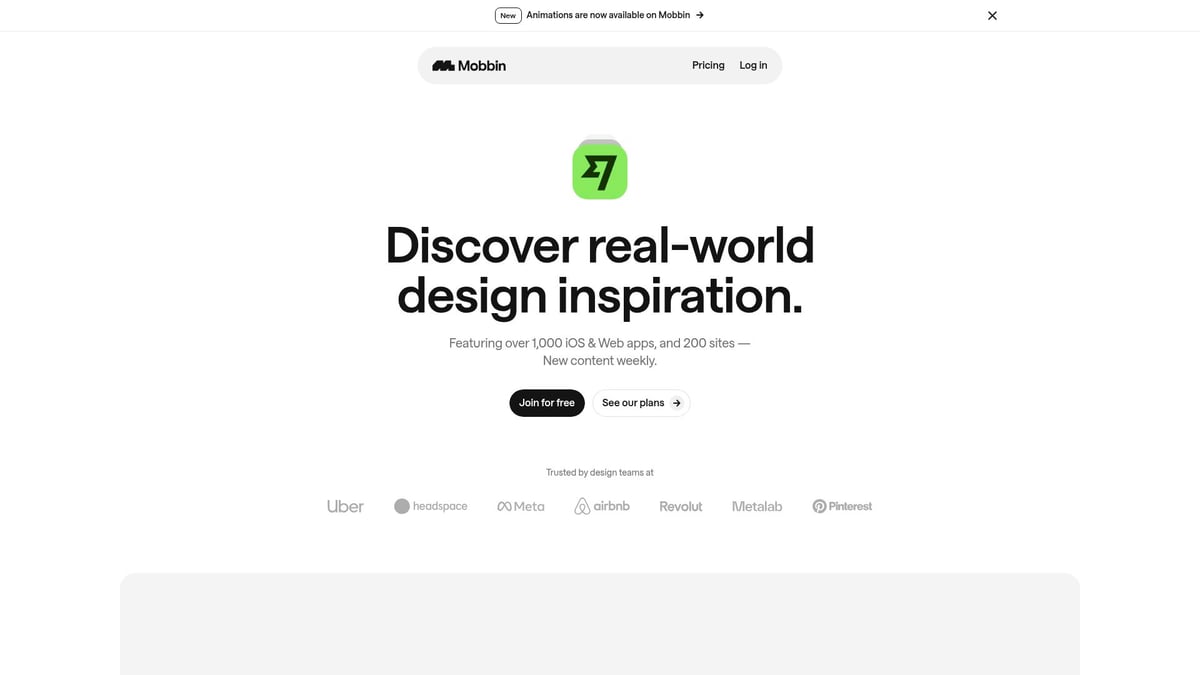
Mobbin’s core strength is pattern search. Product teams filter by platform or component and instantly find onboarding flows or dashboard layouts. The workflow integration means you can move from reference to action in minutes.
Pros: up-to-date content and deep pattern breakdowns. Cons: screenshots only, not interactive prototypes. Mobbin’s AI recommends patterns based on your project brief, streamlining ideation. For SaaS, apps, or UX/UI teams, Mobbin brings clarity and rhythm to design portals.
Dribbble
Need a pulse on the creative community? Dribbble is the social hub of design portals. Free to join, with Pro from $8/month, it’s where portfolios, job boards, and feedback collide.
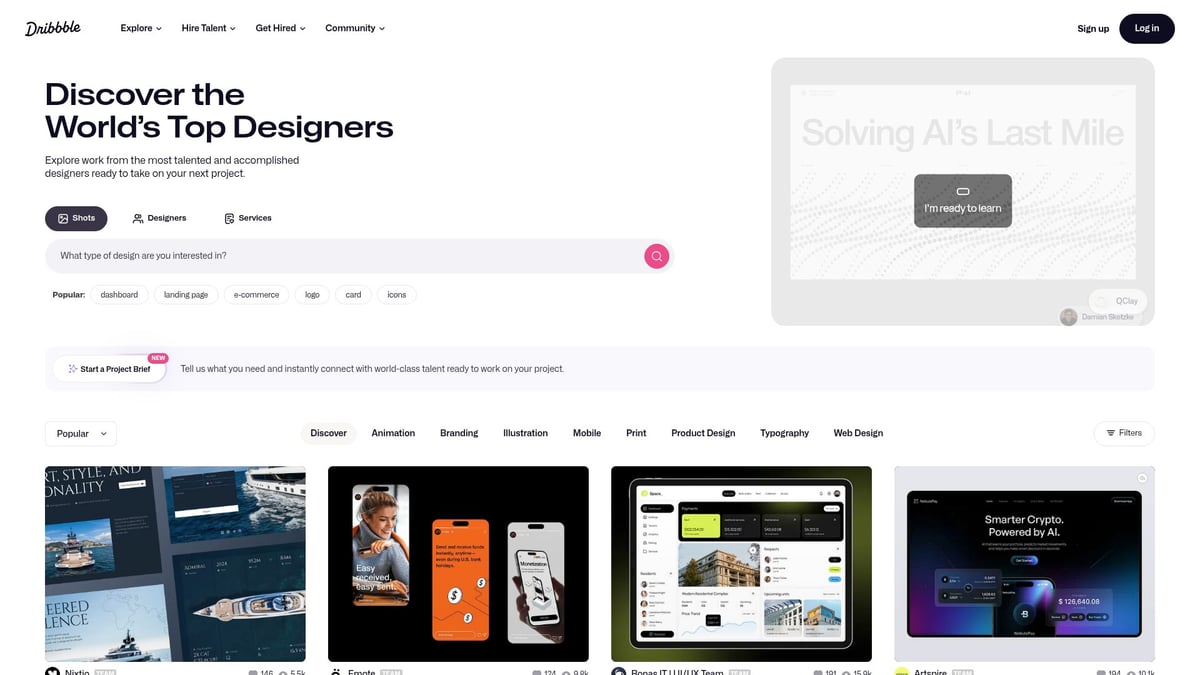
Dribbble’s diverse styles and networking make it a magnet for freelancers and agencies. Sourcing motion design for a product launch? You’ll find it here. Its personalized feed, powered by AI, ensures inspiration is always relevant.
Pros: vibrant community, exposure, and hiring pipeline. Cons: sometimes surface-level, lacking deep real-world context. Still, Dribbble’s design portals approach is perfect for quick bursts of inspiration and talent scouting.
Lapa Ninja
Conversion-focused? Lapa Ninja is the specialist among design portals. It’s free, with optional paid resources, and curates high-performing landing pages.
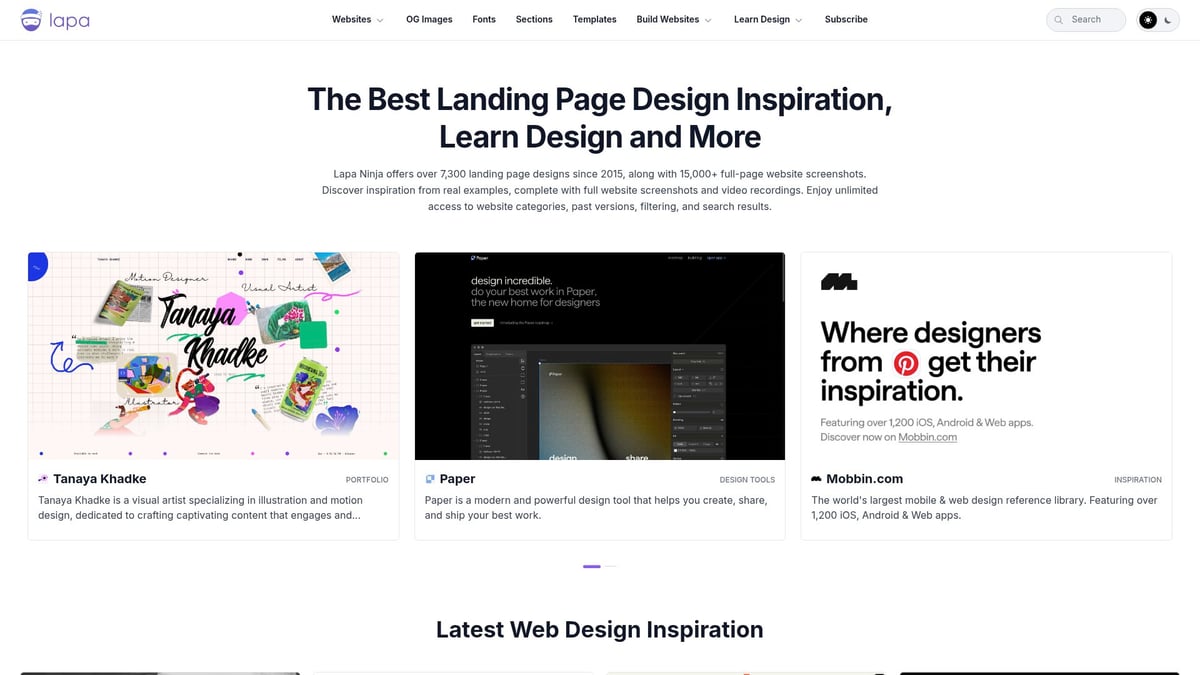
Marketers and web designers use its filterable gallery to optimize SaaS sign-up flows with proven references. The quick-scanning UI and downloadable assets turn inspiration into action fast.
Pros: actionable, fast, and focused. Cons: narrow scope, less depth on full product UI. Lapa Ninja uses AI to break down conversion best practices, making it a go-to for anyone seeking high-impact design portals.
Designspiration
If you need multi-disciplinary inspiration, Designspiration is a versatile option among design portals. Free with Pro from $7/month, it offers visual search, color palette generation, and board organization.
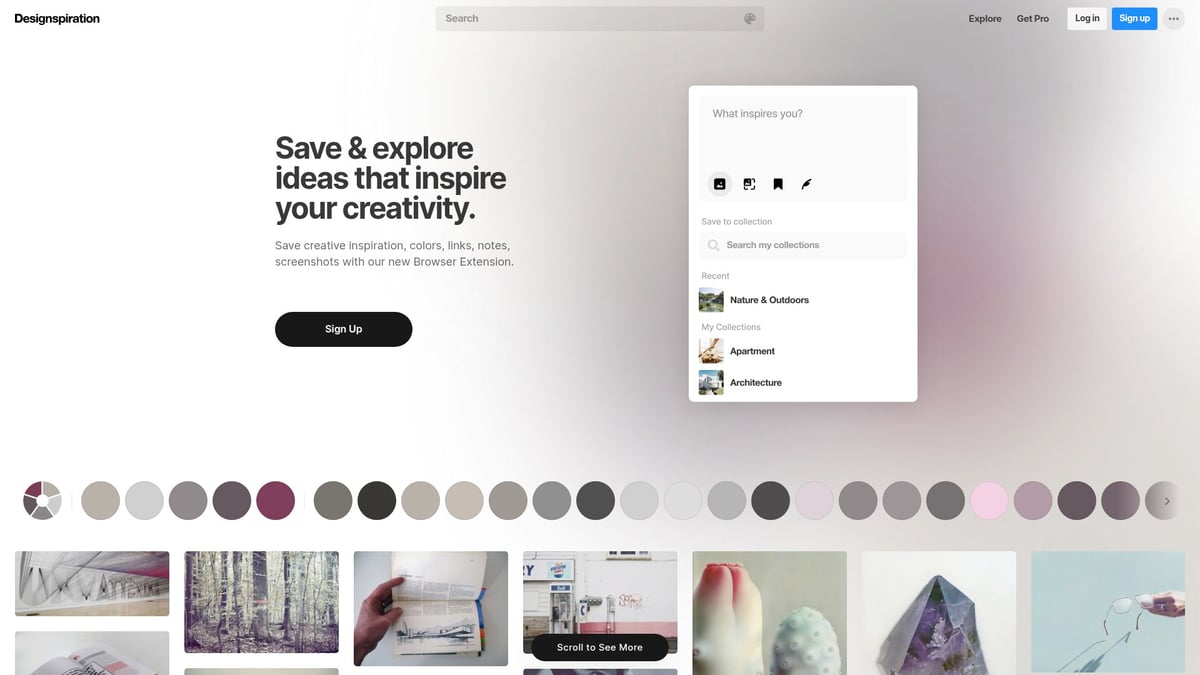
Designers across branding, print, and web use it to build moodboards for brand refreshes. The intuitive search uncovers unexpected styles, while AI powers color and style matching for deeper clarity.
Pros: versatile and easy to use. Cons: less curated than Awwwards, variable quality. Still, for those who want a broad creative spark from design portals, Designspiration is hard to beat.
Behance
Behance is the powerhouse of design portals, with free access and deep Adobe integration. It hosts project portfolios, case studies, and a thriving creative community.
Designers, illustrators, and agencies use Behance to study end-to-end UX case studies—think fintech apps or motion projects. The platform’s AI tags projects and surfaces smart recommendations, keeping inspiration systematized.
Pros: process transparency and global exposure. Cons: can be overwhelming, variable quality. For teams seeking real-world process over pretty screens, Behance’s design portals approach is a masterclass in depth and clarity.
Quick Comparison Table
| Portal | Key Strength | AI Features | Best For | Pricing |
|---|---|---|---|---|
| Embark Studio™ | Workflow Systems | AI workflows, curation | Startups, premium brands | $4,000+/month |
| Awwwards | Web Curation | Smart search, trends | Web designers, agencies | Free/$60 year |
| Mobbin | UI Patterns | Pattern recommendations | Product/UX teams, SaaS | Free/$12 month |
| Dribbble | Community & Talent | Feed curation, matching | Freelancers, agencies | Free/$8 month |
| Lapa Ninja | Landing Pages | Conversion analysis | Marketers, web designers | Free/paid |
| Designspiration | Multi-Discipline | Color/style matching | Branding, print, web designers | Free/$7 month |
| Behance | Case Studies | Tagging, recommendations | Agencies, illustrators, creatives | Free |
For high-performance workflows, modern design portals are more than galleries—they’re accelerators for clarity, depth, and rhythm. Want to maximize their impact? Build a design system or framework, and let your inspiration become actionable.
Integrating Design Portals Into Your Workflow
Creative teams often fall into the trap of random moodboarding, collecting beautiful screens but missing the bigger picture. The real power of design portals is not just finding inspiration, but systematically translating it into clear, actionable decisions that accelerate your entire process.
Building a Systematic Approach to Inspiration
Think of integrating design portals as building a map, not a gallery. Here is a practical, repeatable workflow:
- Start with the Brief: Clarify project goals and constraints before opening any design portals. This sets a filter for what is actually useful.
- Curate with Purpose: Use platforms like Mobbin for UI flows and Awwwards for marketing sites. Save only references that directly answer your brief, not just what looks appealing.
- Break Down Patterns: Document why a specific navigation, card, or animation works. What problem does it solve? How does it fit your product’s rhythm?
- Transform Inspiration into Action: Organize references in a shared, systematic toolkit. Tag each example by use case, style, or conversion principle so the team can act on it, not just admire it.
| Step | Tool Example | Value Add |
|---|---|---|
| Brief | Notion | Filters noise |
| Curate | Mobbin | Relevant UI patterns |
| Analyze | Awwwards | Clear rationale for choices |
| Document | Figma/Docs | Repeatable, team-aligned framework |
Real UI Scenario: Inspiration to Execution
Imagine you are designing a SaaS onboarding flow. Begin with Mobbin to identify real onboarding patterns used by top apps. Next, consult Awwwards to see how these flows are visually introduced on marketing sites. Instead of copying, you extract principles: clarity, minimal friction, and a strong first impression. Your team documents these patterns in your design system, making every future onboarding project faster and more consistent.
The AI Angle: Streamlining, Not Replacing
Modern design portals now surface relevant patterns using AI-powered recommendations, saving hours of manual searching. By analyzing your project brief, these platforms suggest layouts, color palettes, and flows tailored to your goals. For a deeper dive on how AI enhances decision-making and creativity, check out Essential Framer design system features.
Studio Thinking: Systems Over Screens
At Embark Studio™, we believe systems thinking is the antidote to creative chaos. Using design portals within a structured framework means less time lost to random inspiration, and more time spent creating with clarity and depth. Documenting inspiration in a repeatable toolkit ensures every team member moves in sync, reducing handoff friction and accelerating iteration.
Ready to move from noise to clarity? Building your own design framework—like the proprietary systems we use at Embark Studio™—can help you extract the full value from today’s design portals and keep your workflow future-proof.
The Future of Design Portals and AI-Assisted Workflows
The future of design portals is often misunderstood. Many believe that as AI evolves, creative work will become automated or formulaic. This misconception misses the deeper truth: the most impactful design portals in 2026 are not about replacing creativity, but about amplifying it through clarity and rhythm.
Why Systems, Not Random Screens, Define the Next Era
Design portals have shifted from static galleries to dynamic, AI-accelerated hubs. Today, systems thinking wins over scattered moodboarding. Why? Because teams need more than inspiration—they need process, structure, and actionable insights.
A top design team might start with a project brief and quickly surface relevant patterns, UI flows, and interaction models in minutes, not hours. The right design portals act as accelerators, surfacing solutions that fit the project's context and brand, not just the latest trends.
Real-World Application: From Inspiration to Launch
Consider a startup preparing for a high-stakes product launch. Instead of endless scrolling, they use a systematic approach:
- Define the core user flows and key moments.
- Use design portals to gather targeted examples—marketing sites from Awwwards, product flows from Mobbin.
- Leverage AI search to filter by interaction type, industry, or conversion goal.
- Assemble a curated board, then annotate why each reference fits the brief.
- Rapidly prototype, using insights from the portal to inform both the structure and the details.
This workflow transforms inspiration into execution. The team avoids random visual noise and instead builds with clarity, rhythm, and depth.
AI as Enabler, Not Replacement
AI inside design portals now does more than surface images. It anticipates needs, highlights emerging patterns, and even suggests next steps based on the project context. According to AI-Assisted Design Workflows, AI streamlines design decision-making and collaboration, but the final call—what to keep, what to change—remains with the team.
| Strengths | AI in Design Portals | Human Designers |
|---|---|---|
| Speed | Instant curation | Contextual judgment |
| Pattern Match | Smart recommendations | Emotional resonance |
| Workflow | Seamless integration | Creative direction |
Design portals will continue to evolve, but the most successful teams will harness AI as an accelerator, not a crutch. The psychology of design remains rooted in human clarity and intent.
Studio Thinking: Systems Over Screens
At Embark Studio, we see design portals as catalysts for high-performance systems, not just collections of screens. The future belongs to those who build frameworks—processes that turn curated inspiration into repeatable, scalable outcomes.
Investing in a proprietary design system or toolkit can multiply the impact of these platforms. Want to see how systems thinking transforms results? It starts by choosing the right design portals, then building your own rhythm on top.
Now that you’ve seen how the right design portals can take your projects from scattered ideas to streamlined, high-impact experiences, why not see what a system-driven approach can do for your startup? At Embark Studio™, we believe in designing with purpose—using curated tools, AI workflows, and real collaboration to help you move faster and grow smarter. If you’re ready to explore how a tailored design partnership could elevate your next launch, I’d love to chat and learn about your goals. Let’s make your vision tangible—Book a Free Discovery Call.


