

Most startups build their brand backward. They design a logo, pick colors, write some copy, and call it done. Then six months later, everything feels inconsistent. Your website doesn't match your deck. Your product interface conflicts with your marketing site. Your sales team describes the company differently than your CEO. This isn't a design problem. It's a foundation problem. A complete brand foundation checklist doesn't start with aesthetics. It starts with strategy, builds toward systems, and ends with assets that compound in value over time.
Why Most Brand Foundation Work Fails
You hired a designer. They delivered a logo and a color palette. Maybe some fonts. You got a PDF labeled "brand guidelines" that nobody reads. Three months later, your brand looks like it was designed by five different agencies.
This happens because most teams confuse deliverables with foundation. A logo is not a brand foundation. A color scheme is not a brand foundation. These are outputs. The foundation is the strategic layer underneath, the decisions that inform every visual and verbal choice your company makes for the next five years.
Brand foundation work fails when it skips the strategic layer:
- No clear positioning means designers guess at visual direction
- No messaging framework means every writer invents new language
- No system thinking means every asset is a one-off
- No governance model means nobody maintains consistency
The cost shows up later. When you're preparing for Series A and realize your pitch deck, website, and product tell three different stories. When you hire a marketing team and they spend weeks reverse-engineering what your brand actually stands for. When you need to move fast on a campaign but can't because nothing is reusable.
A proper brand foundation checklist solves this by building infrastructure, not just deliverables. It creates a system that gets stronger with use, not weaker.
Strategic Layer: What Comes Before Design
Start here. Before anyone opens Figma or picks a typeface, lock down the strategic decisions that will drive every creative choice downstream.
Brand Positioning Framework
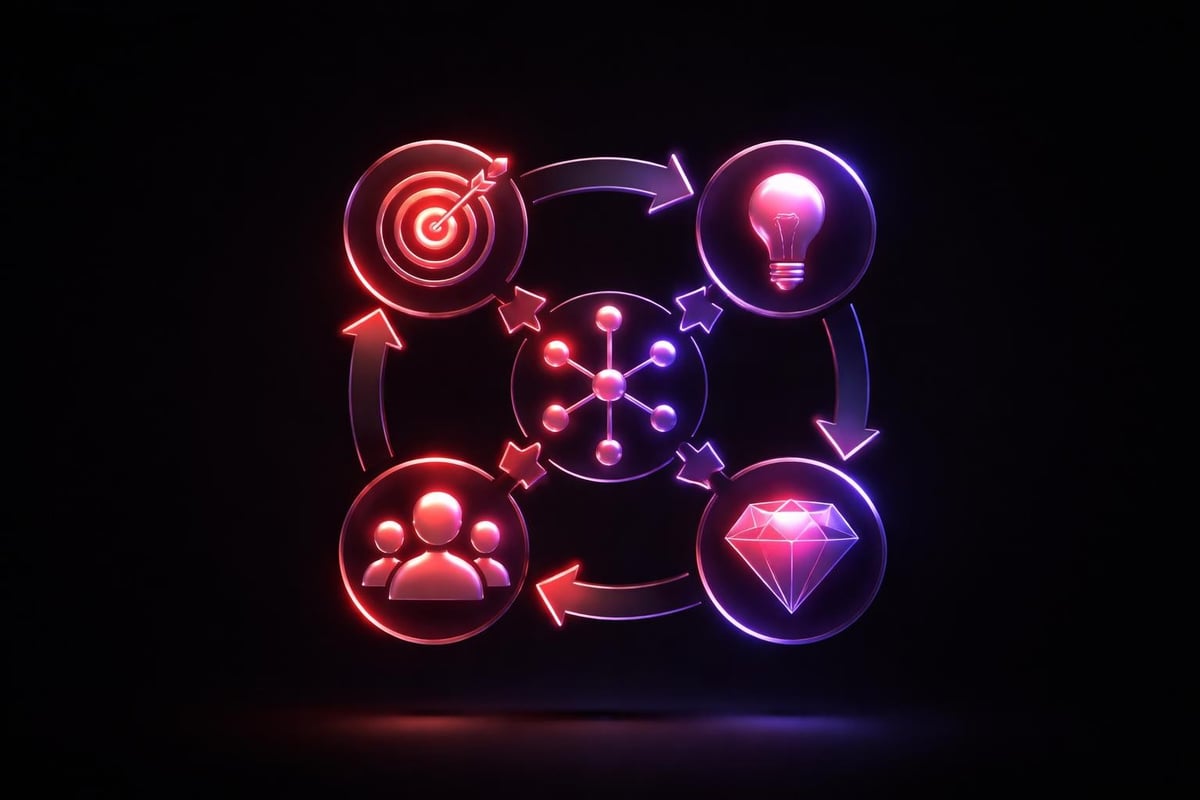
Your positioning isn't what you do. It's the specific angle you own in your market. This requires ruthless clarity about three things: who you serve, what problem you solve better than anyone else, and why you're the only team that can solve it this way.
Document these elements:
Target audience definition - Not demographics. Psychographics. What does your ideal customer believe? What do they value? What keeps them up at night? Write this as if you're describing a specific person, not a market segment.
This work feeds directly into B2B startup branding decisions later. Positioning drives visual direction, messaging architecture, and product strategy.
Mission, Vision, and Values
These aren't wall art. They're decision-making tools. Your mission answers what you do. Your vision answers where you're going. Your values answer how you'll get there when nobody's looking.
Write these for internal use first:
- Mission - One sentence. What you do, for whom, and to what end. If you can't say it in one breath, it's not clear enough.
- Vision - The world you're building toward. Make it ambitious enough to matter and specific enough to measure. "Change the world" isn't a vision. "Make software development 10x faster through AI-native workflows" is a vision.
- Values - Three to five principles that guide behavior and decisions. Each value should have a clear opposite. If everyone would agree with your value, it's not a real choice. "Customer focus" isn't a value. "Ship fast and fix forward" is a value because it implies trade-offs.
Brand consistency research shows that companies with clearly defined values and mission statements maintain 23% higher brand consistency across channels. This isn't about corporate culture posters. It's about alignment at scale.
Identity System: Design That Scales
Once strategy is locked, build the identity system. This is where most teams start, which is why most brand systems fail. You need the strategic layer first because it informs every visual decision.
Logo Architecture
Your logo isn't a single mark. It's a flexible system with multiple lockups for different contexts. Build variants now so you're not redesigning under deadline pressure later.
| Logo Variant | Use Case | Format Requirements |
|---|---|---|
| Primary horizontal | Website headers, presentations | SVG, PNG (2x, 3x) |
| Stacked vertical | Mobile apps, square social avatars | SVG, PNG (2x, 3x) |
| Icon/symbol only | Favicons, app icons, watermarks | SVG, PNG (512px, 1024px) |
| Monochrome versions | Single-color applications, merch | SVG in black, white |
| Responsive lockup | Adapts to container width | SVG with breakpoint variants |
Export everything in vector format. Build a single source file that generates all variants programmatically. When you update the primary mark, every variant updates automatically. This is system thinking.
Color System with Functional Hierarchy
Stop thinking about "brand colors" and start thinking about color systems. You need a primary palette for brand recognition and a functional palette for interface design. These work together but serve different purposes.
Primary brand palette:
- One dominant color that owns your brand
- Two to three supporting colors for variation
- Each color needs six to eight tints and shades for flexibility
Functional interface palette:
- Neutral scale (9-11 shades from white to black)
- Success, warning, error, info states
- Background, surface, and border colors
- All mapped to semantic tokens (not hex values)
The difference: brand colors create recognition. Functional colors enable high-performance websites that work across light mode, dark mode, and accessibility requirements. Build both from day one.
Typography System
Two typefaces maximum. One for headlines, one for body copy. More than that and you're creating complexity without value. Pick fonts that support your positioning and work across all contexts.
Evaluate typefaces against these criteria:
- Character set coverage - Does it support all languages you'll need? Special characters? Numerals with multiple styles?
- Weight availability - Minimum four weights (light, regular, medium, bold). Seven or more is better. Single-weight fonts create design constraints you'll regret later.
- Performance - Variable fonts load faster and offer more flexibility. If your typeface doesn't have a variable version, pick a different typeface.
- Licensing - Can you use it on web, in apps, in marketing materials? Read the license. Budget for it.
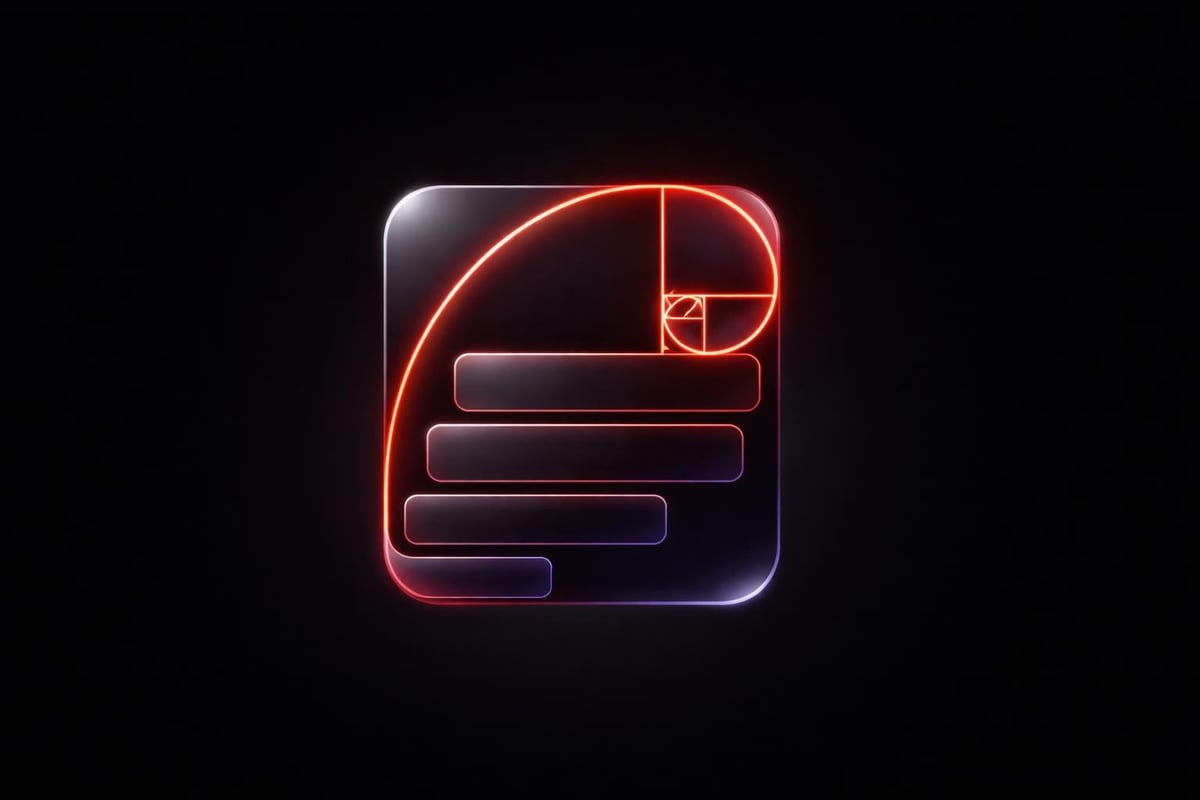
Define a type scale using a ratio (1.2x, 1.25x, 1.333x are common). This creates mathematical relationships between font sizes that feel coherent even when you're not thinking about it. Every headline, subhead, and body size should come from this scale.
Verbal Identity: The Words That Scale
Visual identity gets all the attention. Verbal identity drives revenue. Your brand voice, messaging framework, and content templates determine whether your marketing converts or not.
Voice and Tone Framework
Voice is constant. Tone adapts to context. Your voice is your brand personality expressed through language. Your tone shifts based on where the reader is and what they need.
Define your voice across four spectrums:
- Formal ←→ Casual
- Serious ←→ Playful
- Respectful ←→ Irreverent
- Authoritative ←→ Collaborative
Pick a position on each spectrum that aligns with your positioning. Then define how tone shifts across contexts. Your 404 page can be playful. Your security documentation should be authoritative. Same voice, different tone.
Write example sentences for each combination. Show, don't tell. "We're conversational but professional" means nothing. "We say 'Here's what we found' instead of 'Our analysis indicates'" is a rule you can use.
Messaging Architecture
This is your reusable language system. Every team member should be able to describe your company the same way because they're pulling from the same architecture.
Build these message layers:
- Elevator pitch - 30 seconds. What you do, who it's for, why it matters. Memorize this.
- Value propositions - Three to five specific outcomes you create. Each one should be provable and differentiated.
- Feature messaging - How you describe what you built. Focus on outcomes, not specifications. "Real-time collaboration" is a feature. "Ship 40% faster with your entire team in the same file" is feature messaging.
- Proof points - Metrics, case studies, customer quotes. Specific numbers that back up every claim you make.
Store this in a shared document. Reference it every time someone writes copy. When your messaging architecture is strong, your tech company brand identity becomes self-reinforcing across every customer touchpoint.
Content Guidelines and Templates
Templates are leverage. Every time someone creates a landing page, writes an email, or builds a presentation, they should start with a template that already follows brand guidelines.
Create templates for:
- Landing pages - Layout structure, headline formulas, CTA placement, image ratios
- Email campaigns - Header, body copy patterns, signature blocks
- Sales decks - Slide layouts, data visualization styles, narrative arc
- Social posts - Format variations for each platform, caption structures, hashtag strategy
- Documentation - Article structure, code examples, screenshot styles
Each template should be a starting point that enforces consistency while allowing flexibility. Lock down structure and styling. Leave content and messaging open to context.
Asset Library: The Compound Effect
Brand assets should get more valuable over time, not less. Build a library system that makes every new asset strengthen your brand instead of diluting it.
Iconography and Illustration Style
Custom icons create brand recognition faster than almost any other element. They show up everywhere: UI, marketing, presentations, documentation. Consistency here pays compound returns.
Define your icon system:
- Style (outline, filled, duotone)
- Stroke weight and corner radius
- Grid system (usually 24px or 32px)
- Conceptual approach (literal vs. abstract)
Build a starter set of 30-50 icons that cover your most common needs. Then establish rules so anyone creating new icons maintains the same style. Better yet, building design systems with AI-assisted workflows can generate style-consistent icons on demand.
Illustration follows the same logic. Pick an approach (geometric, organic, minimal, detailed) and create examples that show range within constraints. You want enough flexibility to avoid repetition but enough consistency to feel like the same brand.
Photography and Image Guidelines
Stock photography destroys brands. Every company in your category uses the same diverse-team-looking-at-laptop images. You need a distinct visual language that compounds recognition.
Set image standards:
- Subject matter (people, product, abstract, data viz)
- Composition rules (rule of thirds, symmetry, negative space)
- Color treatment (full color, desaturated, color overlays)
- Lighting style (high key, low key, natural)
- Acceptable stock sources (if you must use stock)
Better approach: Shoot custom photography once or use AI-generated images that follow your visual language. The initial investment pays back every time you need an image that actually looks like your brand instead of a generic tech company.
Implementation Tools: Make It Usable
A brand foundation checklist that lives in a PDF is worthless. Build tools that make consistency the path of least resistance.
Design System and Component Library
Your brand guidelines should be a living design system, not a static document. Every color, font, icon, and component should exist as a reusable element in your design and development tools.
Build your system in layers:
- Design tokens - Variables for colors, spacing, typography, shadows. These become your single source of truth.
- Components - Buttons, forms, cards, navigation. Built once, used everywhere.
- Patterns - Common layouts and flows. Landing page hero, pricing table, feature grid.
- Templates - Full page designs that combine patterns into starting points.
Host this in Figma (for design) and code (for development). Keep both in sync. When you update a color token, it updates everywhere automatically. This is how you maintain consistency as you scale.
Brand Guidelines Document
Yes, you still need a guidelines document. But make it actionable, not decorative. Focus on decisions and rules, not examples and inspiration.
Structure your guidelines:
| Section | What to Include | Why It Matters |
|---|---|---|
| Strategy overview | Positioning, mission, vision, values | Context for all decisions |
| Logo usage | Lockups, spacing, don'ts | Protect the primary identifier |
| Color system | Palettes, tokens, accessibility | Enable consistent visual language |
| Typography | Scales, pairings, web implementation | Maintain readable hierarchy |
| Voice and messaging | Examples, tone shifts, word lists | Align verbal communication |
| Asset library | Where to find approved assets | Reduce creation friction |
| Contact for questions | Who owns what, how to request support | Enable team autonomy |
Make this searchable. Add it to your wiki. Link to it from your design system. The easier it is to use, the more it gets used.
Asset Management System
Where do finished assets live? Where does your team find the current logo? How do you distribute updated brand resources without Slack messages and email attachments?
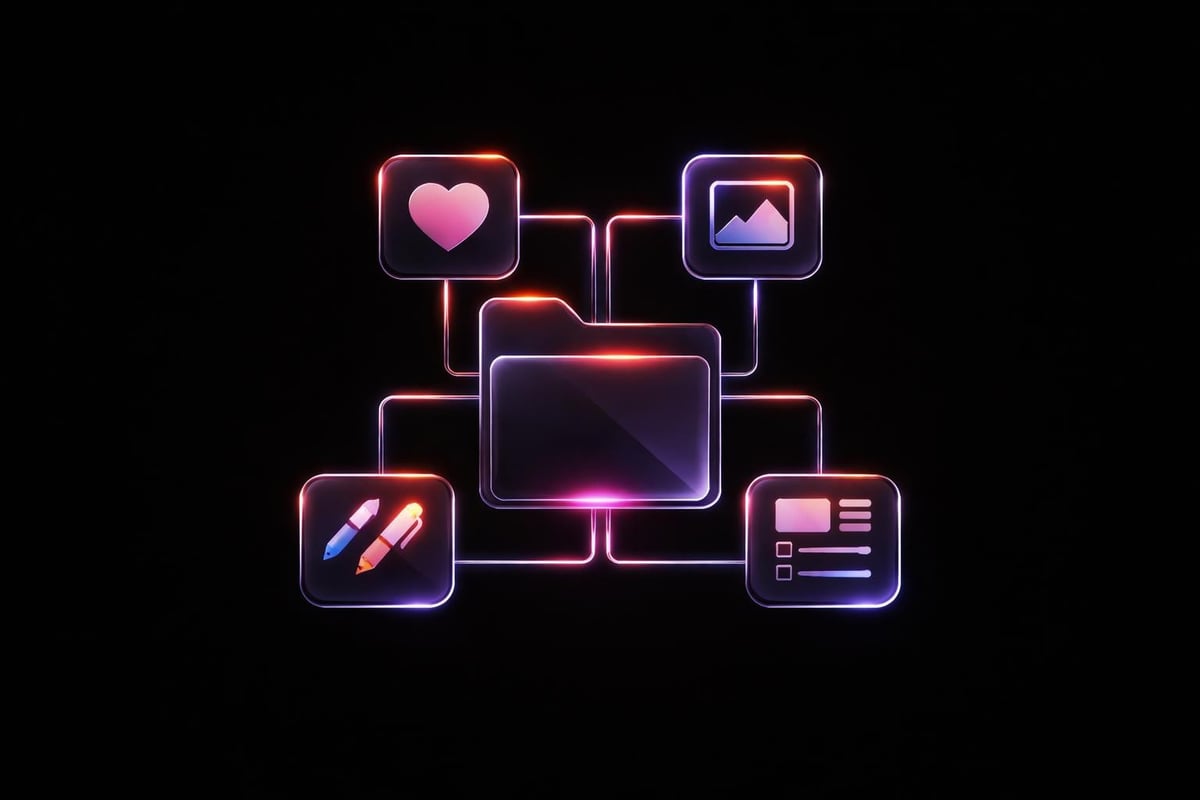
Set up a centralized brand portal. This could be a Notion database, a Brandfolder account, or a custom solution. The tool matters less than the organization.
Organize assets by:
- Type - Logos, icons, templates, photography
- Format - Source files, exports, print-ready
- Use case - Web, social, print, product
- Status - Current, archived, deprecated
Tag everything. Add search. Include usage notes and context with each asset. When someone needs a logo, they should find it in 30 seconds, not 30 minutes.
Maintenance and Evolution
Brand foundations aren't set-it-and-forget-it. They evolve with your business. Build governance into the system from day one.
Ownership and Decision Rights
Who can update brand assets? Who approves new icon styles? Who decides when messaging needs to shift? Define this clearly or your foundation erodes through incremental inconsistency.
Assign clear ownership:
- Brand strategy - Usually CMO or VP Marketing
- Visual identity - Design lead or creative director
- Verbal identity - Head of content or brand marketing
- Asset library - Operations or brand manager
- Design system - Lead product designer
Each owner maintains their domain and coordinates with others when changes affect multiple areas. Updates follow a defined process, not ad hoc requests.
Audit and Iteration Schedule
Review your brand foundation quarterly. Not to redesign everything. To identify gaps, inconsistencies, and opportunities for improvement.
Quarterly brand audit checklist:
- Review all customer touchpoints for consistency
- Gather feedback from team members using the system
- Identify missing assets or templates that would add value
- Update guidelines based on new use cases
- Archive deprecated assets and document changes
- Train new team members on system updates
This continuous improvement approach prevents the slow drift toward inconsistency that kills most brand systems. Small corrections compound into sustained quality.
When to Refresh vs. Rebuild
Your brand foundation should last years, not months. But markets shift. Positioning evolves. Sometimes you need to refresh the system without rebuilding from scratch.
Refresh when:
- Your target audience has expanded or shifted
- Visual trends have made your identity feel dated
- You've outgrown your messaging or positioning
- Asset quality is inconsistent across platforms
Rebuild when:
- Your business model has fundamentally changed
- You're entering entirely new markets
- Acquisition or merger requires rebranding
- Current foundation has no strategic layer
Most growing companies need a refresh every 3-4 years and a rebuild every 7-10 years. If you built the foundation right, refresh work is strategic tweaks, not starting over.
Brand Foundation Checklist: Your Complete Build Sequence
Execute this in order. Each phase builds on the previous one. Skip steps and you'll create dependencies that force rework later.
Phase 1: Strategic Foundation (Week 1-2)
- Define target audience with psychographic depth
- Write problem statement and document customer cost of inaction
- Develop unique value proposition and competitive differentiation
- Articulate mission, vision, and values with decision-making utility
- Map competitive landscape and identify positioning white space
- Create messaging architecture with reusable language components
Phase 2: Visual Identity System (Week 3-4)
- Design logo system with multiple lockups and responsive variants
- Build color system with brand and functional palettes
- Select and implement typography with full scale and weights
- Create icon style guidelines and starter icon set
- Define illustration and photography approach with examples
- Establish spacing system, grid, and layout principles
Phase 3: Verbal Identity Framework (Week 3-4)
- Document voice characteristics across key spectrums
- Define tone variations for different contexts and use cases
- Write elevator pitch, value propositions, and feature messaging
- Compile proof points, metrics, and customer validation
- Create word lists, terminology preferences, and grammar rules
- Build content templates for common formats
Phase 4: Asset Library and Tools (Week 5-6)
- Set up design system with tokens and components
- Create brand guidelines document with strategic context
- Organize asset management system with clear taxonomy
- Build templates for common deliverables
- Export logo package in all required formats
- Document usage rules and implementation guides
Phase 5: Implementation and Governance (Week 7-8)
- Assign ownership and decision rights across brand domains
- Train team on brand system usage and resources
- Establish review and approval processes for brand work
- Set quarterly audit schedule and improvement workflow
- Create onboarding materials for new team members
- Launch brand portal and distribute access
This sequence typically takes 6-8 weeks for a complete build with proper strategic depth. Faster timelines skip critical thinking. Slower timelines introduce scope creep. Most startups underestimate the strategic work and overestimate the design work.
Real-World Application: How Foundation Drives Growth
Theory is worthless without execution. Here's how a complete brand foundation checklist translates to business outcomes.
When positioning is clear, your sales team closes faster because they're telling a consistent, differentiated story. When messaging is documented, your content team produces more because they're not reinventing language every time. When your design system is built, your product UI design ships faster because components are reusable.
Measurable outcomes from strong brand foundation:
- 37% reduction in creative production time - Templates and systems eliminate starting from scratch
- 23% increase in brand recall - Consistency across touchpoints builds recognition faster
- 41% decrease in onboarding time for creative hires - Clear systems and guidelines create immediate productivity
- 2.3x ROI on brand investment over 36 months - Foundation assets compound in value with use
These numbers come from brand foundation research tracking companies that implemented comprehensive systems versus those that built incrementally. The difference isn't subtle.
Your brand foundation determines velocity. How fast can you launch a campaign? How quickly can you test new messaging? How efficiently can you maintain consistency as you scale? Strong foundations create competitive advantages that compound over time.
Building Your Brand Foundation in 2026
The tools have changed. The principles haven't. In 2026, AI-assisted workflows accelerate execution, but they don't replace strategic thinking. You still need human judgment on positioning, differentiation, and brand personality. You still need disciplined systems thinking to create consistency at scale.
What's different: Implementation is faster. You can generate icon sets, build design systems, and create templates in hours instead of weeks. The bottleneck is no longer production. It's decision-making.
Your brand foundation checklist should account for AI-native workflows. Build systems that leverage automation while maintaining quality and consistency. Use AI to scale execution, not to make strategic decisions.
For startups raising capital or preparing for growth, a complete Brand Foundation becomes table stakes. Investors want to see brand maturity. Customers expect consistency. Recruits evaluate your brand as signal of company quality. You can't fake foundation work. Either you built the system or you didn't.
The companies that win in 2026 won't be the ones with the prettiest logos. They'll be the ones with the strongest foundations, the most disciplined systems, and the fastest execution velocity. Build once. Scale forever.
A complete brand foundation checklist isn't about checking boxes. It's about building infrastructure that drives every marketing decision, every design choice, and every customer interaction for years to come. Most startups skip this work and pay for it later through inconsistency, rework, and missed opportunities. At Embark Studio™, we help founding teams build brand foundations that create compounding value from day one, combining strategic depth with execution speed through modern workflows and systems thinking.
Get articles like this in your inbox
Practical design and growth insights for founders. No spam, unsubscribe anytime.


