

Think building intelligent solutions means years of coding and deep data science? That myth is fading fast.
In 2026, no code ai and machine learning platforms are transforming how innovators create business impact. Now, anyone can build, test, and launch smart products without ever touching a line of code.
This guide reveals how the evolution of no code ai and machine learning is democratizing digital transformation. You will see core design principles, step-by-step workflows, top platforms, real-world examples, and future trends.
Are you ready to rethink your approach to innovation? Let’s explore how clarity, rhythm, and human creativity can drive your next breakthrough.
The No Code AI Revolution: Why 2026 Is a Turning Point
The era of no code ai and machine learning is rewriting the rules of digital innovation. For decades, the myth persisted: true AI solutions demanded rare coding skills, deep data science expertise, and vast resources. In 2026, the landscape is unrecognizable—creators from every discipline are building intelligent products, not just engineers.
The Democratization of AI and Machine Learning
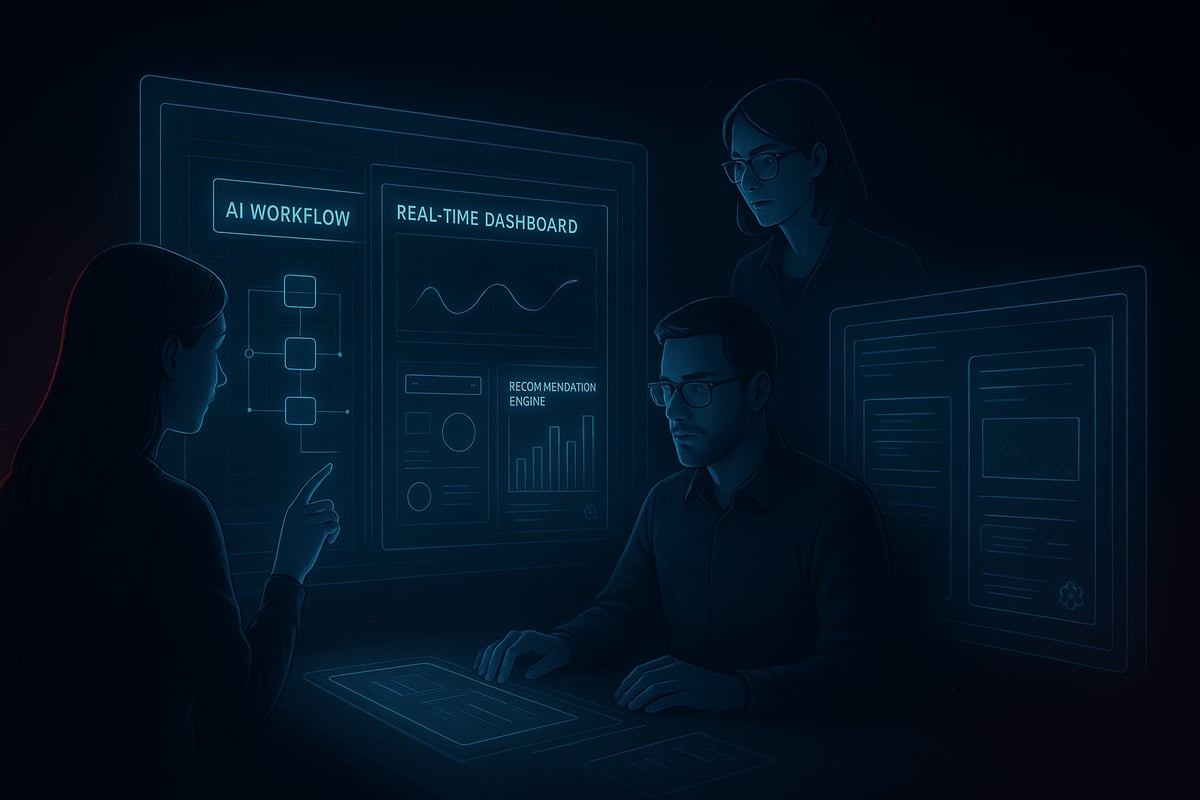
Barriers once defined the field: advanced programming, high costs, and a shortage of AI talent. No code ai and machine learning platforms now remove those obstacles, making intelligent systems accessible to anyone with vision and data. This democratization is not just technical—it is psychological.
By 2026, over 65% of enterprise AI solutions will be built with no-code or low-code tools (Gartner, 2025). Market research confirms explosive growth, with the no-code AI platforms market surging to $24.7 billion by 2029. The core design principle is clarity and accessibility. Instead of wrestling with syntax, creators drag, drop, and configure visual workflows.
Product managers can now launch recommendation engines without waiting for engineering bandwidth. AI automates the technical foundation—data ingestion, model selection, deployment—so innovators concentrate on outcomes and user experience. This shift empowers teams, unlocking creativity and ownership. Studio thinking prevails: systems that scale, rapid iteration, and feedback loops replace bottlenecks and gatekeeping.
Why Now? The Convergence of Technology and Usability
Why is 2026 the tipping point for no code ai and machine learning? Cloud infrastructure has matured, and drag-and-drop ML interfaces are intuitive. AI-assisted workflows are woven directly into business processes, eliminating the friction between idea and execution.
Design cycles are now iterative and feedback-driven, mirroring the rhythm of modern no-code ML. Consider a retailer deploying computer vision for inventory: with a no-code platform, what once took months now takes weeks. Teams can visually connect data sources, define logic, and launch predictive models with minimal effort.
No code ai and machine learning is not a shortcut—it is a reframing of innovation itself. The focus shifts from building screens to designing adaptable systems. Clarity, rhythm, and continuous improvement become the hallmarks of transformative digital products. As we look ahead, innovators who master these systems will define the future. The Embark Studio™ system is built to empower this new generation of creators.
Core Principles of No Code AI and ML: Design Thinking Meets Automation
Forget the myth that no code ai and machine learning platforms are only for quick prototypes or simple tasks. The real revolution lies in how these tools blend design thinking with powerful automation, creating a new rhythm for digital innovation.

Human-Centered Design in No-Code AI
Many believe that using no code ai and machine learning means sacrificing control or depth. In reality, these platforms are grounded in human-centered design, where clarity and user empowerment take priority over technical barriers.
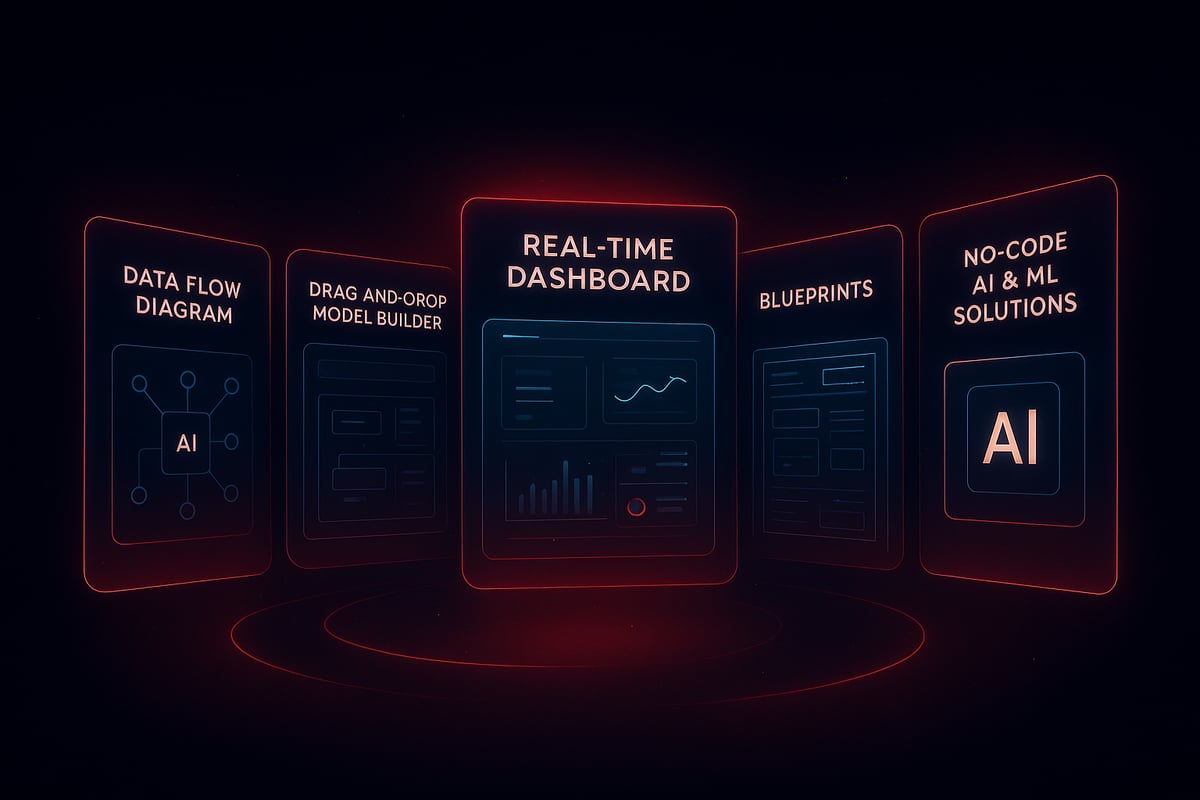
Every interface is shaped by design thinking: visual pipelines guide users through each step, drag-and-drop model builders let you experiment without fear, and intuitive dashboards reveal insights at a glance. This approach is not about hiding complexity, but about making the creative process accessible to more people.
Consider a healthcare team using a no-code platform to prototype a diagnostic model. Instead of getting lost in code, they focus on real patient needs, iterating quickly based on feedback. Here, rapid iteration is not a luxury, but a built-in principle.
A recent MIT study found that 78% of no code ai and machine learning users achieve faster time-to-value compared to traditional ML projects. This is because the design puts systems thinking before screen-by-screen decision-making.
For a deeper dive into how these principles empower creators, see Human-Centered AI Design Principles.
No code ai and machine learning unlocks creativity, not by removing expertise, but by amplifying it. The goal is to minimize friction and maximize clarity, so teams can focus on solving real problems.
The Role of AI in No-Code Workflows
AI in no code ai and machine learning is not the star of the show, but the silent partner. It automates repetitive steps, surfaces insights, and suggests optimizations, so innovators can focus on direction rather than syntax.
Imagine building a predictive model with RapidMiner. Instead of spending hours on feature engineering and model tuning, the platform’s AI modules handle the heavy lifting. Instant feedback on performance metrics lets you iterate quickly, keeping human intuition in control.
The rhythm of no code ai and machine learning is iterative. AI handles data prep and model selection, while humans drive creative problem-solving and business alignment. This feedback loop is what powers modern digital transformation.
Studio thinking means building systems, not just screens. No code ai and machine learning platforms enable teams to scale ideas with clarity and rhythm, connecting workflows across business functions.
As you design your next intelligent product, consider how a system-first mindset can create outcomes that are both innovative and sustainable. The Embark Studio™ system is built on these very principles, guiding creators toward clarity, adaptability, and continuous improvement.
Step-by-Step Guide: Building No Code AI Solutions in 2026
Building with no code ai and machine learning starts before you ever see a screen. The real challenge? Most teams believe innovation means endless coding or hiring expensive experts. In reality, the process can be systematic, visual, and driven by clarity.
Step 1: Define the Problem and Outcome
The first step is not about technology, but about clarity. Start by identifying a business challenge or opportunity. What outcome matters most? Maybe you want to increase conversions, reduce churn, or automate approvals.
Studio thinking means looking at the whole system, not just one screen. For example, a fintech startup might aim to automate loan approvals, freeing staff for more valuable work. This shift often comes from recognizing automation as the key to overcoming business growth bottlenecks, as explored in Automation and Business Growth Bottlenecks. Here, no code ai and machine learning become the foundation for reimagining workflows.
Step 2: Collect and Prepare Data Visually
Next, connect to your data. No code ai and machine learning platforms offer built-in connectors for databases, spreadsheets, and APIs. Data cleaning, normalization, and exploration happen through intuitive drag-and-drop tools.
Imagine a retail team merging sales and inventory data using a visual interface. AI surfaces missing values and outliers, guiding teams to make data-driven decisions without manual scripts. The process is transparent and collaborative, so teams can focus on what matters.
Step 3: Select and Configure Machine Learning Models
Now, choose the right model template. Most no code ai and machine learning platforms provide visual menus for classification, regression, or clustering. Adjust parameters in real time and let AI recommend the best fit.
A UI might present a table comparing model accuracy, feature importance, and explainability:
| Model | Accuracy | Feature Importance | Explainable? |
|---|---|---|---|
| Random Forest | 92% | Yes | Yes |
| SVM | 88% | No | Limited |
| XGBoost | 94% | Yes | Yes |
E-commerce managers can deploy churn prediction models without code, trusting the system to surface relevant insights.
Step 4: Train, Test, and Iterate
With your model selected, training and testing become interactive. Split data visually, view instant feedback on accuracy or confusion matrices, and iterate quickly.
No code ai and machine learning platforms make feedback loops obvious. Tweak, retrain, and revalidate in minutes, not weeks. This rhythm of continuous improvement empowers teams to experiment bravely, knowing they can always refine their approach.
Step 5: Deploy and Monitor
Deployment is now a one-click affair. Models launch securely to cloud or on-premise environments. Real-time dashboards display predictions and key business metrics.
AI-driven alerts notify teams of data drift or performance drops. Healthcare providers, for example, can deploy diagnostic tools at the edge and monitor outcomes instantly. The system prioritizes clarity and rhythm, ensuring results are always actionable.
Building no code ai and machine learning solutions is not about shortcuts, but about empowering teams to focus on outcomes, not syntax. The Embark Studio™ approach? Design systems that scale, adapt, and drive clarity—ready for whatever challenge comes next.
Leading No Code AI Platforms and Tools in 2026
The landscape of no code ai and machine learning platforms is more dynamic than ever. With dozens of contenders, choosing the right system can feel overwhelming. The real challenge for innovators is not just picking a tool, but selecting a platform that amplifies clarity, creativity, and business impact.
To understand the market momentum, consider that global forecasts predict significant growth for no code ai and machine learning platforms through 2032, with new players and evolving features every year. See the No-code AI platforms market forecast for a detailed industry outlook.
Key Players and Their Strengths
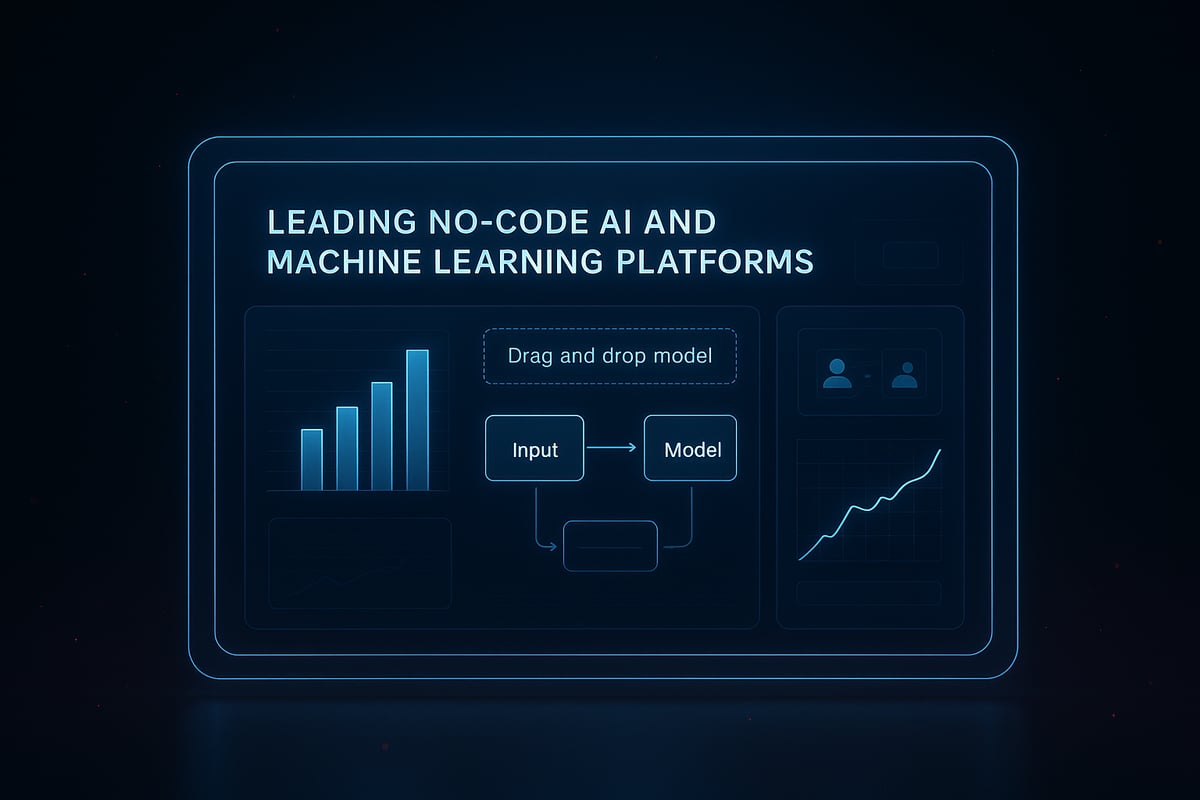
In 2026, several platforms define the rhythm of no code ai and machine learning innovation. Each brings a unique approach to workflow clarity, feedback, and extensibility.
| Platform | Strengths | UI Example |
|---|---|---|
| Dataiku | End-to-end pipelines, collaboration, strong governance | Visual pipeline builder |
| KNIME | Open-source, flexible, visual workflow design | Drag-and-drop node editor |
| RapidMiner | Automated ML, explainable AI, rapid prototyping | Real-time model feedback |
| Google AutoML | Scalable, seamless GCP integration, cloud-first | Simple cloud deployment |
| Microsoft Power Platform | Deep business integration, enterprise security | Business app connectors |
Picture a product manager building a recommendation engine in Dataiku. The interface is cinematic: nodes glow as you connect data sources, and real-time feedback guides each choice. No code ai and machine learning platforms like these prioritize visual clarity over technical noise, letting you focus on outcomes, not syntax.
Platform Selection Criteria
Selecting the right no code ai and machine learning platform is a design decision, not just a technical one. Start by aligning platform strengths with your business needs and data sources. Look for robust support for explainable AI and regulatory compliance—these are non-negotiable in 2026.
Documentation and community support matter. Platforms with active communities and clear tutorials foster rapid learning and iteration. Evaluate whether the system can scale with your product vision, not just solve today's problem.
Studio thinking means prioritizing systems that enable continuous feedback and flexibility. The future of no code ai and machine learning belongs to platforms that empower creators with clarity, adaptability, and rhythm. As you evaluate, consider frameworks that elevate your entire innovation process—a principle at the core of the Embark Studio™ system.
Real-World Applications: No Code AI in Action
The biggest misconception? That only data scientists can create business-ready AI. In practice, no code ai and machine learning are dissolving these barriers, putting powerful tools in the hands of decision-makers, designers, and product teams.
Industry Case Studies and Outcomes
- Retail: Merchandisers use no code ai and machine learning to build dynamic pricing engines. Instead of waiting for IT, they drag visual blocks to connect sales, inventory, and competitor data. The result? Revenue increases by 15%, proven in an MIT case study. The UI features a live dashboard, with pricing recommendations updating in real time as market conditions shift.
- Healthcare: Clinical teams, not just programmers, prototype diagnostic models using intuitive drag-and-drop platforms. Data from patient records flows into a visual pipeline for cleaning and analysis. Diagnostic accuracy improves while manual review time drops by 40%. Dashboards display model confidence scores and patient outcomes, enabling rapid iteration based on real feedback.
- Finance: Fraud detection is no longer locked behind engineering backlogs. With no code ai and machine learning, risk analysts deploy visual ML pipelines, identifying suspicious patterns in minutes. Automated alerts and explainable AI modules highlight why transactions are flagged, all within a clear, visual interface. Deployment to production happens in under a month.
- Manufacturing: Operations leads design predictive maintenance workflows, connecting machine sensor feeds to ML models through simple interfaces. A dashboard shows which equipment is likely to fail, so teams act before costly breakdowns occur. The clarity of the system means even non-technical staff can monitor and adjust workflows.
Psychological Impact and Studio Thinking
What unites these scenarios? Teams own their outcomes. No code ai and machine learning empower users to experiment, iterate, and deploy—without waiting on technical gatekeepers. This shift is psychological as much as technical. The clarity of UI design, feedback loops, and transparent logic enable confidence and creativity.
No code ai and machine learning are not shortcuts. They are force multipliers for expertise, letting teams focus on impact, not syntax. For a deeper look at how AI is reshaping product innovation through design, see AI in Product Design Innovation.
As we build the Embark Studio™ system, one thing is clear: the future belongs to those who design for clarity, rhythm, and continuous improvement.
The Future of No Code AI and ML: Trends, Challenges, and Opportunities
The biggest misconception about no code ai and machine learning is that it is a shortcut, not a serious innovation driver. In reality, the landscape is shifting fast. By 2026, next-generation tools are empowering creators to build, deploy, and govern intelligent workflows at scale, regardless of their technical background.
The Next Wave: Generative and Agentic AI
Generative AI and prompt engineering are opening new creative frontiers for no code ai and machine learning. Retrieval-Augmented Generation (RAG) and Agentic AI are making it possible to build autonomous, adaptive workflows without writing a line of code. According to a recent No-code AI platforms market analysis, the sector is projected to see rapid growth as more businesses seek accessible, explainable, and scalable AI solutions. This surge is not about replacing human creativity, but amplifying it.
Responsible AI: Ethics, Explainability, and Compliance
As no code ai and machine learning platforms mature, responsible AI becomes a core design principle. Visual tools are now surfacing bias, privacy, and compliance checks directly within model dashboards. By 2026, 70% of enterprises will require explainable AI as a standard feature. A well-designed UI might highlight flagged features, show model decisions in plain language, and offer real-time alerts for potential compliance risks. The logic is clear: clarity and transparency drive trust and adoption.
Building for the Future: Systems, Not Screens
The challenge is balancing speed with governance. The future of no code ai and machine learning belongs to those who build adaptable systems, not just shiny screens. Studio thinking means designing frameworks that prioritize clarity, rhythm, and continuous improvement. The next generation of innovators will invest in toolkits that evolve with their needs, always focusing on outcomes over syntax. At Embark Studio™, this system-first mindset is shaping the way we imagine tomorrow’s AI workflows.
Ready to bring your no code AI ideas to life and build digital products that scale? We’ve seen how 2026 is the year innovators like you can leverage accessible, high performance tools without getting bogged down by technical barriers. At Embark Studio, we work side by side with founders and product teams to turn visionary concepts into conversion focused experiences using Framer and AI assisted workflows. If you’re curious how a system driven approach can help your startup move faster and grow smarter, let’s explore the possibilities together.
Get articles like this in your inbox
Practical design and growth insights for founders. No spam, unsubscribe anytime.


