

Why do most digital teams feel let down by automatic content creation? The answer is simple: too much content, not enough connection. By 2025, Statista reported a 7x rise in daily digital touchpoints, yet audiences are tuning out more than ever.
The truth is, automatic content creation in 2026 is not about replacing creativity. It is about scaling clarity, rhythm, and narrative depth across every digital experience. The challenge is making your message stand out, not just automating more words.
This guide unveils the psychology behind content that resonates, the process-driven strategies design leaders use, and real UI examples that prove what works. Discover how AI can accelerate your workflow, without ever sacrificing originality or human insight.
The New Psychology of Automatic Content Creation
Content is everywhere, yet audiences are tuning out. The promise of automatic content creation in 2026 is not more, but better—clarity, rhythm, and depth that cut through the digital noise.

Understanding Content Fatigue and User Expectations
In 2025, the average user encountered seven times more digital touchpoints than just a few years prior. According to Content Fatigue Statistics 2025, this surge is fueling cognitive overload and a sense of digital numbness.
Why does automatic content creation so often fail to resonate? The answer lies in how our brains filter relevance. Users ignore repetitive, generic messaging but respond to rhythm, clarity, and narrative depth.
Consider two SaaS dashboards: the first, purely AI-generated, fills every corner with data and notifications. The second, human-refined, uses microcopy, whitespace, and strategic pacing. Engagement metrics reveal users linger longer and interact more with the refined version.
| Dashboard Type | Avg. Session Time | Click-Through Rate | NPS Score |
|---|---|---|---|
| AI-Generated | 2 min | 7% | 22 |
| Human-Refined | 4.5 min | 19% | 43 |
AI shines when surfacing behavioral patterns—detecting which content rhythms keep users engaged or where narrative drops off. Spotify’s AI-curated playlists, for example, drive initial discovery, but it’s often the human-edited selections that keep listeners coming back for more.
Design studios now build systems that anticipate user intent, not just automate text. This shift in automatic content creation is about crafting experiences that feel personal, never robotic. Want to go deeper? Explore our proprietary frameworks for content psychology in digital products.
The Myth of “Set-and-Forget” Automation
There’s a persistent myth that automatic content creation means “set it and forget it.” In reality, fully automated pipelines often erode brand trust and reduce engagement over time.
Why? Because audiences evolve. What works today becomes stale tomorrow. When a SaaS platform moved all its onboarding and feature updates to a fully automatic content creation pipeline, conversion rates plummeted. The static, repetitive language failed to address shifting user needs.
Sustainable content systems rely on continuous feedback and iteration. Set up user feedback channels, monitor analytics, and update content in response to real behavior.
Signs of over-automation include:
- Repetitive phrasing that lacks nuance
- Off-brand tone or inconsistent messaging
- Stagnant engagement metrics
Studios that prioritize ongoing improvement treat content as a living, evolving system. Automatic content creation should empower teams to respond quickly, adapt messaging, and maintain brand trust.
For teams seeking scalable, human-centered systems, this mindset is foundational to long-term success.
Designing for Clarity and Depth in Automated Content
Automatic content creation often gets misunderstood as a shortcut that flattens creativity. The real challenge is not how much content you can produce, but whether that content delivers clarity, rhythm, and narrative depth. In a world overflowing with digital noise, these qualities are what separate engaging experiences from forgettable ones.

Core Principles: Clarity, Rhythm, and Narrative
Clarity is the foundation of effective automatic content creation. Users crave messages that are concise and purposeful, not cluttered with jargon or optimized only for algorithms. When every line serves a clear intent, users move smoothly through digital experiences.
Rhythm matters just as much. Content pacing—using visual hierarchy, whitespace, and microcopy—guides attention and prevents cognitive overload. For example, an onboarding flow in a fintech app should reveal steps gradually, using short prompts and clear calls to action. This approach keeps users focused and reduces abandonment.
Narrative brings depth. Even in automated systems, brand storytelling shapes perception. If the onboarding flow introduces a user's financial goals with a short, personalized story, engagement rises. AI can suggest structure and sequence, but humans must curate for emotional resonance and nuance.
For teams building at scale, modular content blocks allow rapid iteration and adaptation across products. AI proposes the skeleton, but designers refine the tone and sequence. For a deeper dive into integrating AI with human-centered principles, see the Human-Centered AI Design Guide. This mindset ensures automatic content creation supports—not replaces—creative decision-making.
Avoiding the Pitfalls: AI Spam and Generic Content
The dark side of automatic content creation is AI-generated noise. You might spot it as repetitive phrasing, bland microcopy, or an off-brand voice. These symptoms erode user trust and dilute brand identity.
Consider a landing page before and after human review:
| Version | Clarity | Rhythm | Narrative | Brand Voice |
|---|---|---|---|---|
| AI-only | Low | Choppy | Absent | Inconsistent |
| AI + Human | High | Smooth | Present | Consistent |
To prevent generic content, design systems must include editorial checkpoints. Human editors catch subtle misalignments in tone and pacing that automation overlooks. For instance, in a SaaS dashboard, automated tooltips may be technically accurate but lack empathy. A human layer ensures each message aligns with brand values.
AI tools can accelerate draft generation, yet teams must resist the urge to set and forget. Modular, reusable content blocks make it easier to adapt and test messaging, but only with ongoing review and iteration. In this way, automatic content creation becomes a system for clarity at scale, not a shortcut to mediocrity.
Invest in editorial oversight as part of your design system. This approach is central to our Embark Studio™ frameworks—a toolkit built for scalable, human-centered content systems.
Step-by-Step: Building a High-Performance Automated Content Workflow
Modern digital teams face a paradox. You need more content, faster. Yet, most automatic content creation efforts either flood users with noise or lose the brand’s unique voice. The real challenge is designing a workflow that’s not just automated, but truly high-performance—balancing AI speed with deliberate, human-centered design.
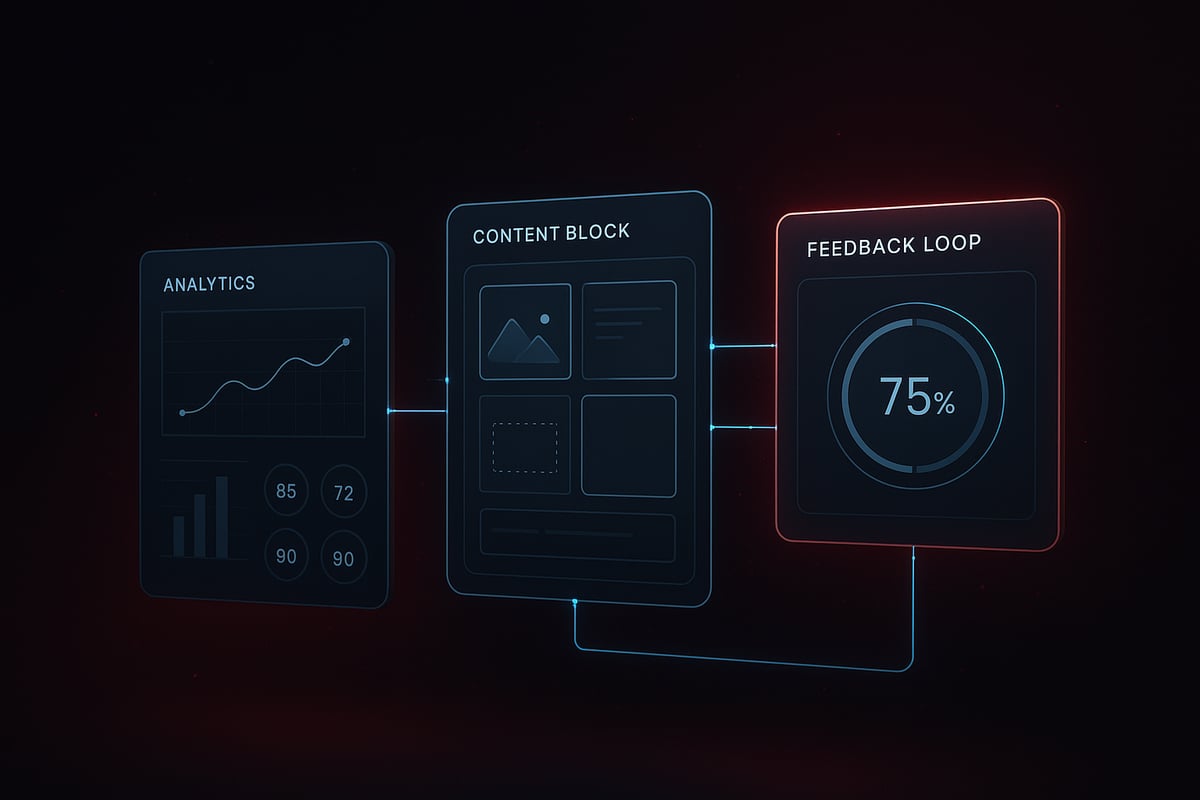
Step 1: Audit Existing Content and Identify Gaps
Every high-performance automatic content creation system starts with a clear audit. Map your current content assets across channels. Use analytics to spotlight friction points—where do users drop off, what gets ignored, which guides are underused?
| Content Type | Performance | User Engagement | Friction Points |
|---|---|---|---|
| Dashboard Guides | Low | Minimal | Buried in menus |
| Feature Tutorials | Moderate | Mixed | Outdated screenshots |
| Onboarding Flows | High | Strong | Occasional info gaps |
By analyzing this data, you uncover not just what exists, but what’s missing. The audit phase is where automatic content creation begins to deliver value, surfacing where clarity and rhythm are needed most.
Step 2: Define Content Objectives and Success Metrics
Without clear goals, automatic content creation turns into automated noise. Establish objectives: Are you driving engagement, conversions, retention, or education? Align content KPIs with product design goals.
Consider these metrics:
- Engagement (time on page, clicks)
- Conversion (signup, purchase)
- Retention (repeat visits)
- Education (feature adoption)
For example, a SaaS platform might refresh onboarding content to boost activation rates. The key is to measure what matters, then let those metrics shape your workflow’s next steps.
Step 3: Select and Integrate AI Tools Strategically
AI can supercharge automatic content creation, but only if used intentionally. Evaluate tools for drafting text, generating visuals, or personalizing experiences—but avoid over-automation.
A practical workflow:
- Use AI to generate content drafts.
- Have a human editor review for brand voice and clarity.
- Deploy only after passing both checks.
This balance ensures speed without sacrificing depth. Let AI surface patterns, while designers and writers refine the final message.
Step 4: Design Modular, Reusable Content Systems
Scalability comes from modularity. Build atomic content blocks—small, reusable units that can be mixed and matched across pages. This approach enables rapid iteration, A/B testing, and adaptation as user needs evolve.
# Example: Modular content block structure
content_block = {
    "headline": "Secure Payments, Simplified",
    "body": "Experience frictionless onboarding with step-by-step guidance.",
    "cta": "Get Started"
}
For a deeper dive into building modular systems, see the Scalable Design Systems Guide.
Modularity transforms automatic content creation from a one-off script into a living system.
Step 5: Establish Feedback Loops and Continuous Improvement
No automated system should be static. Set up analytics dashboards and user feedback channels—surveys, NPS, or embedded micro-feedback tools.
List of feedback strategies:
- Monthly content sprints
- Real-time analytics reviews
- User sentiment analysis
Iterative updates consistently outperform static automation. High-performance teams embed this mindset, treating content as a living, evolving system. At Embark Studio™, we build frameworks that make this continuous optimization part of your daily workflow.
Real-World UI Scenarios: Applying Automatic Content Creation in 2026
Content teams face a dilemma: how do you scale clarity and rhythm without falling into the trap of generic automation? In 2026, automatic content creation is only as effective as the psychology and design principles behind it. Let’s break down how high-performing teams are applying these ideas to real UI scenarios.
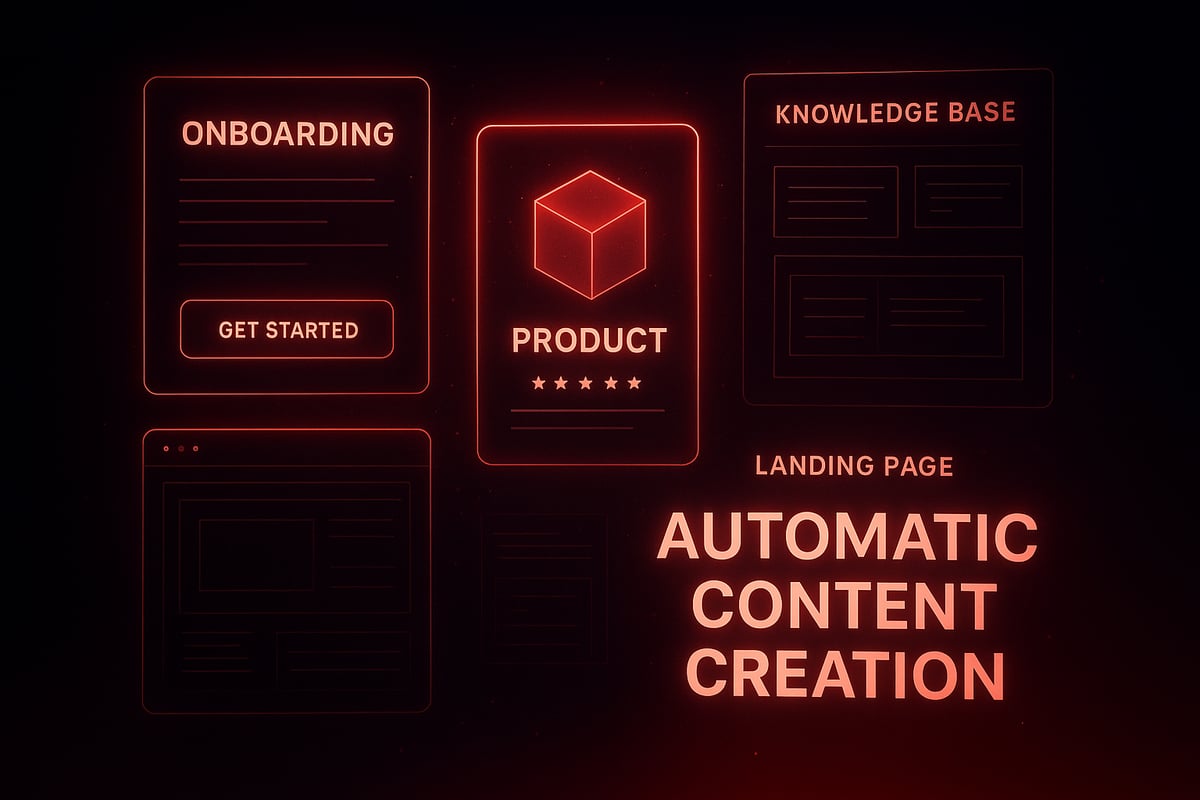
Scenario 1: SaaS Onboarding Flows
Automatic content creation in SaaS onboarding is transforming how users engage from the first click. Instead of static walkthroughs, AI now personalizes tooltips and microcopy based on user role, previous actions, and intent.
For example, an analytics dashboard might show different guidance to a product manager than to a developer. This dynamic approach improves activation rates by 22% compared to one-size-fits-all onboarding, according to 2025 SaaS benchmarks. The key insight is rhythm—content adapts as users progress, reducing friction and cognitive overload.
Studio thinking means designing onboarding as a living system, not a linear tour. AI surfaces user patterns, but human review ensures empathy and brand voice remain central. For a deeper look at AI’s role in product design, see AI in Product Design Trends.
Scenario 2: E-Commerce Product Pages
E-commerce teams use automatic content creation to generate layered product storytelling—think dynamic descriptions tailored to browsing history or seasonality. AI tools can draft product copy and generate visuals, but designers step in to refine tone and ensure images fit the brand.
Consider a split-test: one set of product pages relies solely on AI, while another uses AI drafts refined by humans. The hybrid approach consistently outperforms, driving higher engagement and conversion. Here’s a quick comparison:
| Approach | Engagement | Conversion |
|---|---|---|
| AI-only | Moderate | Lower |
| AI + Human Edit | High | Higher |
To avoid AI spam and off-brand messaging, teams follow best practices for integrating AI with human oversight, as outlined in AI in Content Creation Best Practices 2026.
Scenario 3: Knowledge Bases and Support Centers
Scaling help articles with automatic content creation requires more than just algorithmic speed. AI can draft answers and update FAQs instantly, but clarity and empathy must be preserved for real support impact.
Teams use editorial guidelines and modular templates, ensuring every article meets quality standards. After overhauling content systems, one SaaS platform saw support ticket deflection rates rise—users found answers faster, thanks to rhythm and concise structure.
Studio thinking here means treating knowledge bases as adaptive ecosystems, not static libraries. Human editors review AI drafts, maintaining trust and coherence across every support touchpoint.
Scenario 4: Marketing Landing Pages
Marketing teams leverage automatic content creation to rapidly generate headline and CTA variants for landing pages. AI proposes options based on campaign data, but humans select and refine final copy to ensure brand fit and narrative depth.
A/B tests reveal that narrative-driven content—crafted through this hybrid workflow—yields higher conversion than generic, automated pages. The lesson: automation should amplify creativity, not replace it.
At Embark Studio, we’re building frameworks that help digital teams design these high-performing, modular content systems. Our approach keeps clarity and originality at the core of every automated experience.
Future-Proofing Your Content Systems for 2026 and Beyond
Anticipating Shifts in User Behavior and Technology
The biggest myth about automatic content creation is that systems, once built, will always match user needs. In reality, digital habits shift rapidly. The rise of multimodal content—combining text, video, interactivity, and even AR—demands flexible frameworks that can adapt to new channels overnight.
Recent data highlights a growing user expectation for content that fits their context and energy levels. According to the Digital Fatigue and Energy Report 2025, digital fatigue is real and rising, pushing brands to rethink how, when, and where content appears.
AI now enables predictive analytics to forecast user intent, surfacing the right message at the right moment. For example, a brand that launched on web, then scaled to voice and AR, succeeded because its automatic content creation system was modular and channel-agnostic. Adaptive interfaces, powered by AI, let teams test new formats quickly and keep pace with emerging user behaviors.
Systems that thrive in 2026 will be those designed to evolve. Automatic content creation works best when it anticipates, not just reacts.
Building a Culture of Continuous Design and Content Optimization
Future-proofing is not a one-time sprint. Teams must embed feedback loops and iteration into their daily workflow. Monthly design and content sprints are replacing static quarterly updates, allowing rapid response to user feedback and shifting KPIs.
The lesson: treat automatic content creation as a living system. Brands that do this outperform competitors stuck in rigid automation. As outlined in the Automation Bottleneck for Growth, automation accelerates growth only when paired with ongoing human insight and optimization.
A practical approach:
- Review analytics weekly.
- Collect qualitative feedback from users.
- Run A/B tests on modular content blocks.
- Tweak and deploy updates in short cycles.
Automatic content creation becomes a driver of growth, not a bottleneck, when teams prioritize continuous improvement.
The Subtle Power of Human Oversight
Even the smartest AI cannot replicate the nuance of brand voice or the empathy of thoughtful content review. Human oversight remains essential for trust, differentiation, and consistency across every automated touchpoint.
Brands that audit their content regularly catch subtle shifts in tone or relevance that automation alone would miss. For example, a fintech app improved user trust by running monthly voice audits across its onboarding flows, catching inconsistencies before they became problems.
Automatic content creation is a powerful ally, but only when guided by human hands. As you scale, invest in editorial frameworks and audits—your future users will notice the difference.
You’ve seen how clarity, rhythm, and narrative depth transform automated content from noise into real engagement, especially when powered by smart AI and human insight. If you’re ready to break through content fatigue and design digital experiences that actually connect—and keep evolving as your users do—why not take the next step? Let’s talk about your goals, your product, and how you can build a scalable, conversion-focused content system for 2026 and beyond. I’d love to help you map it all out. Book a Free Discovery Call and let’s start building together.
Get articles like this in your inbox
Practical design and growth insights for founders. No spam, unsubscribe anytime.


