

Most startups treat their website like a product launch. They build it, ship it, celebrate it. Then they watch it slowly decay. Performance degrades. Security vulnerabilities appear. Content grows stale. Conversion rates plateau. The problem isn't the initial design. It's the lack of a support system. Website support packages aren't maintenance contracts or hourly billing arrangements. They're operational frameworks that keep digital products performing at peak capacity. For product-focused teams, they represent the difference between a static asset and a conversion engine that compounds value over time.
The Structural Problem With One-Time Website Builds
Traditional website projects operate on a false premise: that digital products can be completed. This mindset creates a gap between launch day and the moment teams realize their site needs continuous optimization.
Consider what happens in the first 90 days after launch. Traffic patterns emerge that weren't anticipated. User behavior reveals friction in conversion paths. Browser updates introduce rendering inconsistencies. Security patches require immediate deployment. Comprehensive website maintenance services address these realities through systematic support structures rather than reactive fixes.
The cost of neglect compounds exponentially. A minor performance issue that reduces load speed by one second can decrease conversions by 7%. An outdated CMS becomes a security liability. Broken links damage SEO authority. Each ignored issue creates technical debt that eventually requires expensive remediation.
High-performing teams recognize three fundamental truths:
- Websites are products, not projects
- Performance optimization is continuous, not episodic
- Support systems prevent expensive emergencies
What Website Support Packages Actually Contain
Structure determines outcomes. Effective website support packages organize services into systematic layers, each addressing specific operational needs.
Performance and Infrastructure Management
The foundation layer ensures technical reliability. This includes hosting optimization, content delivery network configuration, database management, and uptime monitoring. These aren't passive services. They require active tuning based on traffic patterns, geographic user distribution, and content delivery requirements.
Standard support package offerings typically bundle hosting with security and backup protocols, creating baseline stability for business-critical sites.
Performance monitoring extends beyond simple uptime checks. It tracks Core Web Vitals, identifies rendering bottlenecks, analyzes resource loading sequences, and flags JavaScript execution delays. For conversion-focused sites, milliseconds matter. Systematic performance optimization can improve load times by 40-60% without redesigning a single component.
Security and Compliance Protocols
Security isn't a feature. It's an operational discipline. Support packages implement layered security measures including SSL certificate management, vulnerability scanning, malware detection, and firewall configuration.
But security extends into compliance territory. GDPR requirements, CCPA regulations, and accessibility standards demand continuous monitoring and updates. Professional maintenance packages often include ADA compliance audits and remediation workflows that prevent legal exposure.
| Security Layer | Function | Update Frequency |
|---|---|---|
| SSL Certificates | Encrypted data transmission | Annual renewal |
| Core Software | Platform vulnerability patches | Weekly scans |
| Plugin/Dependencies | Third-party security updates | Daily monitoring |
| Access Control | User permission audits | Monthly review |
| Backup Systems | Recovery point objectives | Hourly incremental |
Content and Functionality Updates
Digital products evolve through continuous refinement. Support packages provide structured workflows for content updates, feature additions, and conversion optimization experiments.
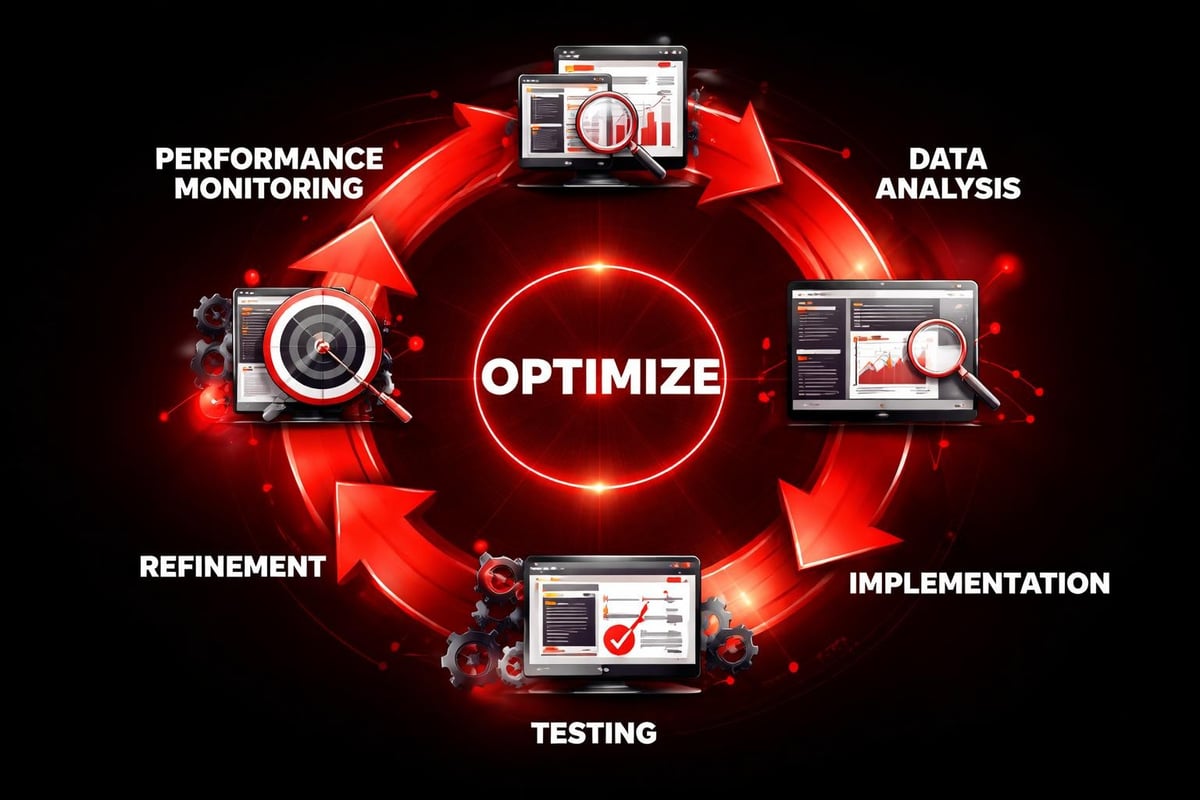
This isn't about making cosmetic changes. It's about systematic testing and improvement. A/B testing headline variations. Optimizing form field sequences. Refining navigation hierarchies based on user flow data. Each modification follows a hypothesis-test-measure cycle that compounds improvements over time.
Flexible support structures accommodate both routine updates and strategic enhancements, scaling effort allocation based on business priorities and growth phases.
How Support Systems Differ From Maintenance Contracts
The terminology matters because it reflects fundamentally different operational philosophies. Maintenance implies preservation. Support implies optimization.
Traditional maintenance contracts fix broken elements and apply patches. They're reactive by nature. Something breaks, someone fixes it. This approach creates a ceiling on performance. Your site never gets worse than broken, but it never gets better than functional.
Support systems operate proactively. They monitor leading indicators, not just failures. They optimize based on performance data, not just error logs. They test improvement hypotheses, not just apply security patches.
The Operational Model Distinction
Maintenance contracts typically bill hourly or per-incident. This creates perverse incentives. Providers benefit from inefficiency. Complex problems generate more billable hours. Quick fixes take precedence over systematic solutions.
Support packages align incentives differently. Fixed-scope retainers encourage efficiency and prevention. Providers benefit from building robust systems that require less emergency intervention. Investment shifts from crisis management to continuous improvement.
WordPress-specific support offerings demonstrate this distinction clearly, addressing common platform challenges through systematic prevention rather than reactive repairs.
Structuring Support Tiers for Different Growth Phases
Not all websites require the same support intensity. Effective packages scale with business complexity and traffic volume.
Foundation Tier: Essential Stability
Early-stage products need reliability without operational overhead. Foundation support includes:
- Daily automated backups with 30-day retention
- Weekly security scans and immediate patch deployment
- Monthly performance audits with optimization recommendations
- Standard uptime monitoring with 99.9% SLA
- Quarterly content updates (4 hours per month)
This tier maintains baseline performance for sites under 50,000 monthly visitors with relatively stable content and functionality.
Growth Tier: Active Optimization
Scaling startups require continuous refinement. Growth support adds:
- Real-time performance monitoring with anomaly detection
- Bi-weekly conversion optimization experiments
- Advanced security with threat response protocols
- Content workflow management for frequent updates
- Integration monitoring for third-party services
The growth tier suits businesses between 50,000 and 500,000 monthly visitors actively optimizing conversion paths and user experiences.
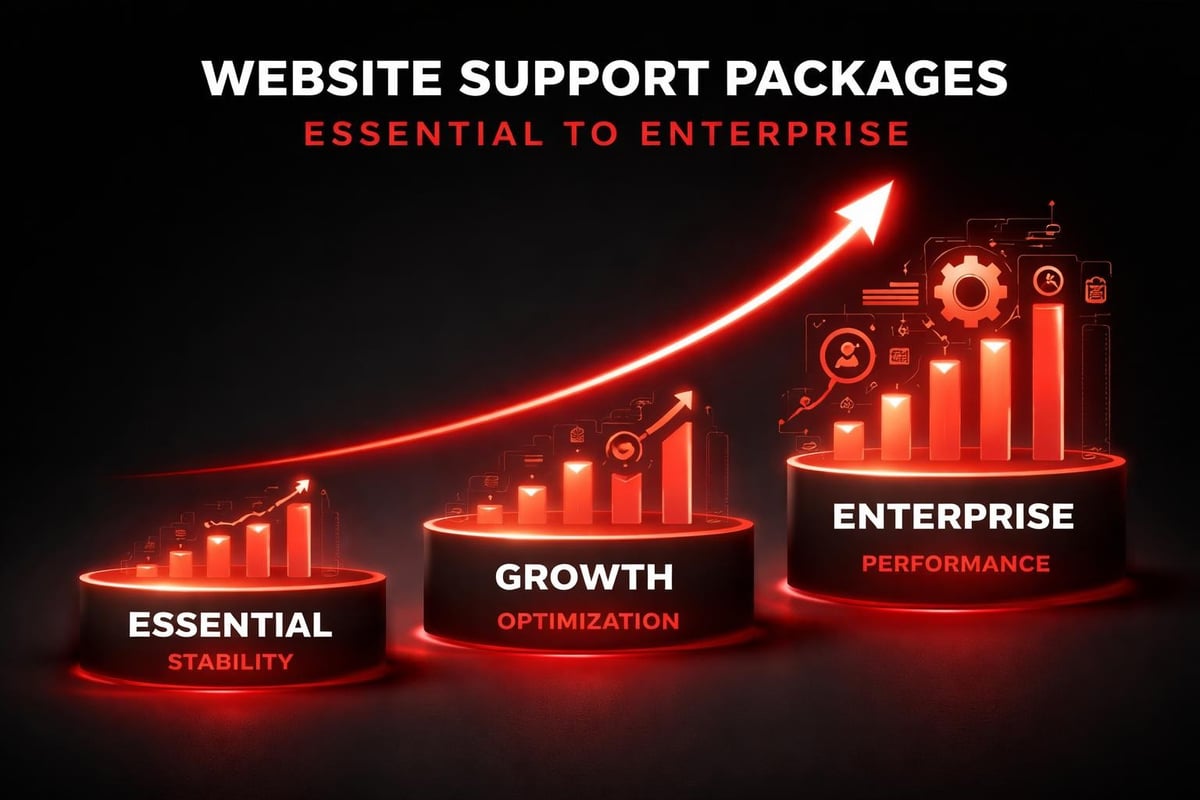
Enterprise Tier: Strategic Partnership
High-traffic platforms require dedicated strategic support. Enterprise packages include:
- Custom performance SLAs with guaranteed response times
- Dedicated support team familiar with business objectives
- Strategic optimization roadmap aligned with product goals
- Advanced analytics integration and conversion tracking
- Priority access to design and development resources
This tier serves sites exceeding 500,000 monthly visitors where performance directly impacts revenue at scale.
The AI-Accelerated Support Workflow
Traditional support models relied on manual monitoring and reactive intervention. Modern workflows integrate AI systems that surface issues before they impact users and suggest optimizations based on performance patterns.
AI-assisted monitoring analyzes thousands of metrics simultaneously, identifying anomalies that human observation would miss. It detects subtle performance degradation, predicts server capacity needs, and flags unusual traffic patterns that might indicate security threats.
But the real value emerges in optimization workflows. AI analyzes user session recordings, identifying friction points in conversion funnels. It suggests content variations based on semantic analysis of high-performing pages. It generates performance improvement recommendations by comparing current metrics against similar high-performing sites.
This doesn't replace human judgment. It accelerates it. Designers spend less time diagnosing problems and more time solving them. Strategic decisions receive data-backed context. Experimentation cycles compress from weeks to days.
Our approach to AI-assisted workflows treats artificial intelligence as a research assistant that handles pattern recognition and data synthesis, freeing designers to focus on strategic decision-making and creative problem-solving.
What Investor-Backed Teams Actually Need
Venture-funded startups face unique support requirements. They operate under compressed timelines with high-stakes performance expectations. Their websites aren't just marketing assets. They're conversion engines that directly impact runway and growth metrics.
Standard support packages often miss critical startup needs. They provide technical maintenance but lack strategic alignment with product velocity and growth experiments.
Velocity-Matched Support Structures
Startup-optimized packages synchronize with product development cycles rather than calendar schedules. They provide:
- Sprint-aligned update windows that don't conflict with product releases
- Rapid implementation cycles for conversion experiments
- Flexible scope allocation that shifts with strategic priorities
- Performance benchmarking against competitive landscape
- Growth metric integration with business intelligence tools
This structure recognizes that startup priorities shift rapidly. What matters most changes quarter by quarter. Support systems need corresponding flexibility.
Technical Debt Prevention
Early-stage velocity often creates technical shortcuts. Features get shipped with "temporary" implementations that become permanent. Quick fixes accumulate into structural problems. Scalable design systems prevent this entropy by establishing component libraries and pattern standards that maintain consistency even during rapid iteration.
Support packages for growth-stage companies include systematic technical debt audits. These identify architectural shortcuts before they become expensive refactoring projects. They create roadmaps for progressive enhancement that doesn't require complete rebuilds.
Building Internal vs. External Support Capacity
Growing teams face a critical decision: build internal support capacity or partner with specialized providers. The answer isn't binary. Optimal structures typically blend both.
When Internal Support Makes Sense
Companies should consider internal support capacity when:
- Website updates occur daily with multiple team members contributing
- Product and website functionality are tightly integrated
- Proprietary technology or unique architecture requires specialized knowledge
- Team size exceeds 50 people with dedicated operations roles
Even in these scenarios, external partnerships often handle specialized tasks like security audits, performance optimization, and complex feature development.
When External Partners Add Value
External support becomes essential when:
- Core team lacks specialized expertise in web performance optimization
- Security and compliance require dedicated focus
- Scaling demands exceed internal capacity
- Strategic perspective requires outside viewpoint
- Opportunity cost of internal support exceeds external pricing
Strategic design partnerships provide not just execution capacity but accumulated expertise across hundreds of optimization cycles and diverse business contexts.
Hybrid Operating Models
Most effective structures combine internal ownership with external expertise. Internal teams maintain day-to-day content updates and minor adjustments. External partners handle:
- Quarterly performance optimization sprints
- Security audits and compliance certification
- Complex feature development and integration work
- Strategic conversion optimization programs
- Emergency response for critical issues
This model preserves institutional knowledge internally while accessing specialized expertise when needed.
The Economic Model of Continuous Support
Website support packages represent a shift from capital expenditure to operational investment. This change has profound implications for how teams budget and measure return.
Traditional website projects required large upfront investments followed by sporadic additional costs when issues arose. This model created budget uncertainty and misaligned incentives between clients and providers.
Retainer-based support converts variable costs into predictable monthly investments. This enables better financial planning and aligns provider success with client outcomes.
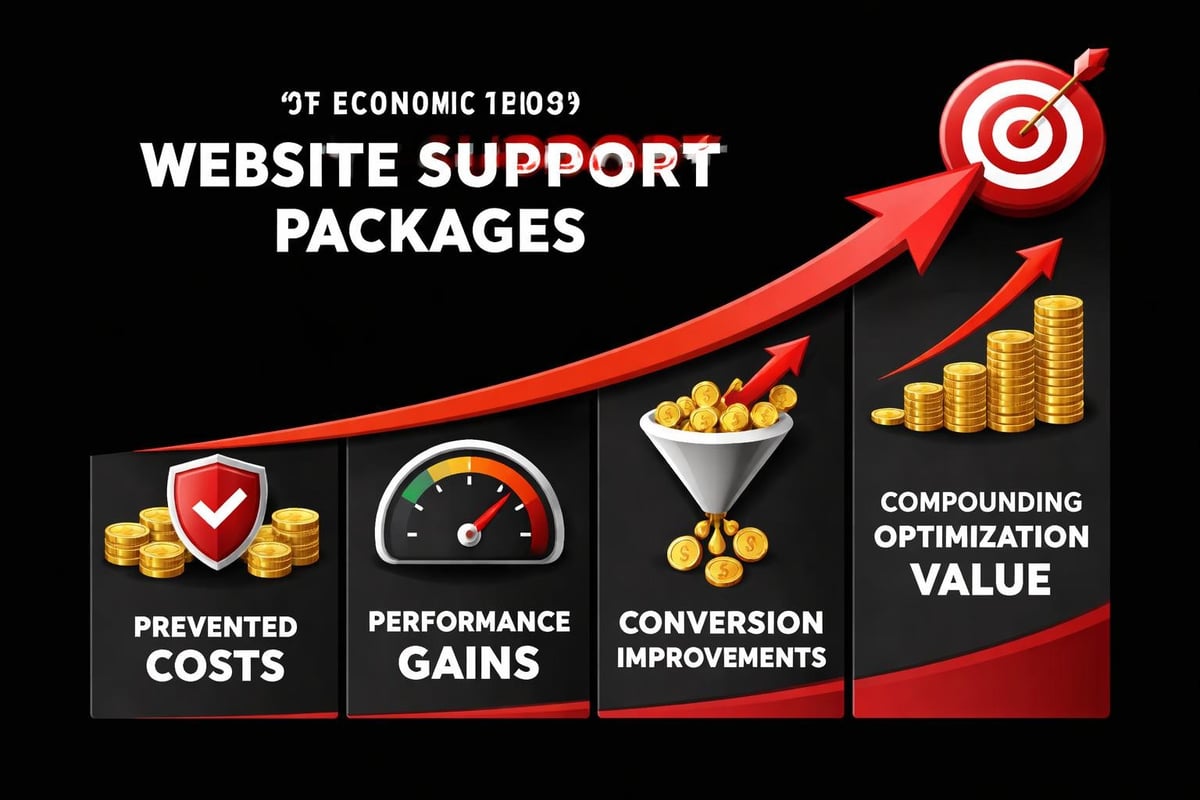
The true economic value emerges from prevented costs:
| Cost Category | Annual Risk Without Support | Prevention Value |
|---|---|---|
| Security breach recovery | $50,000 - $500,000 | 100x package cost |
| Performance-driven conversion loss | $120,000 (for $1M ARR site) | 40x package cost |
| Emergency repair/recovery | $15,000 - $75,000 | 10x package cost |
| SEO ranking deterioration | $80,000 - $200,000 | 25x package cost |
These aren't theoretical. They're observed outcomes from teams that deferred systematic support until critical failures forced expensive remediation.
Integration With Broader Product Operations
Website support shouldn't exist in isolation. Effective packages integrate with product development, marketing operations, and business intelligence systems.
This integration manifests in shared analytics frameworks, synchronized release schedules, and unified experimentation platforms. When website support operates as an extension of product operations rather than a separate vendor relationship, optimization compounds across channels.
Product design workflows benefit from this integration through consistent design language, shared component libraries, and coordinated feature releases that maintain coherence across web and product experiences.
Data Flow and Optimization Loops
Modern support packages establish bidirectional data flows between website performance and product metrics. Conversion path analysis informs product onboarding flows. User behavior patterns on marketing pages surface feature priorities. Support ticket patterns reveal documentation gaps.
This creates feedback loops that accelerate learning and improvement across the entire customer journey rather than optimizing isolated touchpoints.
Transition From Project to System Thinking
The shift to continuous support requires fundamental mindset changes. Teams must think in systems rather than deliverables. Progress measures differently. Success metrics evolve.
Project thinking asks: "Is it done?" System thinking asks: "Is it improving?" This distinction affects everything from team structure to budget allocation to performance evaluation.
Support systems require patience. Optimization compounds slowly. The most significant gains often emerge in months 6-12 as systematic improvements accumulate and data patterns clarify.
But this patience pays exponential returns. High-performing digital experiences emerge not from perfect launches but from continuous refinement guided by performance data and user behavior patterns.
The Studio Approach to Website Support
At Embark Studio™, we structure website support packages around operational systems rather than service catalogs. Our approach recognizes that startups need velocity, reliability, and strategic alignment more than comprehensive feature lists.
We organize support into three operational layers: stability systems that prevent failures, optimization systems that improve performance, and evolution systems that adapt to changing business needs. This structure scales naturally from early-stage reliability focus through growth-stage optimization to enterprise-level strategic partnership.
The key differentiator: integration with product design workflows. Updates don't require handoffs between marketing, design, and development teams. Changes flow through unified systems built in Framer with components, variables, and automation that maintain consistency while enabling speed.
AI assists throughout. Performance monitoring surfaces optimization opportunities. Content analysis suggests refinement priorities. Anomaly detection flags issues before they impact users. But strategic decisions remain human. Designers interpret data, prioritize experiments, and craft solutions that advance business objectives.
This isn't a maintenance contract. It's an operational partnership structured around continuous improvement rather than reactive intervention. Our project work demonstrates this approach across venture-backed startups where website performance directly impacts growth metrics and investor confidence.
Choosing the Right Support Structure
Selection criteria should emphasize operational fit over feature checklists. The best website support packages align with how your team actually works rather than forcing adaptation to provider processes.
Evaluate potential partners on these operational dimensions:
- Response architecture: How quickly do they detect and address issues? Real-time monitoring matters more than promised response times.
- Optimization velocity: How fast can they implement and test improvements? Days matter when running conversion experiments.
- Strategic alignment: Do they understand your business model and growth objectives? Technical expertise without context adds limited value.
- System integration: How well do their workflows mesh with your product operations? Friction in handoffs negates efficiency gains.
- Knowledge transfer: Do they build internal team capacity or create dependency? Sustainable partnerships increase autonomy over time.
The wrong choice creates operational overhead that negates support benefits. The right choice amplifies team velocity and creates compounding performance improvements.
Website support packages transform digital products from static assets into optimization engines that compound value over time. The structure you choose determines whether your site merely survives or actively drives business growth. At Embark Studio™, we build support systems that integrate with product workflows, accelerate optimization cycles through AI-assisted monitoring, and maintain the performance standards investor-backed startups require. If you're ready to shift from reactive maintenance to systematic improvement, let's design a support framework that scales with your ambition.
Get articles like this in your inbox
Practical design and growth insights for founders. No spam, unsubscribe anytime.


