

Why do so many new sites burst onto the scene with excitement, only to watch their launched website vanish into digital obscurity by 2026? The answer is rarely about flashy tools or speed. It all comes down to clarity, rhythm, and understanding user psychology from the very first click.
This guide is your roadmap to building a launched website that stands out and drives real growth. We go beyond surface-level trends and reveal what actually works—how to design with intent, launch with precision, and evolve your platform for lasting impact.
You’ll learn how to clarify your purpose, apply design psychology, harness AI for smarter workflows, master launch execution, and systematize growth. Every step is rooted in proven principles and actionable tactics.
Ready to move past the noise? Let’s unlock the true potential of your launched website and set the stage for measurable, sustainable success.
Step 1: Clarify Your Website’s Purpose and Audience
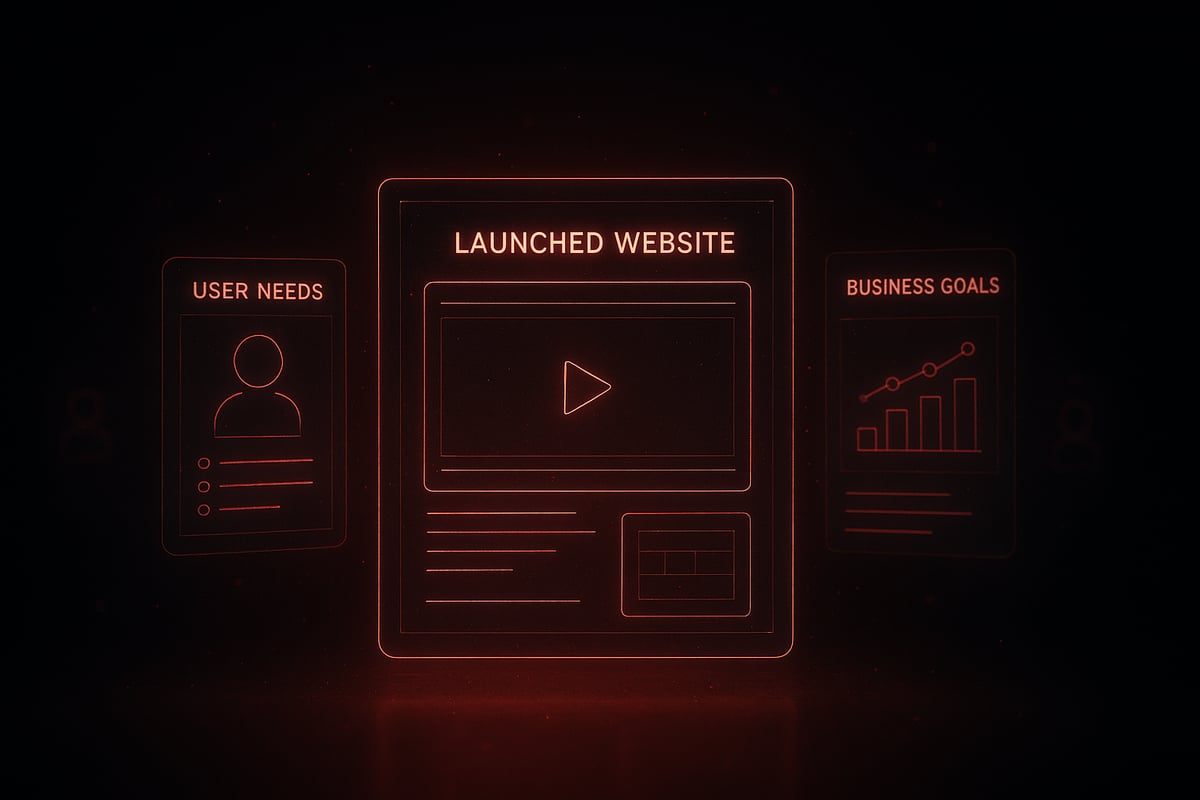
Launching a site isn’t enough in 2026. Many founders rush to get a launched website live, but without clarity, even the slickest platform vanishes into the noise. The truth: users act when they instantly see value. Homepages that cut through clever slogans and state their value boldly convert twice as well (Unbounce 2023). First impressions are lightning-fast—users judge a launched website in just 0.05 seconds. To thrive, map user needs against business goals. Use a simple table to align both sides before you design:
| User Needs | Business Goals |
|---|---|
| Fast access to info | Generate qualified leads |
| Simple navigation | Increase sign-ups |
| Trust signals | Build brand authority |
Want a deeper dive? The Corporate website development guide covers the strategic foundation for successful launches.
Define the Core Problem Your Website Solves
A launched website must answer one question instantly: “Why should I care?” Clarity always beats cleverness. Users act when the value is clear, not when they’re forced to decode jargon. The psychology is simple—judgment happens in milliseconds. Make your homepage a bold statement, not a puzzle.
Identify and Segment Your Target Audience
Generic sites are invisible. A launched website that tries to speak to everyone ends up resonating with no one. Build user personas: Are you targeting enterprise buyers or SMBs? A SaaS onboarding flow, for example, should look very different for a Fortune 500 client than for a startup founder. Empathy and specificity shape site structure and drive engagement.
Craft a Compelling Value Proposition
Clarity over cleverness wins every time. Use proven frameworks for homepage messaging. Dropbox’s “Your files, anywhere” is a masterclass in concise value. Design rhythm—consistent spacing, type, and flow—reinforces your message and keeps users anchored to your launched website.
Set Measurable Goals and KPIs
You can’t improve what you don’t measure. Before your launched website goes live, define conversion, engagement, and retention goals. Set up analytics and event tracking from day one. For example, measure sign-ups, scroll depth, and retention rates to inform both content and design decisions.
Studio Thinking: Systems Over Screens
Think beyond pixels. Scalable architecture ensures your launched website adapts as you grow. Design systems reduce friction, keep branding tight, and make future updates seamless. In our studio, clarity and rhythm are the foundation for every project. Want a toolkit that futureproofs your next launch? Stay tuned for our Embark Studio™ system.
Step 2: Design for Depth, Clarity, and Conversion
Designing a launched website in 2026 is not about chasing trends or flashy visuals. The real challenge is creating depth, clarity, and a seamless path to conversion. Too often, sites look stunning but confuse users or bury the value. How do you build a launched website that feels cinematic and drives action from the first second?

Apply Core Design Psychology Principles
First impressions are instant. Users judge a launched website’s credibility in just 0.05 seconds. This is where visual hierarchy and rhythm come into play. Guide attention using contrast, clear spacing, and bold statements. Whitespace is not empty space; it gives the brain room to process information, reducing decision fatigue.
Think of Airbnb’s homepage. Progressive disclosure gently reveals content, helping users focus without feeling overwhelmed. Every visual decision supports clarity, not just aesthetics. A launched website rooted in psychology turns skimmers into engaged explorers.
Build a Conversion-Focused User Flow
A launched website must move users from curiosity to action effortlessly. Map the journey: landing, value proposition, action. Logical sequencing removes guesswork and supports decision-making.
Take an e-commerce checkout. Collapsing unnecessary steps and using clear progress indicators can cut cart abandonment by double digits. Micro-interactions—like animated buttons or subtle confirmations—increase engagement by 20 percent, according to the Nielsen Norman Group. Each micro-moment nudges users closer to conversion, making your launched website feel alive and intuitive.
Balance Brand Expression and Usability
Every launched website faces the tension between bold brand visuals and frictionless navigation. Fintech sites often use vibrant color and motion to build trust, but too much can cloud usability. The secret is always clarity over noise.
Studio thinking means using scalable design systems to create consistency and rhythm. Curious how to build a brand that scales with your ambitions? Explore The ultimate guide to scalable design systems for proven strategies that support both creativity and structure. When your launched website is systematized, every update strengthens your brand and user experience.
Leverage AI-Assisted Design for Iteration
AI transforms how a launched website evolves. Rapid prototyping tools generate multiple hero layouts in minutes, letting you test ideas fast. AI can check color contrast for accessibility, ensuring compliance without slowing your creative flow.
But AI is a collaborator, not a replacement. Designers set the vision, while AI accelerates iteration and learning. The best results come when human intuition and AI efficiency work together, making your launched website sharper with every cycle.
Responsive and Accessible by Default
In 2026, a launched website must be mobile-first and accessible out of the box. With 70 percent of traffic on mobile and 15 percent of users needing accessibility features, compliance is non-negotiable. WCAG 3.0 sets the standard.
Think of adaptive navigation that shifts for touch and voice. Real UI leaders prioritize inclusive layouts and semantic HTML from the start. The payoff is reach, retention, and a launched website ready for every user.
Studio thinking: Systems beat screens, clarity beats noise. That’s why a framework like Embark Studio™ Design System empowers you to design, iterate, and grow without losing your edge.
Step 3: Accelerate Workflows with Modern AI and Collaboration
Launching a website in 2026 is more than a checklist. The real challenge? Orchestrating rapid, purposeful workflows without sacrificing depth or clarity. Many teams race to launch, but only those who harness the right systems and psychology drive long-term growth for their launched website.
Integrate AI Into Your Design and Build Process
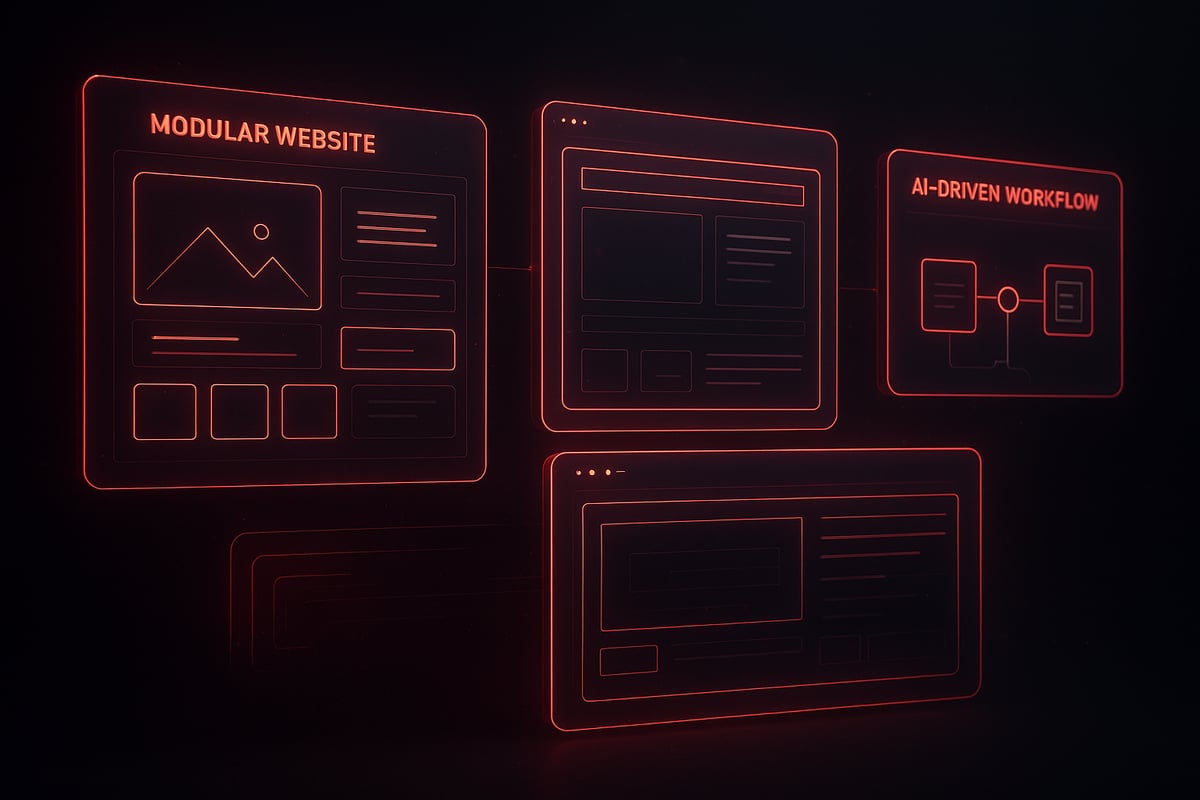
AI is transforming how teams approach a launched website. Instead of hours spent wireframing, designers now generate layouts in minutes using AI-powered modules. For example, Framer’s instant layout suggestions help teams visualize multiple homepage options, then refine with human insight.
The psychology here is simple: fast feedback loops keep creativity flowing. When AI handles the repetitive, your team focuses on the big ideas. For a deeper dive into how AI accelerates workflow, explore AI in product design innovation trends.
Studio thinking: treat AI as a partner, not a replacement. Your vision shapes the launched website, while AI amplifies your process.
Foster Real-Time Collaboration and Feedback Loops
A launched website thrives on collaboration. Gone are the days of endless email chains and siloed feedback. In 2026, real-time tools like Figma multiplayer and Framer collaboration empower teams to co-create, review, and iterate in one space.
Consider a SaaS startup: designers, developers, and product leads jump into a shared canvas, leaving comments and refining UI together. The result? Fewer handoffs, more ownership, and a rhythm that keeps the launched website aligned with business goals.
Studio thinking: feedback is fuel, not friction. Build in async reviews, but prioritize live co-creation for momentum.
Build with Scalable, Modular Architecture
Every high-performing launched website starts with a modular foundation. Component-driven design—think reusable blocks for navigation, cards, or forms—makes updates effortless and futureproofs your site.
Imagine a dashboard where new features drop in as plug-and-play modules. AI even helps document and version these components, so your system evolves without chaos. This architecture is the backbone of sustainable growth.
Studio thinking: systems over screens. Design for adaptability from day one.
Prioritize Speed Without Sacrificing Quality
Speed is vital, but quality is non-negotiable. Data shows that sites launched in under 90 days see 30% faster revenue growth. The secret? Pre-launch sprints, clear MVP goals, and post-launch refinement.
For your launched website, focus on launching fast, then learning and iterating based on real user data. AI supports this by automating tests and flagging issues, but your team’s eye for detail ensures no compromise on experience.
Studio thinking: launch is a milestone, not the finish line. Perfect through iteration.
How Embark Studio™ Accelerates High-Performance Launches
At Embark Studio™, we embed ourselves within your team, bringing AI-assisted workflows and systematized design thinking to every launched website. Our approach helped Ducati relaunch with cinematic clarity and powered OpenReel’s product UI transformation.
We believe clarity, rhythm, and systems drive measurable growth. If you want your launched website to stand out, consider a partner who builds for both velocity and depth.
Step 4: Execute a Cinematic, Conversion-Driven Launch
Launching a website is not just about going live. The real challenge is making your launched website unforgettable. Many founders assume that hitting publish is the finish line. In reality, launch is the opening scene of your brand’s story.
Craft a Compelling Launch Narrative
Every launched website deserves a captivating story. Great launches are not checklists, they are cinematic events. Think of Notion’s viral campaign—anticipation, clarity, and exclusivity combined to create buzz.
Frame your launch as a journey, not a transaction. Why? Because users connect emotionally when the narrative is clear. A strong story makes your launched website memorable, not just functional.
Studio thinking: clarity and rhythm in messaging create trust. The right rhythm guides visitors from curiosity to action.
Build Anticipation and Community
A successful launched website does not appear out of thin air. Build momentum before launch. Use waitlists, teaser campaigns, and early beta access to spark curiosity.
Data shows early access programs can boost launch conversion by 25 percent. Real UI examples include live countdowns, founder introduction videos, and social proof from pre-launch testers.
AI can help segment invite lists and personalize teaser content. Community engagement ensures your launched website starts with an invested audience.
Stress-Test Your Website Before Release
Behind every flawless launched website is rigorous testing. Use a detailed QA checklist: performance, accessibility, and device compatibility matter.
Balance automated and manual testing for depth and speed. AI-powered tools can simulate user flows, revealing friction points that humans might miss.
A table can help organize your final checks:
| QA Area | Tool/Method | Owner |
|---|---|---|
| Performance | Lighthouse, AI sim | Dev Team |
| Accessibility | WCAG scanner | QA Lead |
| Devices | BrowserStack | QA Team |
Studio thinking: systems-based QA reduces surprises and builds launch confidence.
Optimize for Launch-Day Conversion
Your launched website only gets one debut. Use launch-specific CTAs, interactive onboarding, and limited-time offers to drive immediate action.
SaaS products with guided tours see 30 percent higher activation. Use pop-up modals and progressive onboarding for a smooth experience.
For discoverability, ensure your launch plan includes SEO best practices so your launched website is primed for organic growth from day one.
AI can suggest personalized greetings and adapt landing flows in real time.
Monitor, Measure, and Adapt in Real Time
The first 72 hours after your launched website goes live are critical. Set up analytics dashboards to monitor user flows, conversion rates, and feedback.
Respond quickly to real user behavior. Studio teams roll out micro-updates to fix friction and amplify what works.
Remember, a cinematic launch is never static. Systems thinking means your launched website grows with every insight.
Subtle hint: Consider Embark Studio™ for a design system that delivers clarity, rhythm, and ongoing momentum.
Step 5: Systematize Growth and Continuous Improvement
Every launched website faces a silent threat: stagnation. The digital world moves fast, and standing still means falling behind. The real secret is building a system that fuels ongoing growth, not just a one-time launch.
Implement a Continuous Feedback Loop
A launched website is never truly finished. The best teams set up continuous feedback loops from day one. User interviews, analytics, and surveys uncover what works and what needs to evolve. For example, e-commerce brands use heatmaps to spot areas users ignore or abandon.
By acting on this feedback, you transform raw data into actionable insights. This rhythm of listening and iterating keeps your launched website aligned with real user needs, not just assumptions.
Scale Content and Features Intelligently
Growth is not about adding features at random. The smartest approach is data-driven: analyze support tickets, monitor user flows, and prioritize what users actually want. Imagine a SaaS platform using AI to cluster support queries, then rolling out integrations users request most.
This keeps your launched website lean yet powerful, avoiding bloat and focusing on features that deliver measurable value.
Optimize for SEO and Discoverability
A launched website must be discoverable to succeed. In 2026, best practices include semantic HTML, structured data, and optimizing for voice search. According to Modern Web Design Principles Every Business Needs in 2026, most site visits begin with organic search.
Implement technical SEO from the start, use analytics to spot ranking gaps, and ensure your content answers real user questions.
Maintain Design Rhythm and Brand Consistency
Design rhythm is more than aesthetics, it is about trust. Consistent spacing, color, and typography provide users with a sense of reliability. Leading brands use design systems to scale this rhythm across every page and touchpoint.
A launched website with a systematized design approach stands out for clarity and cohesion, not just style.
Leverage AI for Ongoing Personalization and Testing
AI transforms how you personalize, test, and optimize. Dynamic landing pages, automated A/B tests, and content recommendations all become easier with AI-driven workflows. As explored in AI-Powered Web Development in 2026, AI accelerates the learning cycle, adapting your launched website to user behavior in real time.
Yet, AI supports the vision. The creative direction, messaging, and rhythm still come from you.
A truly successful launched website is a living system, not a static project. Studio thinking means building frameworks that allow for perpetual growth, clarity, and rhythm. Consider partnering with a studio like Embark Studio™ to systematize your long-term success.
Step 6: Futureproofing—Designing for the Next Wave
A common misconception is that a launched website is a finished product. In reality, the digital landscape in 2026 shifts quickly, and sites that stand still risk slipping into irrelevance. The real challenge is not predicting every trend, but building a foundation that adapts as user behaviors, technologies, and expectations evolve.
Anticipate Emerging Trends and Technologies
The next wave is already forming. In 2026, AI-native UX, conversational interfaces, and immersive content are redefining how users interact with every launched website. Early adopters embracing voice commands, predictive personalization, and dynamic layouts are gaining a measurable edge.
For example, brands leveraging Intelligent Front-End Personalization can adapt UI elements in real time, tailoring the experience to predicted user behavior. This approach moves beyond static screens, creating living interfaces that respond to context.
The key insight: A launched website should be more like a living organism than a static artifact.
Build Adaptable, Modular Design Systems
Futureproofing is not about guessing the next big thing, but about designing for flexibility. Modular systems let you plug in new features or redesign sections without overhauling the entire site.
Consider a SaaS dashboard built with reusable blocks. When new integrations or user needs arise, updates happen quickly, keeping the launched website fresh and relevant.
Systems thinking means every component serves a purpose, supporting clarity and rhythm across the experience.
Foster a Culture of Experimentation
Growth is not a one-time event. Companies that build experimentation into their workflow evolve faster and outperform competitors. For instance, brands that run monthly A/B tests see double the growth rate compared to those who do not.
Practical steps:
- Set up automated test cycles for new features.
- Regularly review analytics and user feedback.
- Encourage teams to propose and try bold ideas.
In this way, your launched website becomes a testing ground for innovation, not just a digital brochure.
Measure, Reflect, and Evolve
No site is ever truly complete. Setting quarterly review rituals keeps your team focused on continuous improvement. Use heatmaps, user interviews, and analytics to spot friction and opportunities.
Studio thinking means treating your launched website as a system in motion, always seeking the next level of clarity and engagement. The best results come from measured evolution, not one-off redesigns.
Consider working with a design partner who specializes in systems, rhythm, and perpetual growth—like the Embark Studio™ approach—instead of chasing trends.
You’ve made it this far because you know that simply launching a website isn’t enough in 2026—it’s about building clarity, rhythm, and systems that drive real growth. Whether you’re mapping out your site’s purpose, weaving in AI workflows, or planning your next cinematic launch, having the right partner by your side can make all the difference. If you’re ready to accelerate your journey and want expert guidance tailored to your startup’s goals, let’s talk about how we can help you build a high performance, conversion focused website that scales.
Get articles like this in your inbox
Practical design and growth insights for founders. No spam, unsubscribe anytime.


